


x

Stampa giclée o su tela di qualità museale, con produzione rapida e diverse opzioni di finitura. ( Ordina la riproduzione dipinta a mano Acquista download)





























Scegli tra le nostre dimensioni predefinite, che rispettano le proporzioni originali dell'opera d'arte.

È possibile inserire dimensioni personalizzate per adattare l'opera a una cornice o a uno spazio specifico. Se la dimensione selezionata non corrisponde alle proporzioni dell'immagine originale, procederemo al ritaglio dell'opera o all'estensione dell'immagine con un bordo specchiato o a tinta unita. Un mockup digitale ti verrà inviato per approvazione prima dell'inizio della produzione.
Si prega di notare che l'anteprima a schermo non riflette il ritaglio o l'estensione effettivi. Solo il mockup mostrerà accuratamente la composizione finale.
Sebbene siano disponibili dimensioni personalizzate, si raccomanda di selezionare una dimensione dall'elenco predefinito per preservare le proporzioni originali.
Consegna in tutto il mondo () in 2 settimane invece delle normali 4/5 settimane. (21 Agosto)


Trinity (detail)
Dimensioni della riproduzione
Masaccio’s “Trinity (detail),” housed within the magnificent Santa Maria Novella in Florence, isn't merely a fresco; it’s a pivotal moment in art history – a visual manifesto declaring the arrival of the High Renaissance. Painted between 1425 and 1427, this intimate section captures the essence of Masaccio’s revolutionary approach to depicting reality, a departure from the stylized elegance of the preceding Gothic era and a profound influence on generations of artists to come. The scene, centered around an elder figure representing God the Father, is imbued with a startling sense of depth, volume, and emotional resonance that was unprecedented for its time.
The fresco’s immediate impact lies in its masterful use of linear perspective. Masaccio didn't simply depict space; he created it – a meticulously constructed illusion of three-dimensionality that draws the viewer directly into the scene. The architecture, modeled after Roman precedents and likely informed by Filippo Brunelleschi’s groundbreaking experiments with perspective, recedes realistically towards a vanishing point, anchoring the figures within a believable environment. This isn't a flat surface; it’s a stage where forms exist in relation to each other, creating an astonishingly convincing sense of space.
Masaccio’s palette is restrained yet remarkably effective. Earth tones – ochres, siennas, and umbers – dominate the composition, lending it a dignified solemnity. However, within this muted range, he skillfully employs chiaroscuro—the dramatic interplay of light and shadow—to sculpt the figures and define their forms. The light source, emanating from an unseen point above and to the right, casts deep shadows that accentuate the musculature of the Father’s body, imbuing him with a palpable sense of weight and presence. This subtle manipulation of light isn't merely decorative; it’s integral to Masaccio’s goal of creating realistic figures that appear to exist within a tangible world.
The figure of the Father is particularly striking. His face, rendered with astonishing detail – the furrowed brow, the thoughtful gaze—conveys an intense contemplation. He isn't depicted as a distant deity but as a human being grappling with profound questions. The folds of his garment are meticulously modeled, demonstrating Masaccio’s mastery of drapery and his commitment to accurately representing the texture and weight of fabric.
Beyond its technical brilliance, “Trinity (detail)” is rich in symbolic meaning. The central figure represents God the Father, while the dove hovering above symbolizes the Holy Spirit. The presence of Mary and Saint John—both deeply revered figures within Christian iconography—adds layers of spiritual significance to the scene. The inclusion of a *memento mori* – a reminder of death – beneath the depiction of the Trinity serves as a poignant counterpoint, reminding viewers of the ephemeral nature of earthly existence and the importance of seeking salvation.
The donor figures flanking the central archway are particularly intriguing. Their placement within the architectural framework suggests that they represent patrons who commissioned the fresco—likely members of the Florentine elite. The gesture of prayer, with their hands raised in supplication, underscores the devotional purpose of the artwork and its intended audience.
Masaccio’s “Trinity (detail)” represents a watershed moment in art history. It marked a decisive shift away from the stylized conventions of the Gothic era and toward a more naturalistic and intellectually rigorous approach to painting. His innovations in perspective, his mastery of chiaroscuro, and his profound understanding of human anatomy profoundly influenced artists like Leonardo da Vinci and Michelangelo, shaping the course of Western art for centuries to come. Reproductions of this masterpiece offer a unique opportunity to experience firsthand the genius of one of the Renaissance’s most visionary painters.
Additional Research:

Tommaso di Ser Giovanni di Simone, meglio conosciuto come Masaccio (che significa "grasso Tommaso"), fu una figura cruciale nel primo Rinascimento italiano. Nato il 21 dicembre 1401 a San Giovanni Valdarno, in Italia, e morto tragicamente giovane nel 1428, la sua breve carriera rivoluzionò la pittura con un realismo innovativo, la prospettiva e il chiaroscuro (l'uso di forti contrasti tra luce e ombra). Nonostante la sua vita breve, l’impatto di Masaccio sulle generazioni successive di artisti fu profondo, stabilendo un nuovo standard per il naturalismo e influenzando il corso dell’arte occidentale.
L’impatto di Masaccio sul corso della storia dell’arte occidentale è incommensurabile, nonostante la sua carriera tragicamente breve. Le sue innovazioni nella prospettiva, nel chiaroscuro e nel naturalismo hanno alterato fondamentalmente il modo in cui gli artisti rappresentano il mondo. Ha efficacemente colmato il divario tra le convenzioni artistiche medievali e gli ideali emergenti del Rinascimento.
L’eredità di Masaccio perdura come una delle artiste più importanti e influenti della storia. Si pone come una figura cruciale nella transizione dall'arte medievale all'arte rinascimentale, cambiando per sempre il modo in cui percepiamo e rappresentiamo il mondo attraverso la pittura. La sua breve ma brillante carriera testimonia il potere dell’innovazione e l’impatto duraturo del genio artistico.

1401 - 1429 , Italia
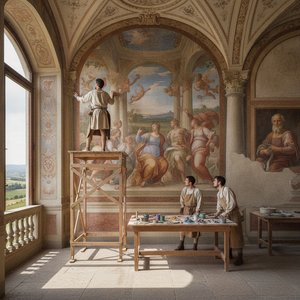
Explore the profound history and technical mastery of fresco painting. From ancient Roman murals to Michelangelo's Sistine Chapel, discover the enduring chemistry and artistry behind this timeless wall painting technique used by the world's greatest masters.


Rimani aggiornato sulle ultime novità dell'arte, sulle offerte esclusive e sulle idee di decorazione.
Raccontaci del tuo progetto e i nostri esperti d'arte ti proporranno 3 suggerimenti artistici personalizzati.
Lascia che creiamo per te una selezione di 3 opzioni su misura – Gratis!


 Anteprima in scala reale
 Condividi
 Condividi
 Dettagli

 Scarica immagine
 Articoli simili
 Radiografia
 Slideshow


 Leggi tutto







 L'opzione vetro è disponibile solo per dimensioni inferiori a 110 cm


![Stanze Vaticane - Il Parnaso (dettaglio) [07] — Raffaello, High Renaissance](/media/artworks/images-thumb/3c/a1/3ca1620e84d3f2fe4e94d9bb954e0eca.jpg)


