x


Stampa giclée o su tela di qualità museale, con produzione rapida e diverse opzioni di finitura. ( Switch to hand made Painting Switch to Image)





























Scegli tra le nostre dimensioni predefinite, che rispettano le proporzioni originali dell'opera d'arte.

È possibile inserire dimensioni personalizzate per adattare l'opera a una cornice o a uno spazio specifico. Se la dimensione selezionata non corrisponde alle proporzioni dell'immagine originale, procederemo al ritaglio dell'opera o all'estensione dell'immagine con un bordo specchiato o a tinta unita. Un mockup digitale ti verrà inviato per approvazione prima dell'inizio della produzione.
Si prega di notare che l'anteprima a schermo non riflette il ritaglio o l'estensione effettivi. Solo il mockup mostrerà accuratamente la composizione finale.
Sebbene siano disponibili dimensioni personalizzate, si raccomanda di selezionare una dimensione dall'elenco predefinito per preservare le proporzioni originali.
Consegna in tutto il mondo () in 2 settimane invece delle normali 4/5 settimane. (29 Luglio)


Para III
Dimensioni riproduzione
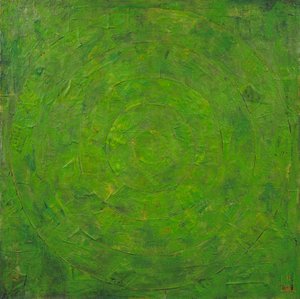
Morris Louis (1912–1962), an American Color Field painter, revolutionized abstract art in the mid-century with his groundbreaking approach to pigment application. His monumental canvases like “Para III,” created in 1959, exemplify this distinctive style—a deliberate rejection of traditional representation and a fervent embrace of pure color as expressive language.
“Para III” immediately captivates viewers with its overwhelming vibrancy. Dominating the canvas is a tapestry of crimson, scarlet, and magenta hues that bleed outwards from vertical bands of pigment, creating an illusion of flowing light and movement. The artist’s meticulous technique—the pioneering use of Magna paint—allowed for unprecedented control over color dispersion and layering, resulting in a surface texture that resembles solidified wax.
Louis's method involved pouring Magna onto unstretched canvas, allowing the pigment to spread organically across the surface. This process eschewed brushes entirely, prioritizing spontaneity and responding directly to the interplay of light and atmosphere. The resulting “silkscreen” effect is not merely accidental; it’s a calculated decision designed to convey an emotional state—a profound contemplation of nature and a yearning for transcendence.
Influenced by artists like Ralph Albert Blakelock and William James Glackens, Louis sought to capture the essence of feeling rather than depicting visual details. Blakelock's tonalist landscapes – particularly “Moonlight” – instilled in Louis a fascination with capturing subtle gradations of color and conveying mood through atmospheric perspective. Similarly, Glackens’ still lifes—such as “Still Life with Roses & Fruit”—demonstrated the power of color to evoke emotion and stimulate contemplation.
“Para III” resonates deeply with viewers due to its ability to bypass rational thought and tap into primal instincts. The bold colors pulsate with energy, mirroring the dynamism of the natural world—specifically, the forest setting depicted in Blakelock’s work. It's a piece that invites introspection and encourages contemplation on themes of beauty, solitude, and spiritual awakening.
Furthermore, Louis’s exploration of Magna paint represents a significant advancement in pigment technology. This acrylic emulsion, developed specifically for him by Leo Newman, offered superior adhesion and color stability compared to conventional oil paints, allowing for greater artistic freedom and expanding the possibilities of Color Field painting.


1912 - 1962 , Stati Uniti d'America
Esplora le 25 opere iconiche di Kazimir Malevich, pioniere del suprematismo e dell'arte astratta. Scopri la storia dietro 'Black Square', 'Bianco su bianco' e altre creazioni rivoluzionarie. Trova riproduzioni d'arte di alta qualità per decorare la tua casa su Most-Famous-Paintings.com.

Explore the captivating world of Beatrice Parsons, a pioneering British abstract expressionist. Discover her journey from garden watercolors to evocative color field paintings and learn about her place within art history.

Explore the profound spiritual resonance of Color Field Painting with insights into Rothko, Newman & Still. Discover the techniques & legacy of this influential abstract art movement.
Esplora le 25 opere più iconiche di Mark Rothko, il maestro dell'espressionismo astratto. Scopri la storia, i colori e l'emozione dietro ogni tela. Acquista riproduzioni artistiche di alta qualità per arredare con stile su Most-Famous-Paintings.com
Esplora i 25 capolavori di Wassily Kandinsky, pioniere dell'arte astratta. Scopri la storia, il significato e le tecniche dietro ogni dipinto iconico. Trova riproduzioni d'arte di alta qualità per decorare la tua casa su Most-Famous-Paintings.com.


Rimani aggiornato sulle ultime novità dell'arte, sulle offerte esclusive e sulle idee di decorazione.
Raccontaci del tuo progetto e i nostri esperti d'arte ti proporranno 3 suggerimenti artistici personalizzati.
Lascia che ci pensiamo noi: 3 opzioni su misura per te – Gratis!


 Preview
 Invia
Invia Condividi
 Dettagli opera

 Scarica
 Simili
 Radiografia
 Slideshow


 Scopri di più







 L'opzione vetro è disponibile solo per dimensioni inferiori a 110 cm