x

Olio su tela dipinto a mano nelle tue dimensioni e con la tua cornice, realizzato su ordinazione dai nostri artisti. ( Passa alla stampa Passa all'immagine)





























Scegli tra le nostre dimensioni predefinite, che rispettano le proporzioni originali dell'opera d'arte.

È possibile inserire dimensioni personalizzate per adattare l'opera a una cornice o a uno spazio specifico. Se la dimensione selezionata non corrisponde alle proporzioni dell'immagine originale, provvederemo a ritagliare l'opera o a estendere il dipinto con elementi aggiuntivi dipinti a mano. Un mockup digitale ti sarà inviato per approvazione prima dell'inizio della produzione.
Si prega di notare che l'anteprima a schermo non riflette il ritaglio o l'estensione effettivi. Solo il mockup mostrerà accuratamente la composizione finale.
Sebbene siano disponibili dimensioni personalizzate, consigliamo di selezionare una dimensione dall'elenco predefinito per preservare le proporzioni originali.
Consegna in tutto il mondo () in 3/4 settimane anziché nelle normali 5 settimane. (1 Agosto). Nessun compromesso sulla qualità.


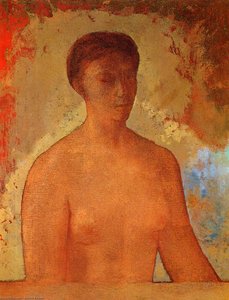
Ophelia
Dimensioni della riproduzione
Odilon Redon's “Ophelia,” painted in 1903, stands as a haunting testament to the Symbolist movement’s fascination with psychological landscapes and the subconscious. More than just a depiction of Shakespeare’s tragic heroine—a young woman drowning in the Thames after rejecting Hamlet’s affections—the painting delves into realms beyond rational observation, presenting an ethereal vision steeped in melancholic beauty.
The Symbolist movement emerged in France around 1890 as a reaction against Impressionism’s focus on capturing fleeting sensory impressions. Artists like Redon sought to express profound psychological and spiritual truths—often obscured by conscious thought—through evocative imagery and symbolic motifs. Influenced by thinkers such as Nietzsche and Freud, Symbolists explored themes of death, decay, and the subconscious mind, reflecting anxieties about modernity and questioning traditional moral values.
Redon’s masterful use of symbolism elevates “Ophelia” beyond a simple narrative illustration. The scattered flowers—lilacs, poppies, roses—represent beauty intertwined with fragility and impending doom, mirroring Ophelia's own vulnerability as she succumbs to despair. Similarly, the bird perched in the upper right corner symbolizes hope amidst sorrow, albeit a hope tinged with melancholy. Most powerfully, however, is the overarching impression of sadness conveyed through Redon’s muted palette and hazy brushstrokes—a visual embodiment of Ophelia’s inner turmoil.
"Ophelia" doesn't merely depict a scene from Shakespeare; it invites viewers into the protagonist’s tormented psyche. Redon succeeds in capturing the essence of grief and disillusionment, presenting an image that lingers long after viewing—a poignant reminder of the human capacity for profound emotion and the enduring power of art to communicate experiences beyond words.


1840 - 1916 , Francia

Esplora i 25 capolavori del Metropolitan Museum di New York! Scopri la storia, gli artisti (Van Gogh, Monet, Rembrandt) e le emozioni dietro dipinti iconici. Trova riproduzioni artistiche di alta qualità per decorare casa con stile su Most-Famous-Paintings.com.

Esplora i 25 capolavori di Dante Gabriel Rossetti, pittore preraffaellita simbolo del romanticismo vittoriano. Scopri storie, tecniche e colori unici delle sue opere più famose. Trova riproduzioni d'arte di alta qualità per la tua casa su Most-Famous-Paintings.com
Esplora i 25 capolavori imperdibili della National Gallery di Washington! Scopri la storia di Cézanne, Matisse, Picasso e altri maestri. Trova l'arte perfetta per la tua casa su Most-Famous-Paintings.com.
Esplora i 25 capolavori di James Abbott McNeill Whistler, il maestro dell'estetismo e dei notturni. Scopri la storia, le tecniche e l'armonia unica nei suoi dipinti più famosi. Stampe d'arte e riproduzioni di alta qualità su Most-Famous-Paintings.com.
Esplora le 25 opere più iconiche di Egon Schiele, il maestro dell'espressionismo austriaco. Ritratti intensi, colori audaci e storie avvincenti ti aspettano. Trova riproduzioni di alta qualità e idee per decorare la tua casa su Most-Famous-Paintings.com.


Rimani aggiornato sulle ultime novità dell'arte, sulle offerte esclusive e sulle idee di decorazione.
Raccontaci del tuo progetto e i nostri esperti d'arte ti proporranno 3 suggerimenti artistici personalizzati.
Lascia che creiamo per te una selezione di 3 opzioni su misura – Gratis!


 Anteprima in scala reale
 Condividi
 Condividi
 Dettagli

 Scarica immagine
 Articoli simili
 Radiografia
 Slideshow


 Leggi tutto







 L'opzione vetro è disponibile solo per dimensioni inferiori a 110 cm