x

Olio su tela dipinto a mano nelle tue dimensioni e con la tua cornice, realizzato su ordinazione dai nostri artisti. ( Passa alla stampa Passa all'immagine)





























Scegli tra le nostre dimensioni predefinite, che rispettano le proporzioni originali dell'opera d'arte.

È possibile inserire dimensioni personalizzate per adattare l'opera a una cornice o a uno spazio specifico. Se la dimensione selezionata non corrisponde alle proporzioni dell'immagine originale, provvederemo a ritagliare l'opera o a estendere il dipinto con elementi aggiuntivi dipinti a mano. Un mockup digitale ti sarà inviato per approvazione prima dell'inizio della produzione.
Si prega di notare che l'anteprima a schermo non riflette il ritaglio o l'estensione effettivi. Solo il mockup mostrerà accuratamente la composizione finale.
Sebbene siano disponibili dimensioni personalizzate, consigliamo di selezionare una dimensione dall'elenco predefinito per preservare le proporzioni originali.
Consegna in tutto il mondo () in 3/4 settimane anziché nelle normali 5 settimane. (11 Agosto). Nessun compromesso sulla qualità.


Landscape 2
Dimensioni della riproduzione
“Landscape,” painted circa 1907-1908, isn't merely a depiction of a rural scene; it’s a distilled essence of the Iberian Peninsula captured through the nascent lens of Pablo Picasso’s revolutionary Cubist vision. This work, often overlooked amidst the towering achievements of his later years, offers a remarkably intimate glimpse into the artist’s evolving aesthetic and his profound connection to his homeland. The painting portrays a small town nestled within rolling hills – a landscape both familiar and subtly distorted, reflecting the shifting realities of Picasso's artistic journey.
The style is undeniably Cubist, yet it retains a remarkable sensitivity to color and form that distinguishes it from the more rigidly analytical works of the period. Picasso employs a fractured perspective, breaking down the scene into geometric planes and layering them upon one another. Buildings are reduced to their fundamental shapes – rectangles, triangles, and cylinders – while figures are rendered with an almost childlike simplicity, hinting at a desire to strip away superficial appearances and reveal underlying structures. The muted palette—primarily ochres, browns, blues, and greys—evokes the dusty tones of the Spanish countryside, lending the scene a sense of quiet melancholy.
“Landscape” stands as a crucial stepping stone in Picasso’s development of Cubism. Emerging from his explorations with African masks and Iberian sculpture, he sought to represent objects not as they appear to the eye, but as they exist within the mind—a simultaneous representation of multiple viewpoints. This painting demonstrates this principle powerfully; the viewer is invited to actively piece together the scene, constructing a coherent image through their own perception.
The influence of Paul Cézanne’s geometric approach to landscape is also evident here. Picasso admired Cézanne's ability to reduce natural forms to their essential shapes and planes, and he adopted this technique as a foundation for his own Cubist experiments. However, unlike Cézanne’s more serene and harmonious compositions, Picasso imbues “Landscape” with an underlying tension—a sense of fragmentation and instability that foreshadows the turbulent events of the 20th century.
While seemingly straightforward in its subject matter, "Landscape" is rich in symbolic meaning. The small town itself can be interpreted as a representation of Spain – a nation grappling with political upheaval and social change. The figures within the scene—a solitary man and a woman—suggest themes of isolation, longing, and perhaps even loss. The muted colors contribute to an atmosphere of quiet contemplation, inviting viewers to reflect on the complexities of human existence.
Notably, the painting’s composition echoes the traditional Spanish landscape tradition, yet Picasso subverts these conventions by presenting a deliberately ambiguous and unsettling vision. The lack of clear focal points and the fragmented perspective create a sense of disorientation, mirroring the anxieties of a rapidly changing world. It's not simply a depiction of a place; it’s an evocation of feeling—a poignant meditation on memory, identity, and the enduring spirit of Spain.
Today, “Landscape” remains a captivating work that exemplifies Picasso’s early explorations into Cubism. High-quality reproductions capture the painting's subtle nuances and textural details, allowing art lovers to experience its emotional depth within their own homes. Most-Famous-Paintings offers meticulously crafted prints of this iconic piece, ensuring that its beauty and significance are accessible to a wider audience. Whether you’re an avid collector or simply seeking to infuse your space with artistic inspiration, “Landscape” provides a powerful connection to one of the 20th century's most influential artists.


1881 - 1973 , Spagna

Explore the evolution of cityscape painting from Realism to contemporary art with Most-Famous-Paintings. Discover key artists & invest in timeless urban visions. Expert guidance, museum-quality reproductions.
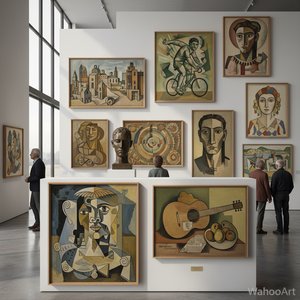
Esplora i 10 capolavori del Cubismo con ! Scopri Picasso, Braque e Gris e la rivoluzione dell'arte moderna. Quadri iconici, storie affascinanti e riproduzioni di alta qualità per decorare la tua casa. Esplora la collezione online!

Scopri i 10 capolavori a olio che hanno segnato la storia dell'arte! Da Leonardo a Van Gogh, esplora le storie e le tecniche dei più grandi maestri. Trova stampe su tela di alta qualità e idee per decorare casa con .

Esplora i 10 capolavori a olio che hanno segnato la storia dell'arte! Da Van Gogh a Leonardo, scopri le storie e le tecniche dei più grandi maestri. Trova riproduzioni di alta qualità e idee per arredare con arte su .
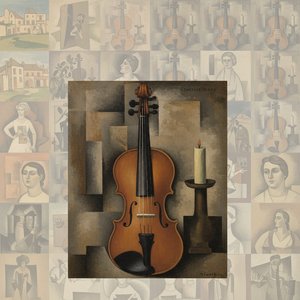
Esplora i 25 capolavori di Georges Braque, pioniere del Cubismo. Scopri la storia, le tecniche e l'impatto di opere iconiche come 'The Patience'. Trova riproduzioni d'arte di alta qualità per decorare casa tua su Most-Famous-Paintings.com.


Rimani aggiornato sulle ultime novità dell'arte, sulle offerte esclusive e sulle idee di decorazione.
Raccontaci del tuo progetto e i nostri esperti d'arte ti proporranno 3 suggerimenti artistici personalizzati.
Lascia che creiamo per te una selezione di 3 opzioni su misura – Gratis!


 Anteprima in scala reale
 Condividi
 Condividi
 Dettagli

 Scarica immagine
 Articoli simili
 Radiografia
 Slideshow
 Leggi tutto







 L'opzione vetro è disponibile solo per dimensioni inferiori a 110 cm


![Spanish Landscape, Toledo [paisaije Español, Toledo] — Diego Rivera, Cubism](/media/artworks/images/thumbnails/11/55/115549776c1d48ecafe55301ea8d1b6c.jpg)