Vendi la tua arte
Lista dei desideri Carrello acquisti Cart
Anteprima in scala realeAnteprima in scala reale Anteprima in ARAnteprima in AR Ordina la riproduzione dipinta a mano Ordina la riproduzione dipinta a manoAcquista download Acquista download CondividiCondividi
DettagliDettagli Aggiungi ai preferiti Aggiungi ai preferiti Scarica immagineScarica immagine Articoli similiArticoli simili RadiografiaRadiografia SlideshowSlideshow

L'Abduzione

Paul Cézanne's L'Abduzione è un affascinante dipinto olio su tela che incarna l'essenza del Romanticismo. Creato nel 1867, questo capolavoro cattura tensione e dramma con pennellate audaci.

Esplora l'arte rivoluzionaria di Paul Cézanne (1839-1906), un maestro del Post-Impressionismo che ha colmato il divario tra Impressionismo e Cubismo. Scopri le sue forme geometriche, pennellate uniche, dipinti di natura morta e il suo impatto duraturo sull'arte moderna. #Cézanne #PostImpresionismo

Giclée / Stampe d'arte

Stampa giclée o su tela di qualità museale, con produzione rapida e diverse opzioni di finitura. (Ordina la riproduzione dipinta a mano Ordina la riproduzione dipinta a manoAcquista download Acquista download)

P118B $10
P118H $10
P118W $10
P438Z $10
P508JH $12
P508YH $12
P805H $10
P805Z $10
P919BZ $10
P919G $10
P919XJ $10
P959ZH $10
P968JZ $12
W106C $8
W218G $10
W218JH $8
W218Y $10
W307PJ $10
W316G $10
W316PJ $8
W316Y $10
W398PJ $8
W4111J $10
W500HY $15
W500JH $15
W692G $12
W849H $8
W940BG $15
W953PJ $8

Standard
custom
CM
INCH

Scegli tra le nostre dimensioni predefinite, che rispettano le proporzioni originali dell'opera d'arte.

larghezza
altezza

È possibile inserire dimensioni personalizzate per adattare l'opera a una cornice o a uno spazio specifico. Se la dimensione selezionata non corrisponde alle proporzioni dell'immagine originale, procederemo al ritaglio dell'opera o all'estensione dell'immagine con un bordo specchiato o a tinta unita. Un mockup digitale ti verrà inviato per approvazione prima dell'inizio della produzione.
Si prega di notare che l'anteprima a schermo non riflette il ritaglio o l'estensione effettivi. Solo il mockup mostrerà accuratamente la composizione finale.
Sebbene siano disponibili dimensioni personalizzate, si raccomanda di selezionare una dimensione dall'elenco predefinito per preservare le proporzioni originali.

Consegna in tutto il mondo () in 2 settimane invece delle normali 4/5 settimane. (20 Agosto)

why_choose_icon
Spedizione espressa gratuita in tutto il mondo
why_choose_icon
Tela in lino di alta qualità
why_choose_icon
Assicurazione completa sulla spedizione
why_choose_icon
Garanzia di rimborso dei dazi doganali
why_choose_icon
Garanzia di fedeltà cromatica dell'originale
why_choose_icon
Politica di reso entro 60 giorni (solo per difetti di fabbricazione)
why_choose_icon
Garanzia di rimborso al 100%
why_choose_icon
Sconto per acquisti multipli

Prezzo totale

$ 68

reproduction

L'Abduzione

Giclée / Stampe d'arte

Dimensioni della riproduzione

-

Prezzo totale

$ 68

Dettagli rapidi

  • Medium: Oil on canvas
  • Year: 1867
  • Dimensions: 90 x 117 cm
  • Movement: Post-Impressionism
  • Title: The Abduction
  • Influences:
    • Romanticism
    • Realism
  • Subject or theme: Violence, abduction

Quiz d'arte

Per ogni domanda è presente una sola risposta corretta.

Domanda 1:
What artistic movement is Paul Cézanne’s ‘The Abduction’ primarily associated with?
Domanda 2:
In what year was ‘The Abduction’ created?
Domanda 3:
What is the approximate size of ‘The Abduction’?
Domanda 4:
What medium was used by Cézanne to depict this artwork?
Domanda 5:
Who recognized Cézanne’s genius and championed his work in the late 1890s?

Descrizione del pezzo

The Abduction

Paul Cézanne's The Abduction is a captivating oil on canvas painting that embodies the essence of Romanticism. Created in 1867, this piece measures 90 x 117 cm and is characterized by its dramatic and tense atmosphere.

Composition and Symbolism

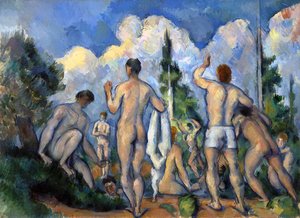
The central figures of the painting are two men, one holding the other above his head. The man being held appears to be naked, suggesting an act of violence or abduction. Surrounding these main subjects are three additional figures: one near the left edge, another on the right side, and a third closer to the center but slightly behind the central duo. The composition is striking, with bold brushstrokes and vivid colors that evoke a sense of drama and tension. The use of oil on canvas allows for rich textures and depth, drawing the viewer into the scene. It’s as if Cézanne sought to capture not just what he saw, but also the very feeling of unease and apprehension inherent in the moment depicted—a deliberate departure from the serene landscapes favored by many Impressionists of his time. The positioning of the figures isn't accidental; it reinforces the narrative tension and invites contemplation on themes of dominance and vulnerability.

Artistic Influences

Cézanne’s early works were influenced by Romanticism and Realism, as seen in his murals at the Jas de Bouffan country house. However, The Abduction showcases his transition towards a new pictorial language, one that would later influence avant-garde movements of the 20th century. He absorbed elements from artists like Eugène Delacroix and Gustave Courbet—particularly their willingness to explore emotional intensity and confront uncomfortable truths—but Cézanne ultimately forged his own path, prioritizing structural integrity over mere visual representation. This ambition to depict underlying forms rather than surface appearances was a cornerstone of his revolutionary approach.

Reception and Legacy

Initially, Cézanne’s work was met with incomprehension and ridicule. Critics dismissed it as crude and lacking in finesse, failing to grasp the profound significance of his artistic vision. It wasn't until the late 1890s that fellow artists like Camille Pissarro and art dealer Ambroise Vollard recognized his genius. Vollard’s solo exhibition in Paris brought Cézanne’s work to a broader audience, sparking considerable debate about its merits. The painting’s unconventional style challenged established conventions of academic art, marking a decisive break from the prevailing aesthetic sensibilities of the era. Today, The Abduction is considered a cornerstone of Post-Impressionism—a pivotal moment in art history that paved the way for Cubism and fundamentally altered our understanding of artistic expression. Its enduring appeal lies in its ability to provoke emotion and stimulate intellectual curiosity.

Reproductions at Most-Famous-Paintings

For art enthusiasts who wish to own a piece of this historical masterpiece, Most-Famous-Paintings offers high-quality, handmade oil painting reproductions. These reproductions capture the essence and detail of Cézanne’s original work, allowing collectors to appreciate his artistry in their own homes. They faithfully recreate the textured surface and vibrant hues of the canvas, transporting viewers back to the artistic fervor of 1867. Explore The Abduction in stunning detail at Most-Famous-Paintings today!

Other Works by Paul Cézanne

- Rue des Saules. Montmartre - The Murder - Landscape with Mill These paintings, like The Abduction, showcase Cézanne’s unique style and his contribution to the evolution of modern art.

Conclusion

The Abduction by Paul Cézanne is a powerful example of Romanticism in painting. Its dramatic composition, rich colors, and historical significance make it a captivating piece for both art historians and enthusiasts. Through Most-Famous-Paintings's reproductions, this masterpiece can be appreciated and cherished by many.
For more information on Paul Cézanne and his works, visit Paul Cézanne on Wikipedia.

Biografia dell'artista

vitae e influenze

paul cézanne, pittore post-impressionista francese, nacque il 19 gennaio 1839 ad Aix-en-Provence, Francia. La sua giovinezza fu segnata da un forte legame con la famiglia e la sua attività bancaria, che gli fornirono sicurezza finanziaria. Ciò gli permise di concentrarsi sulle sue aspirazioni artistiche senza il peso dello stress finanziario. les nabis, neo-impressionismo e simbolismo influenzarono le prime opere di Cézanne, caratterizzate dall'enfasi sulle forme geometriche e su una tavolozza cromatica limitata. Il suo interesse per le opere di paul gauguin e georges seurat ha ulteriormente consolidato il suo stile post-impressionista.

stile artistico e tecniche

L'uso innovativo di Cézanne dei piani cromatici e delle piccole pennellate ripetitive creava campi complessi che esprimevano il suo intenso studio dei soggetti. Il suo approccio spesso esploratorio all’arte portò allo sviluppo di una nuova lingua pittorica, che enfatizzava la struttura sottostante degli oggetti in una composizione.

eredità e impatto

L'opera pionieristica di Cézanne nel post-impressionismo ha aperto la strada a vari movimenti d’avanguardia, tra cui il cubismo, il fauvismo e il surrealismo. La sua influenza può essere vista nelle opere di pablo picasso, henri matisse e georges braque. L'eredità di Cézanne continua a ispirare artisti ed appassionati d’arte, consolidando il suo posto come figura fondamentale nella storia dell’arte moderna.
Paul Cézanne

Paul Cézanne

1839 - 1906 , Francia

Informazioni rapide

  • Artisti Che Hanno Influenzato:
    • Paul Gauguin
    • Georges Seurat
  • Artisti Influenzati:
    • Pablo Picasso
    • Henri Matisse
    • Georges Braque
  • Data Di Nascita: 19 gennaio 1839
  • Luogo Di Nascita: Aix-en-Provence, Francia
  • Movimento Artistico: Post-Impressionismo
  • Nazionalità: Francese
  • Nome Completo: Paul Cézanne
  • Opere Notevoli:
    • Lo stagno a Jas de Bouffan
    • Ritratto di Émile Zola
    • Bosco
    • Grandi Bagnanti
Esplora le opere d'arte organizzate per temi, stili e caratteristiche.