
Lista dei desideri Carrello acquisti Cart
Anteprima in scala realeAnteprima in scala reale Anteprima ARAnteprima AR Acquista il dipinto realizzato a mano Acquista il dipinto realizzato a manoAcquista immagine Acquista immagine InviaInvia
Dettagli operaDettagli opera Aggiungi ai preferiti Aggiungi ai preferiti Scarica immagineScarica immagine SimiliSimili RadiografiaRadiografia SlideshowSlideshow

Il Grigio Albero

Il Grigio Albero di Piet Mondrian: Un simbolo dell'arte astratta cubista del primo Novecento, questo dipinto esplora forme geometriche semplificate e colori primari per esprimere bellezza universale.

Esplora l'arte di Piet Mondrian (1872-1944), un pioniere dell'arte astratta e del movimento De Stijl. Scopri i suoi iconici dipinti geometrici, lo stile Neoplasticismo e la sua duratura influenza sul design moderno, sull'architettura e sull'arte del XX secolo.

Giclée / Stampe d'arte

Stampa giclée o su tela di qualità museale, con produzione rapida e diverse opzioni di finitura. (Acquista il dipinto realizzato a mano Acquista il dipinto realizzato a manoAcquista immagine Acquista immagine)

P118B $10
P118H $10
P118W $10
P438Z $10
P508JH $12
P508YH $12
P805H $10
P805Z $10
P919BZ $10
P919G $10
P919XJ $10
P959ZH $10
P968JZ $12
W106C $8
W218G $10
W218JH $8
W218Y $10
W307PJ $10
W316G $10
W316PJ $8
W316Y $10
W398PJ $8
W4111J $10
W500HY $15
W500JH $15
W692G $12
W849H $8
W940BG $15
W953PJ $8

Standard
custom
CM
INCH

Scegli tra le nostre dimensioni predefinite, che rispettano le proporzioni originali dell'opera d'arte.

larghezza
altezza

È possibile inserire dimensioni personalizzate per adattare l'opera a una cornice o a uno spazio specifico. Se la dimensione selezionata non corrisponde alle proporzioni dell'immagine originale, procederemo al ritaglio dell'opera o all'estensione dell'immagine con un bordo specchiato o a tinta unita. Un mockup digitale ti verrà inviato per approvazione prima dell'inizio della produzione.
Si prega di notare che l'anteprima a schermo non riflette il ritaglio o l'estensione effettivi. Solo il mockup mostrerà accuratamente la composizione finale.
Sebbene siano disponibili dimensioni personalizzate, si raccomanda di selezionare una dimensione dall'elenco predefinito per preservare le proporzioni originali.

Consegna in tutto il mondo () in 2 settimane invece delle normali 4/5 settimane. (23 Agosto)

why_choose_icon
Spedizione espressa gratuita in tutto il mondo
why_choose_icon
Tela in lino di alta qualità
why_choose_icon
Assicurazione completa sulla spedizione
why_choose_icon
Garanzia di rimborso dei dazi doganali
why_choose_icon
Garanzia di fedeltà cromatica
why_choose_icon
Politica di reso entro 60 giorni (solo per difetti di fabbricazione)
why_choose_icon
Garanzia di rimborso al 100%
why_choose_icon
Offerta per acquisti multipli

Prezzo totale

$ 68

reproduction

Il Grigio Albero

Giclée / Stampe d'arte

Dimensioni riproduzione

-

Prezzo totale calcolato

$ 68

Informazioni rapide

  • Dimensions: 79 x 109 cm
  • Artist: Piet Mondrian
  • Medium: Oil on Canvas
  • Subject or theme: Tree
  • Artistic style: Neoplasticism
  • Title: The Gray Tree
  • Location: Lehmbruck Museum

Quiz d'arte

Per ogni domanda è presente una sola risposta corretta.

Domanda 1:
What artistic movement is exemplified by Piet Mondrian’s painting ‘The Gray Tree’?
Domanda 2:
In what year was ‘The Gray Tree’ created?
Domanda 3:
What is the dominant visual element in ‘The Gray Tree’, reflecting Mondrian's artistic philosophy?
Domanda 4:
‘The Gray Tree’ is considered a precursor to Mondrian’s later style known as:
Domanda 5:
Which art historian described Mondrian's influence on modern art as 'totemic', symbolizing the ideals of Modernism?

Descrizione del pezzo

The Gray Tree: A Pioneering Vision of Cubism

The Gray Tree by Piet Mondrian stands as a cornerstone of modern art—a testament to the transformative power of abstraction and the burgeoning influence of Cubism in the early 1920s. Painted in 1911, this deceptively simple composition encapsulates Mondrian’s radical departure from representational painting and his unwavering commitment to exploring fundamental geometric forms as vehicles for conveying spiritual truth. Measuring 79 x 109 cm and executed in oil on canvas, the artwork immediately confronts viewers with a stark palette of black, white, and gray—a deliberate rejection of color that underscores Mondrian’s belief in its distraction from pure visual experience.

Artistic Evolution: From Impressionism to Cubist Experimentation

Mondrian's artistic journey began with an immersion in Impressionism and Fauvism, movements characterized by vibrant hues and fleeting impressions of light. However, he swiftly recognized the limitations of these styles in achieving his ambitious goal—to transcend the materiality of the visible world and access a realm of spiritual contemplation. This realization propelled him toward Cubism, spearheaded by Pablo Picasso and Georges Braque, which challenged traditional perspective and dissected objects into fragmented planes. The Gray Tree exemplifies this pivotal shift, demonstrating Mondrian’s meticulous investigation of Cubist principles—specifically the use of orthogonal lines and geometric shapes—to represent three-dimensional space in a two-dimensional format.

Cubist Elements: Deconstructing Form for Geometric Harmony

The painting's visual structure is dominated by horizontal and vertical lines that intersect to create a dynamic equilibrium. These lines are not merely decorative; they actively define the contours of the tree, reducing it to its essential structural components—a thick trunk and branching limbs—while simultaneously conveying a sense of spatial depth. The absence of leaves or any organic detail reinforces Mondrian’s conceptual framework: he sought to eliminate extraneous elements that could obscure the underlying geometric harmony. This deliberate simplification aligns perfectly with Cubist aesthetics, which aimed to dismantle illusionistic representation and reveal the fundamental building blocks of visual perception.

Artistic Significance: A Harbinger of Neoplasticism

The Gray Tree holds profound importance within the broader history of modern art—serving as a precursor to Mondrian’s subsequent Neoplasticist style. Developed in the mid-1920s, Neoplasticism championed the use of primary colors (red, yellow, and blue) combined with geometric shapes—squares and rectangles—to create compositions that were both aesthetically compelling and intellectually rigorous. This stylistic evolution represents a culmination of Mondrian’s artistic explorations, solidifying his position as one of the foremost innovators in abstract art.

Influence on Modern Art: Shaping Aesthetic Discourse

Mondrian's influence extends far beyond painting itself, permeating fields such as architecture, design, and typography. His uncompromising commitment to geometric abstraction inspired generations of artists and designers who sought to express universal values through simplified forms—a legacy that continues to resonate in contemporary visual culture. As Stephen Bayley eloquently stated, “Mondrian has come to mean Modernism. His name and his work sum up the High Modernist ideal.” The Gray Tree remains a captivating emblem of this transformative moment in artistic history—a timeless masterpiece that embodies the enduring quest for beauty and truth through pure geometric abstraction.
  • Piet Mondrian was a Dutch painter and art theoretician known for his contributions to abstract art.
  • The Lehmbruck Museum in Germany houses an important collection of modern sculptures, including works by prominent artists like A.
  • Tableau no. 2 Composition no. V is another notable work by Mondrian available at Most-Famous-Paintings.com.
Abstract art, as seen in the Gray Tree, uses visual elements to create a composition independent of real-world references. This style, which emerged in the early 20th century, was influenced by various social and intellectual preoccupations of the time. The history of painting is a rich tapestry that spans centuries and cultures. From ancient artifacts to modern masterpieces like the Gray Tree, each work reflects the artistic and cultural context of its time.

For those interested in exploring more of Mondrian's works, The Gray Tree is available for viewing at Most-Famous-Paintings.com.

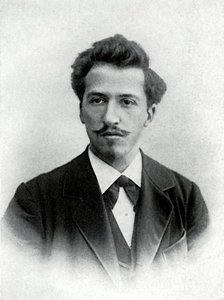
Biografia dell'artista

**primi anni di vita e carriera nei Paesi Bassi (1872-1911)**

pieter cornelis mondriaan, noto dopo il 1911 come piet mondrian, era un pittore e teorico dell'arte olandese nato il 7 marzo 1872 ad Amersfoort, nei Paesi Bassi. Iniziò la sua carriera come insegnante di istruzione primaria mentre praticava la pittura, inizialmente nello stile impressionista olandese della scuola di Haarlem.
  • Le sue opere giovanili, caratterizzate da paesaggi naturalistici, possono essere viste in dipinti come the red mill e trees in moonrise, esposte al kunstmuseum den haag.
  • La ricerca di mondrian per uno stile personale lo portò a esplorare vari movimenti artistici, tra cui il puntinismo e il fauvismo.
  • La sua prima mostra nel 1893 segnò l'inizio della sua carriera prolifica.

**l'evoluzione dello stile di mondrian**

da figurativo all'astratto la direzione artistica di mondrian si è spostata verso uno stile sempre più astratto, culminando in una forma non rappresentativa che chiamò neoplasticismo. Questa 'arte plastica pura' mirava a creare 'bellezza universale', limitando il suo vocabolario formale ai colori primari (rosso, blu e giallo), ai valori (nero, bianco e grigio) e alle direzioni (orizzontali e verticali).

**eredità e influenza**

l'eredità di mondrian si estende oltre il suo lavoro stesso, influenzando stili e movimenti importanti come la pittura a campo colorato, l'espressionismo astratto e il minimalismo. Lo storico dell'arte stephen bayley ha notato che mondrian è diventato un totem per tutto ciò che il modernismo voleva essere.

**opere chiave ed esposizioni**

* piet mondrian: apple blossom (cubismo) (visualizza su Most-Famous-Paintings.com) * piet mondrian: still life with vase of spices ii (cubismo) (visualizza su Most-Famous-Paintings.com) * piet mondrian: passionflower (73 x 48 cm, kunstmuseum den haag, post impressionism, watercolor) (visualizza su Most-Famous-Paintings.com)
Piet Mondrian

Piet Mondrian

1872 - 1944 , Paesi Bassi

Dati rapidi

  • Artisti Influenti:
    • Hague School
    • Impressionismo
    • Pointillism
    • Fauvismo
    • Cubismo
  • Artisti Influenzati:
    • Color Field painting
    • Abstract Expressionism
    • Minimalismo
  • Data Di Nascita: 7 marzo 1872
  • Luogo Di Nascita: Amersfoort, Paesi Bassi
  • Movimento Artistico: De Stijl, Neoplasticismo
  • Nazionalità: Olandese
  • Nome Completo: Piet Mondrian
  • Opere Notevoli:
    • Composition with Red, Yellow and Blue
    • Broadway Boogie Woogie
    • Tableau no. 2 Composition no. V
    • Rhythm of Black Lines
Esplora le opere d'arte organizzate per temi, stili e caratteristiche.




































