Vendi la tua arte
Lista dei desideri Carrello acquisti Cart
Anteprima in scala realeAnteprima in scala reale Anteprima in ARAnteprima in AR Ordina stampa Ordina stampaAcquista download Acquista download CondividiCondividi
DettagliDettagli Aggiungi ai preferiti Aggiungi ai preferiti Scarica immagineScarica immagine Articoli similiArticoli simili RadiografiaRadiografia SlideshowSlideshow

The Empty Mask (Le masque vide)

René Magritte’s ‘The Empty Mask’ (1928) is a surreal masterpiece depicting a mysterious house and floating clouds, embodying the artist's exploration of perception and hidden realities. A captivating Most-Famous-Paintings reproduction.

René Magritte (1898-1967) è stato un artista belga surrealista rinomato per dipinti stimolanti che sfidano la realtà. Esplora opere iconiche come 'Gli Amanti' e il suo uso di oggetti ordinari in contesti inaspettati. Scopri riproduzioni su Most-Famous-Paintings.

Riproduzione a olio fatta a mano

Olio su tela dipinto a mano nelle tue dimensioni e con la tua cornice, realizzato su ordinazione dai nostri artisti. (Ordina stampa Ordina stampaAcquista download Acquista download)

P118B $10
P118H $10
P118W $10
P438Z $10
P508JH $12
P508YH $12
P805H $10
P805Z $10
P919BZ $10
P919G $10
P919XJ $10
P959ZH $10
P968JZ $12
W106C $8
W218G $10
W218JH $8
W218Y $10
W307PJ $10
W316G $10
W316PJ $8
W316Y $10
W398PJ $8
W4111J $10
W500HY $15
W500JH $15
W692G $12
W849H $8
W940BG $15
W953PJ $8

Standard
custom
CM
INCH

Scegli tra le nostre dimensioni predefinite, che rispettano le proporzioni originali dell'opera d'arte.

larghezza
altezza

È possibile inserire dimensioni personalizzate per adattare l'opera a una cornice o a uno spazio specifico. Se la dimensione selezionata non corrisponde alle proporzioni dell'immagine originale, provvederemo a ritagliare l'opera o a estendere il dipinto con elementi aggiuntivi dipinti a mano. Un mockup digitale ti sarà inviato per approvazione prima dell'inizio della produzione.
Si prega di notare che l'anteprima a schermo non riflette il ritaglio o l'estensione effettivi. Solo il mockup mostrerà accuratamente la composizione finale.
Sebbene siano disponibili dimensioni personalizzate, consigliamo di selezionare una dimensione dall'elenco predefinito per preservare le proporzioni originali.

Esempi di personalizzazione: sostituire il volto con una foto del cliente; aggiungere un animale domestico (ad esempio, sostituire un gatto con un cane); inserire un messaggio nascosto nello sfondo; cambiare il paesaggio o gli elementi dello sfondo.
Dopo l'ordine, il team di Most-Famous-Paintings.com contatterà il cliente via e-mail per le istruzioni e fornirà un'anteprima del mockup

Consegna in tutto il mondo () in 3/4 settimane anziché nelle normali 5 settimane. (18 Agosto). Nessun compromesso sulla qualità.

why_choose_icon
Spedizione espressa gratuita in tutto il mondo
why_choose_icon
Tela in lino di alta qualità
why_choose_icon
Assicurazione completa sulla spedizione
why_choose_icon
Garanzia di rimborso dei dazi doganali
why_choose_icon
Garanzia di fedeltà cromatica dell'originale
why_choose_icon
Politica di reso entro 60 giorni (solo per difetti di fabbricazione)
why_choose_icon
Garanzia di rimborso al 100%
why_choose_icon
Sconto per acquisti multipli

Prezzo totale

$ 272

reproduction

The Empty Mask (Le masque vide)

Tecnica di riproduzione

Dimensioni della riproduzione

-

Prezzo totale

$ 272

Dettagli rapidi

  • Year: 1928
  • Location: National Museum Wales
  • Artistic style: Dreamlike, enigmatic
  • Artist: René Magritte
  • Notable elements: Irregular frame, sky,
  • Medium: Oil on canvas
  • Influences:
    • Loss
    • Unseen

Quiz d'arte

Per ogni domanda è presente una sola risposta corretta.

Domanda 1:
What is the primary subject depicted in René Magritte’s ‘The Empty Mask’?
Domanda 2:
According to René Magritte’s essay ‘Words and Images,’ what does the image in ‘The Empty Mask’ suggest?
Domanda 3:
The frame surrounding the depicted images in ‘The Empty Mask’ is described as:
Domanda 4:
In what year was ‘The Empty Mask’ painted?
Domanda 5:
Which of the following best describes René Magritte’s artistic style?

Descrizione dell'opera

The Enigmatic Veil: Unpacking René Magritte’s “The Empty Mask”

René Magritte's "The Empty Mask" (Le masque vide), painted in 1928, isn’t merely a depiction of a peculiar scene; it’s an invitation to question the very nature of perception and representation – a cornerstone of the Surrealist movement. This captivating work, currently residing within the National Museum Cardiff in Wales, immediately draws the viewer into its dreamlike atmosphere, prompting a lingering sense of unease and intellectual curiosity. The painting presents a seemingly simple composition: a small, boxy house constructed from dark wood, nestled against a backdrop of a flickering fire, with four ambiguous clouds hovering above. Yet, within this apparent stillness lies a complex web of symbolic layers that Magritte meticulously crafted to challenge our assumptions about reality.

A Fragmented Reality: Style and Technique

Magritte’s style in “The Empty Mask” is quintessential Surrealism – a deliberate disruption of the expected. He employs a precise, almost photographic realism, rendering each element with meticulous detail, yet simultaneously placing them within an illogical arrangement. The house itself, resembling a miniature wooden box or perhaps a three-sided structure, feels strangely detached from its surroundings. This juxtaposition of realistic depiction and unsettling spatial relationships is characteristic of Magritte’s approach. He utilized oil on canvas, building up layers of paint to achieve the smooth, matte finish that defines much of his work. The muted color palette – primarily dark browns, grays, and blues – contributes to the painting's somber mood, further emphasizing the sense of mystery and isolation. Notably, the use of a freestanding frame around the scene is crucial; it isolates the elements, forcing the viewer to confront them as independent entities rather than part of a cohesive whole.

Symbolism and the Unseen: Layers of Meaning

The symbolism within “The Empty Mask” is deliberately open to interpretation, reflecting Magritte’s core Surrealist philosophy. The empty mask itself is undoubtedly central – it represents concealment, anonymity, and perhaps even the hidden self. It suggests a barrier between the viewer and what lies beneath, hinting at something unseen or unspoken. The house, with its stark simplicity, could symbolize domesticity, but also confinement and a lack of connection to the outside world. The fire, burning in the background, introduces an element of danger and destruction, potentially representing repressed emotions or unresolved conflicts. Crucially, Magritte’s own essay, “Words and Images,” which accompanied this painting's initial exhibition, suggested that each image within the frame "suggests that there are others behind it." This concept underscores the idea that reality is not a fixed entity but rather a series of layered perceptions, constantly shifting and revealing new possibilities. The clouds above add to this sense of ambiguity, their formless shapes mirroring the elusive nature of truth itself.

A Legacy of Questioning: Context within Surrealism

“The Empty Mask” emerged during a period of intense artistic experimentation following World War I. Surrealist artists sought to liberate the unconscious mind and challenge conventional modes of thought, rejecting rationalism in favor of dreams, fantasies, and irrationality. Magritte’s work aligns perfectly with this movement's core tenets. He wasn’t interested in simply depicting reality; he aimed to expose its constructed nature, revealing the mechanisms by which we perceive and interpret the world around us. His exploration of visual paradoxes – objects placed in illogical contexts, familiar forms rendered unfamiliar – directly challenged viewers to reconsider their assumptions about what is “real.” The painting's influence can be seen in subsequent Surrealist artists and continues to resonate today as a powerful meditation on perception, representation, and the mysteries that lie beneath the surface.

Bringing "The Empty Mask" Home: Reproduction Options

Most-Famous-Paintings offers meticulously crafted hand-painted reproductions of René Magritte’s “The Empty Mask,” allowing you to bring this iconic artwork into your own space. Our skilled artists replicate Magritte's precise technique and evocative atmosphere, ensuring a faithful representation of the original while capturing its unique emotional depth. Choose from a range of sizes and canvas materials to perfectly complement your décor. Whether you’re an art collector, interior designer, or simply someone captivated by Surrealism’s enigmatic beauty, a Most-Famous-Paintings reproduction of “The Empty Mask” is a stunning addition to any collection – a constant reminder to question, explore, and embrace the power of the unseen.

Biografia dell'artista

primi anni di vita e inizi artistici

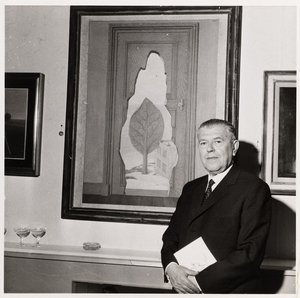
René François Ghislain Magritte, un rinomato artista surrealista belga, nacque il 21 novembre 1898 a Lessines, provincia dell'Hainaut, Belgio. La sua giovinezza è rimasta in parte misteriosa, con poco noto sul suo infanzia. Tuttavia, è documentato che iniziò le lezioni di disegno nel 1910.

evoluzione artistica e influenze

Lo stile artistico di Magritte si è evoluto notevolmente negli anni, influenzato da vari movimenti come l'impressionismo, il futurismo e il cubismo. I suoi primi dipinti, datati intorno al 1915, erano nello stile impressionista. Dal 1916 al 1918, studiò all’Académie Royale des Beaux-Arts a Bruxelles, sotto Constant Montald.

periodo surrealista e opere notevoli

Nel 1926, Magritte produsse il suo primo dipinto surrealista, Il Cavaliere Perduto (Le Jockey Perdu), segnando l'inizio della sua associazione con il movimento surrealista. Il suo lavoro è caratterizzato da immagini stimolanti, spesso che raffigurano oggetti ordinari in contesti insoliti, sfidando la percezione della realtà degli osservatori.
  • Les Amants (1927-1928), una serie di dipinti che presentano persone con panni che coprono i loro volti, si presume sia stata ispirata dalla storia della morte della madre.
  • Gli Amanti, un'altra opera iconica, presenta una coppia che si bacia con i volti coperti da panni bianchi, invitando lo spettatore a riflettere sull’amore e l’identità. (disponibile per l'acquisto come riproduzione su olio fatta a mano o stampa su tela presso Most-Famous-Paintings.com)

vita successiva e eredità

Il lavoro di Magritte è stato esposto negli Stati Uniti nel 1936 e nuovamente in due mostre retrospective, una al Museum of Modern Art nel 1965 e l'altra al Metropolitan Museum of Art nel 1992. È rimasto impegnato nella sinistra politica ma ha sostenuto l’autonomia artistica. Musei notevoli che espongono le opere di Magritte:

Conclusione

L'eredità di René Magritte come maestro surrealista è duratura, con le sue immagini stimolanti che continuano a ispirare e affascinare. Il suo lavoro, caratterizzato da un unico blend tra l’ordinario e l’inaspettato, rimane una pietra angolare dell’arte surrealista. Scopri di più su René Magritte
René Magritte

René Magritte

1898 - 1967 , belgio

Informazioni rapide

  • Artisti Influenti:
    • Impressionismo
    • Futurismo
    • Cubismo
  • Data Di Nascita: 21 novembre 1898
  • Luogo Di Nascita: Lessines, Belgio
  • Movimento Artistico: Surrealismo
  • Nazionalità: Belga
  • Nome Completo: René François Ghislain Magritte
  • Opere Notevoli:
    • Le Jockey Perdu
    • Gli Amanti
    • La Traduzione delle immagini
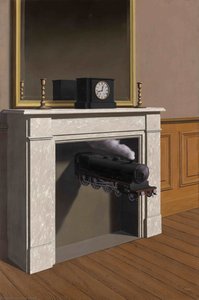
    • Tempo trasfixo
    • La condizione umana
Esplora le opere d'arte organizzate per temi, stili e caratteristiche.