


x

 AcrilicoOpere da pareteBaroque
 1572
1572 280.0 x 181.0 cm
 Pinacoteca dell'Antica
Acquista un'immagine digitale ad alta risoluzione e ottimizzata, di qualità nettamente superiore all'anteprima online.
Ogni file è meticolosamente preparato dai nostri specialisti interni attraverso l'uso di strumenti avanzati e un sapiente ritocco manuale. Garantiamo che ogni immagine presenti una chiarezza eccezionale, una precisione cromatica impeccabile e dettagli raffinati.
Il file finale viene consegnato via e-mail entro 72 ore, ottimizzato per un uso immediato in contesti professionali, editoriali e di stampa. Si tratta della stessa qualità affidata ai più prestigiosi studi di design, editori e gallerie d'arte.
Scarica un file ad alta risoluzione per uso personale, per la stampa e per progetti creativi. ( Acquista stampa Acquista il dipinto realizzato a mano)
Quando scegli Most-Famous-Paintings.com, non riceverai solo un'immagine: riceverai un'opera d'arte digitale professionalmente ottimizzata, realizzata con la massima precisione e accompagnata da una garanzia di soddisfazione. Ecco tutto ciò che include il tuo ordine, automaticamente:

Riceverai il file dell'immagine digitale ad alta risoluzione via email entro 72 ore dall'ordine, pronto per un uso immediato.

La tua opera d'arte viene ottimizzata professionalmente attraverso l'uso di strumenti avanzati di intelligenza artificiale e una revisione manuale, garantendo il massimo livello di dettaglio, nitidezza e accuratezza cromatica.

Hai eliminato o perso accidentalmente il tuo file? Non preoccuparti: te lo invieremo di nuovo in qualsiasi momento, gratuitamente.

Goditi la tua opera d'arte istantaneamente senza costi doganali, dazi o spese di spedizione: i download digitali sono sempre esenti da tasse.

Garantiamo che la tua immagine digitale rifletta i colori originali con la massima fedeltà, grazie all'uso di strumenti professionali e a una gestione accurata del colore.

Se non sei soddisfatto della tua immagine digitale, la revisioneremo o ti rimborseremo il 100% entro 60 giorni, senza domande.

Non sei soddisfatto? Ricevi un rimborso completo entro 60 giorni dal ricevimento del tuo file digitale, senza dover fornire spiegazioni.

Acquista 3 immagini, risparmia il 10% - Acquista 5, risparmia il 15% - Acquista 10+, risparmia il 20%. Ideale per progetti creativi, gallerie e agenzie.

Tiziano Vecellio, universally known as Titian, stands as a monumental figure of the Italian Renaissance—perhaps its most celebrated colorist and a master who redefined the possibilities of oil painting. Born around 1490 in Pieve di Cadore, nestled amidst the dramatic landscapes of the Venetian Alps, his journey from humble beginnings to international acclaim is a testament to prodigious talent and an unwavering dedication to artistic innovation. The exact date of Titian’s birth remains elusive, debated by scholars, but contemporary sources and his early stylistic development suggest that he emerged into the world sometime between 1488 and 1490.
His father, Gregorio Vecellio, was a military man—a profession that instilled in young Tiziano a disciplined spirit and an appreciation for observation. Lucia, his mother, nurtured him with a love of beauty and fostered his artistic inclinations. Recognizing their sons’ potential, the family arranged for Tiziano and Francesco to apprentice under Sebastiano Zuccato, a renowned mosaicist—a decision that would irrevocably steer them toward a path of artistic excellence.
Venice at the turn of the 16th century was a vibrant hub of commerce, culture, and artistic ferment. Titian’s initial training took place within the workshop of Giovanni Bellini—the most influential painter in Venice at the time—where he absorbed the stylistic precepts of his elder mentor. This formative experience instilled in him a profound understanding of Venetian painting traditions and established the foundation for his own distinctive style.
However, it was through contact with Giorgione—a fellow Venetian painter whose work possessed an ethereal poetic quality—that Titian truly embarked on his artistic odyssey. The two artists collaborated on several ambitious projects, including the decoration of the exterior walls of the Fondaco dei Tedeschi—a bustling trading post for German merchants—and their partnership cemented a bond that would shape the trajectory of Venetian art.
Giorgione’s influence is palpable in Titian’s early canvases—characterized by hazy atmospheric effects, muted colors, and an emphasis on capturing mood rather than precise detail. Paintings like *A Man with a Quilted Sleeve* exemplify this stylistic approach, demonstrating Titian’s burgeoning talent for portraiture while simultaneously reflecting Giorgione’s pioneering exploration of perceptual illusion.
As Titian matured, he gradually distanced himself from Giorgione’s delicate aesthetic and embraced a bolder, more dramatic style—one marked by vibrant hues, expressive brushstrokes, and an unwavering commitment to conveying emotion. *The Visitation of Mary and Elizabeth*, now housed in the Accademia di Venezia, exemplifies this stylistic shift, showcasing Titian’s mastery of composition and color to create a scene brimming with psychological depth.
Throughout his prolific career, Titian consistently pushed the boundaries of artistic convention—experimenting with innovative techniques and exploring diverse subjects ranging from mythological narratives to religious iconography. His portraits became renowned for their uncanny realism—capturing not only physical likeness but also subtle nuances of character and emotion—establishing him as one of the foremost portraitists of his era.
Titian’s artistic legacy extends far beyond his lifetime, profoundly influencing generations of painters who followed in his footsteps. His pioneering use of color—particularly his masterful manipulation of tonal harmonies—established a new paradigm for oil painting and inspired artists across Europe to embrace luminous palettes and expressive brushwork.
From Rubens to Rembrandt to Delacroix, Titian’s influence permeated the artistic landscape of the Baroque period and beyond. His paintings continue to captivate audiences today with their breathtaking beauty—a testament to his unparalleled skill as a colorist and a painter—solidifying his place among the titans of Western art history.
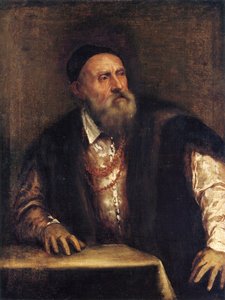
1490 - 1576 , Italia


Rimani aggiornato sulle ultime novità dell'arte, sulle offerte esclusive e sulle idee di decorazione.
Raccontaci del tuo progetto e i nostri esperti d'arte ti proporranno 3 suggerimenti artistici personalizzati.
Lascia che creiamo per te una selezione di 3 opzioni su misura – Gratis!


 Anteprima in scala reale
 Invia
Invia Condividi
 Dettagli opera

 Scarica immagine
 Simili
 Radiografia
 Slideshow
 Espandi i dettagli


