x

Stampa giclée o su tela di qualità museale, con produzione rapida e diverse opzioni di finitura. ( Ordina la riproduzione dipinta a mano Acquista download)





























Scegli tra le nostre dimensioni predefinite, che rispettano le proporzioni originali dell'opera d'arte.

È possibile inserire dimensioni personalizzate per adattare l'opera a una cornice o a uno spazio specifico. Se la dimensione selezionata non corrisponde alle proporzioni dell'immagine originale, procederemo al ritaglio dell'opera o all'estensione dell'immagine con un bordo specchiato o a tinta unita. Un mockup digitale ti verrà inviato per approvazione prima dell'inizio della produzione.
Si prega di notare che l'anteprima a schermo non riflette il ritaglio o l'estensione effettivi. Solo il mockup mostrerà accuratamente la composizione finale.
Sebbene siano disponibili dimensioni personalizzate, si raccomanda di selezionare una dimensione dall'elenco predefinito per preservare le proporzioni originali.
Consegna in tutto il mondo () in 2 settimane invece delle normali 4/5 settimane. (21 Agosto)


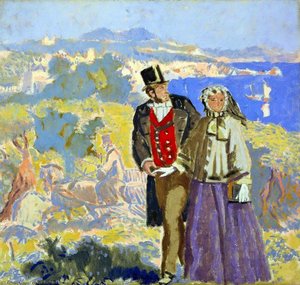
A Marengo
Dimensioni della riproduzione
Walter Richard Sickert's “A Marengo,” painted in 1903, isn’t merely a depiction of two women engaged in conversation; it’s a carefully constructed tableau brimming with psychological depth and an unsettling beauty. This oil painting, rendered in a style that deftly blends Post-Impressionism with nascent Expressionism, invites the viewer into a private moment suspended between observation and speculation. Sickert, a figure perpetually caught between German heritage and British adoption, masterfully utilizes muted tones and gestural brushstrokes to evoke a sense of quiet melancholy—a feeling not simply of sadness, but of something subtly unresolved.
The composition itself is deliberately asymmetrical, drawing the eye towards the central figures while allowing a generous expanse of negative space around them. This strategic use of emptiness amplifies the intimacy of the scene, suggesting a contained world where the women’s conversation holds paramount importance. The flattened perspective, eschewing traditional depth cues, contributes to an immediacy—as if we've stumbled upon this private exchange unexpectedly. Lines are not precise outlines but rather broken gestures, defining forms with a loose, almost impulsive energy that mirrors the emotional intensity of the scene.
“A Marengo” is deeply rooted in Sickert’s time within London's vibrant Camden Town circle – a group of artists who rejected academic traditions in favor of capturing the gritty reality of urban life. This period saw Sickert experimenting with new approaches to representation, often focusing on marginalized figures and exploring themes of sexuality and social alienation. However, the painting also reveals traces of his earlier experiences in Venice, where he developed a fascination with multiple-figure compositions within interiors. The influence of Degas is palpable here – particularly in the way Sickert uses light and shadow to sculpt form and create a sense of drama.
Interestingly, research suggests that the two women depicted—Carolina dell’Acqua and La Giuseppina—were professional prostitutes who frequently modeled for Sickert. This connection adds another layer of complexity to the painting's narrative, hinting at a world of hidden desires and unspoken realities. The choice of these subjects reflects Sickert’s broader interest in portraying individuals on the fringes of society, offering a glimpse into lives often overlooked by mainstream art.
Sickert’s technique is characterized by a deliberate layering of paint in thick impasto strokes, creating a tactile surface that invites close inspection. The visible brushwork isn't merely decorative; it actively contributes to the painting’s emotional impact, conveying a sense of movement and spontaneity. The muted color palette—dominated by browns, greys, and ochres—further enhances this atmosphere of subdued intensity. The diffused lighting casts shadows that subtly define the figures’ volume without resorting to sharp delineation, lending them an almost spectral quality.
“A Marengo” is more than just a portrait; it's a psychological study. Sickert masterfully captures a fleeting moment of human connection—a conversation filled with unspoken meaning and perhaps a hint of melancholy. The painting’s enduring power lies in its ability to evoke a sense of mystery, prompting viewers to contemplate the lives and motivations of these enigmatic figures. It is a testament to Sickert's unique vision – a vision that continues to resonate with audiences today.


1860 - 1942 , Germania

Explore the profound evolution of Post-Impressionist landscapes. From Van Gogh's emotional brushwork to Cézanne's structural mastery, discover how these visionaries redefined art history through color and form in this expert guide for fine art enthusiasts.

Explore the transformative era of Post-Impressionism. Discover how masters like Van Gogh moved beyond light to embrace emotion, structure, and vibrant color, redefining modern art history through expressive brushwork and symbolic depth.


Rimani aggiornato sulle ultime novità dell'arte, sulle offerte esclusive e sulle idee di decorazione.
Raccontaci del tuo progetto e i nostri esperti d'arte ti proporranno 3 suggerimenti artistici personalizzati.
Lascia che creiamo per te una selezione di 3 opzioni su misura – Gratis!


 Anteprima in scala reale
 Condividi
 Condividi
 Dettagli

 Scarica immagine
 Articoli simili
 Radiografia
 Slideshow


 Leggi tutto







 L'opzione vetro è disponibile solo per dimensioni inferiori a 110 cm