x

Stampa giclée o su tela di qualità museale, con produzione rapida e diverse opzioni di finitura. ( Ordina la riproduzione dipinta a mano Acquista download)





























Scegli tra le nostre dimensioni predefinite, che rispettano le proporzioni originali dell'opera d'arte.

È possibile inserire dimensioni personalizzate per adattare l'opera a una cornice o a uno spazio specifico. Se la dimensione selezionata non corrisponde alle proporzioni dell'immagine originale, procederemo al ritaglio dell'opera o all'estensione dell'immagine con un bordo specchiato o a tinta unita. Un mockup digitale ti verrà inviato per approvazione prima dell'inizio della produzione.
Si prega di notare che l'anteprima a schermo non riflette il ritaglio o l'estensione effettivi. Solo il mockup mostrerà accuratamente la composizione finale.
Sebbene siano disponibili dimensioni personalizzate, si raccomanda di selezionare una dimensione dall'elenco predefinito per preservare le proporzioni originali.
Consegna in tutto il mondo () in 2 settimane invece delle normali 4/5 settimane. (18 Agosto)


A Tree in Naples
Dimensioni della riproduzione
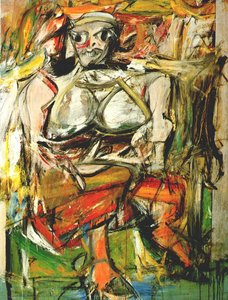
“A Tree in Naples,” created by Willem de Kooning in 1960, stands as a pivotal work within the realm of Abstract Expressionism—a movement that irrevocably altered the trajectory of American art history. More than just a depiction of foliage, this painting embodies De Kooning’s profound engagement with the natural world, translating its intangible qualities into a visual language characterized by bold gestures and vibrant hues.
De Kooning himself articulated his artistic impetus: “Just coming around roads, some place, and having the sensation of a piece of it, a piece of nature, like a fence, something on the road. And I really get very elated by again looking, by again seeing that the sky is blue, that the grass is green.” This simple declaration reveals an unwavering connection to sensory experience—a desire to distill the essence of landscape into expressive form.
Rejecting traditional representation, De Kooning employed a technique rooted in spontaneity and emotional intensity. Vast brushstrokes dominate the canvas, layering colors—primarily blues, reds, whites, blacks, and subtle yellows—to evoke not visual accuracy but rather the feeling of immersion within a natural vista. The artist utilized a palette knife extensively, generating textural variations that amplify the painting’s dynamism.
This approach aligns perfectly with the core tenets of Abstract Expressionism, where the artist prioritizes conveying inner emotion over meticulous detail. Visible marks and splatters contribute to the artwork's expressive character—a testament to De Kooning’s commitment to capturing the immediacy of his perception.
“A Tree in Naples” emerged during a transformative period for artistic discourse—the immediate aftermath of World War II. Abstract Expressionism flourished as the vanguard of American modern art, spearheaded by luminaries like Jackson Pollock, Elaine de Kooning, Lee Krasner, and Franz Kline—collectively known as the New York School. This movement decisively rejected academic conventions, championing improvisation, subjective feeling, and monumental canvases.
De Kooning’s work reflects this paradigm shift away from realism toward a more introspective artistic stance. It stands alongside other seminal pieces of the era that sought to grapple with the psychological impact of war and explore new avenues for artistic expression.
Despite its lack of recognizable imagery, “A Tree in Naples” resonates deeply with viewers—inviting contemplation and fostering personal interpretation. The interplay of color and line generates a palpable sense of movement and vitality, mirroring the energy inherent in natural landscapes. Rather than portraying a specific tree, De Kooning aims to convey its intangible spirit—the light, the air, the overall sensory experience.
The simplification of visual vocabulary—coupled with expansive brushstrokes—creates an immersive encounter for the observer. Ultimately, “A Tree in Naples” serves as a powerful emblem of Abstract Expressionism’s ambition: to transcend mere depiction and communicate profound emotional truths.


1904 - 1997 , Paesi Bassi

Esplora i 10 capolavori dell'Espressionismo Astratto con ! Scopri Pollock, Rothko e De Kooning: storia, tecnica e significato di opere iconiche per arredare la tua casa con arte di alta qualità. Esplora la collezione online!
Esplora i 25 capolavori di Francisco Goya, il genio spagnolo tra Romanticismo e Realismo. Ritratti iconici, 'Los Caprichos' e le toccanti 'Disastri della Guerra'. Trova stampe su tela e riproduzioni artistiche di alta qualità per la tua casa su Most-Famous-Paintings.com.

APS ofrece reproducciones de bellas artes y encargos personalizados desde 2004. Confían en nosotros corporaciones, hoteles y coleccionistas selectos para obras de arte de calidad museística, servicio discreto y soluciones artísticas completas. ¡Póngase en contacto con nosotros para obtener un presupuesto personalizado!

Esplora l'evoluzione dell'espressionismo astratto con Willem de Kooning. Analisi approfondita del suo stile, l'influenza italiana e il suo impatto sull'arte moderna. Scopri perché De Kooning è un investimento prezioso per i collezionisti.

Explore the profound emotional world of Abstract Expressionism with Most-Famous-Paintings. Discover key artists like Pollock & Rothko, learn about collecting, and find museum-quality reproductions to inspire your space.


Rimani aggiornato sulle ultime novità dell'arte, sulle offerte esclusive e sulle idee di decorazione.
Raccontaci del tuo progetto e i nostri esperti d'arte ti proporranno 3 suggerimenti artistici personalizzati.
Lascia che creiamo per te una selezione di 3 opzioni su misura – Gratis!


 Anteprima in scala reale
 Condividi
 Condividi
 Dettagli

 Scarica immagine
 Articoli simili
 Radiografia
 Slideshow

 Leggi tutto







 L'opzione vetro è disponibile solo per dimensioni inferiori a 110 cm