x
 Sculpture BronzeSculptureModern Sculpture
 1956
1956 52.0 x 80.0 cm
 ザ・ヘップワース・ウェイクフィールド
迅速な制作と多彩な仕上げオプションを備えた、ミュージアムクオリティのジークレーまたはキャンバスプリント。 ( 手描きの絵画を購入 画像を購入)
作品のオリジナル比率に合わせた、当店の規定サイズからお選びください。

特定のフレームやスペースに合わせて、ご自身でサイズを指定することも可能です。選択されたサイズが元の画像の比率と一致しない場合、作品をトリミングするか、鏡面反射または単色での塗りつぶしによって画像を拡張いたします。制作を開始する前に、ご確認用のデジタルモックアップをお送りいたします。
画面上のプレビューには、実際のトリミングや拡張は反映されませんのでご注意ください。最終的な構図を正確に確認できるのは、モックアップのみとなります。
カスタムサイズも承っておりますが、元の比率を維持するためには、あらかじめ用意されたリストからサイズを選択することをお勧めいたします。

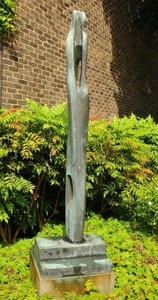
Curved Forms (Pavan)
複製画のサイズ
Barbara Hepworth (1903–1975) stands as one of the most influential figures in British sculpture of the mid-20th century, a pioneer who championed abstraction and sought to capture the essence of organic forms—particularly those found in nature. Her oeuvre is characterized by monumental sculptures crafted from materials like bronze, stone, and alabaster, yet “Curved Forms (Pavan),” created in 1956, exemplifies her distinctive approach: metallized plaster cast on aluminum armature.
Inspired by the graceful Pavan dance—a stately court dance of Elizabethan England—Hepworth’s sculpture transcends mere imitation. Instead, it embodies her profound fascination with movement and transformation. As Hepworth herself eloquently described, she aimed to “capture ‘the spiritual inner life’ of art,” striving not just for visual representation but for conveying a sense of dynamism and interconnectedness.
Hepworth's method was revolutionary for its time. Rejecting the traditional modeling techniques favored by many sculptors, she opted for a process that prioritized resistance—the interaction between sculptor and material. She constructed an aluminum armature – a skeletal framework – providing structural support while allowing her to manipulate the plaster surface with precision.
"Curved Forms (Pavan)" isn't merely a beautiful object; it’s laden with symbolic significance. The three interconnected ovoids represent Hepworth’s belief in the fundamental unity of existence—the idea that all things are interdependent and constantly evolving. Their flowing curves mirror the movement of water or wind, symbolizing fluidity and adaptability.
Hepworth's aesthetic vision was rooted in a deep appreciation for natural forms and a desire to express their underlying principles. She sought to distill the essence of organic shapes into simplified geometric forms, creating sculptures that evoke contemplation and invite viewers to consider the relationship between form and space.
"Curved Forms (Pavan)" resides in The Hepworth Wakefield’s collection, a testament to Hepworth's enduring influence on modern sculpture. Its placement alongside other works by Hepworth underscores her commitment to exploring themes of spirituality and materiality—a legacy that continues to inspire artists and collectors alike.
The sculpture’s distinctive monochromatic surface – achieved through careful polishing – enhances its visual impact, emphasizing the texture and contours of the form while creating a serene atmosphere. As Hepworth herself noted, “Curved Forms (Pavan), Version II” embodies "the spiritual inner life" of art—a profound statement that encapsulates her artistic philosophy.


1903 - 1975

Discover the sophisticated world of metal art. From industrial grace to contemporary sculpture, our expert guide explores how premium metallic masterpieces elevate luxury interiors for discerning collectors seeking timeless elegance and investment-grade artistry.

Explore the profound history of sculpture, from classical realism to modern abstraction. Discover the mastery of form, texture, and medium through an expert art-historical lens designed for discerning collectors and enthusiasts.
Elevate your collection with our expert guide to bronze sculpture. Discover the mastery of lost-wax casting, the artistry of patination, and professional insights for acquiring timeless metal masterpieces that define sophisticated interiors.


最新の美術ニュース、限定オファー、そしてインテリアのアイデアをいち早くお届けします。
お客様のプロジェクトについてお聞かせください。当社の美術専門家が、お客様に合わせた3つのパーソナライズされた芸術提案をご提供いたします。
あなたにぴったりの3作品を無料で厳選いたします


 シェアする
シェアする シェアする
シェアする
 詳細を見る
詳細を見る

 ダウンロード
 似ている作品
 スライドショー
 詳細を見る
詳細を見る






































 ガラスオプションは、110cm未満のサイズでのみご利用いただけます。