


x


作品のオリジナル比率に合わせた、当店の規定サイズからお選びください。

特定のフレームやスペースに合わせて、ご希望のサイズをご入力いただけます。選択されたサイズが元の画像の比率と異なる場合、アートワークをトリミングするか、手描きで要素を追加して絵画を拡張いたします。デジタルモックアップ を制作し、制作開始前にご確認(承認)をいただきます。
画面上のプレビューは、実際のトリミングや拡張を正確に反映しているものではありません。最終的な構図は、モックアップによってのみ正確にご確認いただけます。
カスタムサイズもご利用いただけますが、元の比率を維持するためには、あらかじめ用意されたリストからサイズを選択することをお勧めいたします。

Study for composition no. 7 Study for a panel for the Como Sailing Club in Como
複製画のサイズ

Born in Novegro, Italy (later Novedrate), in 1907, Carla Badiali’s life and artistic journey represent a fascinating intersection of early 20th-century European culture, the burgeoning field of abstract art, and the resilience of an artist navigating turbulent political times. Initially exposed to music and painting during her childhood years spent in France – a period shaped by her family's work commitments – Badiali’s return to Italy marked a pivotal moment, leading her to study at the Istituto Tecnico Industriale di Como. It was here, under the guidance of Manlio Rho, a prominent figure within the group of abstract artists emerging from Como, that she truly embraced non-figurative art and began to forge her distinctive style.
Rho’s influence proved transformative. He introduced Badiali to the principles of geometric abstraction and encouraged experimentation with color and form. This mentorship formed the bedrock of her artistic development, propelling her into a group dedicated to exploring new visual languages. Early works reflect this initial training – bold shapes and vibrant hues began to coalesce, hinting at the dynamic compositions that would become her hallmark.
Badiali’s formative years were characterized by a rich cultural exposure. Her time in France provided an invaluable foundation, fostering a sensitivity to artistic techniques and broadening her understanding of European art movements. Returning to Italy, she enrolled at the Istituto Tecnico Industriale di Como, not solely for technical training but also as a gateway to intellectual and artistic engagement. The institute’s environment proved fertile ground for experimentation, particularly with the innovative ideas circulating within the abstract art circles of Como.
Crucially, her relationship with Manlio Rho was instrumental in shaping her artistic trajectory. He wasn't merely a teacher; he was a fellow artist and a guiding force who instilled in Badiali a deep appreciation for the possibilities of abstraction. His encouragement to explore non-representational forms laid the groundwork for her later success.
Badiali’s artistic career spanned several decades, during which she consistently refined her technique and explored various mediums. However, tempera paint became her favored medium, allowing her to achieve a remarkable luminosity and expressive power. Her paintings are instantly recognizable for their dynamic geometric compositions – interlocking shapes, bold color palettes, and a deliberate sense of movement. These elements weren’t simply decorative; they were carefully considered choices designed to evoke emotion and convey abstract concepts.
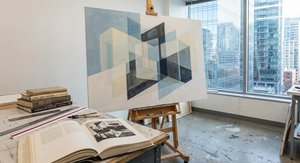
Notable works like “Study for Composition no. 7 Study for a panel for the Como Sailing Club in Como” (available on Most-Famous-Paintings.com) exemplify this approach. The piece, created in 1933, demonstrates her mastery of color and composition, capturing a sense of energy and dynamism through carefully arranged geometric forms. This work, along with others, showcases her ability to translate abstract ideas into visually compelling narratives.
Carla Badiali’s contribution to the Italian art scene is significant, particularly considering the limited opportunities afforded to female artists during that era. She emerged as a respected voice within the Como abstract art movement, paving the way for future generations of women in the arts. Her work wasn't confined to local circles; it gained recognition through exhibitions and inclusion in prestigious collections.
Her paintings are now housed in notable museums such as the Museo Nazionale di Capodimonte in Naples, alongside works by masters like Caravaggio and Cosimo Fanzago, a testament to her artistic merit. Badiali’s legacy extends beyond individual artworks; she represents a vital link between early 20th-century European art and the development of abstract expressionism.
Badiali’s artistic journey is a compelling story of an Italian artist who, through dedication, innovation, and a profound engagement with abstract art, left an enduring mark on the landscape of 20th-century art. Her work continues to inspire artists today, offering a glimpse into a world where form and color converge to create powerful visual experiences.

1907 - 1992 , Italy

Explore the enduring legacy of geometric abstraction! Discover key artists, historical movements & investment insights for discerning art collectors. Expert guidance from Most-Famous-Paintings.

Explore the philosophical roots & artistic evolution of geometric abstraction with Most-Famous-Paintings. Discover Mondrian, Malevich, De Stijl & more. Expert insights for collectors and art enthusiasts.

Explore the evolution of geometric abstraction from Cubism to contemporary art. Discover key artists like Malevich & Mondrian, investment insights, and expert collecting advice at Most-Famous-Paintings.
Explore the captivating world of geometric abstraction! Discover its origins, key artists like Malevich & Mondrian, and why this movement remains highly valued by art collectors today. Expert insights at Most-Famous-Paintings.

Explore the captivating world of geometric abstraction! Discover its origins, key artists like Kandinsky & Mondrian, and why this movement remains highly valued by art collectors today. Expert insights at Most-Famous-Paintings.


最新の美術ニュース、限定オファー、そしてインテリアのアイデアをいち早くお届けします。
お客様のプロジェクトについてお聞かせください。当社の美術専門家が、お客様に合わせた3つのパーソナライズされた芸術提案をご提供いたします。
あなたにぴったりの3作品を無料で厳選いたします


 Preview
 プリントを購入
 シェアする
シェアする シェアする
シェアする
 詳細を見る
詳細を見る

 ダウンロード
 似ている作品
 X線調査
X線調査 スライドショー


 詳細を見る
詳細を見る






































 ガラスオプションは、110cm未満のサイズでのみご利用いただけます。


