


x
 Oil On CanvasWallArtSocial Realism
 153.0 x 112.0 cm
 ナショナル・ギャラリー・シンガポール
迅速な制作と多彩な仕上げオプションを備えた、ミュージアムクオリティのジークレーまたはキャンバスプリント。 ( 手描きの絵画を購入 画像を購入)





























作品のオリジナル比率に合わせた、当店の規定サイズからお選びください。

特定のフレームやスペースに合わせて、ご自身でサイズを指定することも可能です。選択されたサイズが元の画像の比率と一致しない場合、作品をトリミングするか、鏡面反射または単色での塗りつぶしによって画像を拡張いたします。制作を開始する前に、ご確認用のデジタルモックアップをお送りいたします。
画面上のプレビューには、実際のトリミングや拡張は反映されませんのでご注意ください。最終的な構図を正確に確認できるのは、モックアップのみとなります。
カスタムサイズも承っておりますが、元の比率を維持するためには、あらかじめ用意されたリストからサイズを選択することをお勧めいたします。

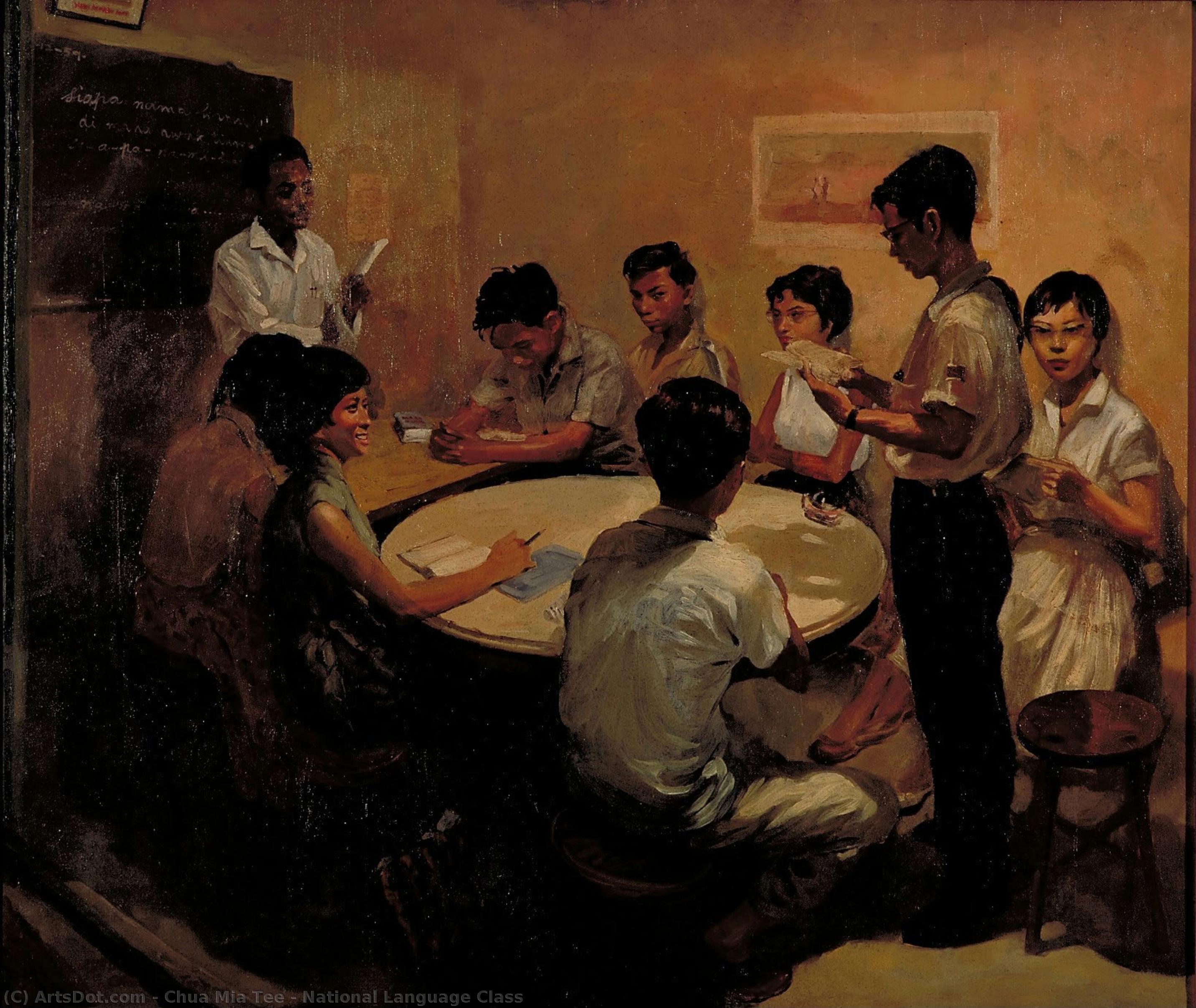
National Language Class
複製画のサイズ
Chua Mia Tee’s “National Language Class,” completed in 1959, transcends mere visual representation; it embodies the spirit of nascent Malaysian identity during a pivotal moment in history. Painted by Singaporean artist Chua Mia Tee (蔡名智), born in 1931, this monumental oil on canvas captures a classroom scene brimming with youthful energy and intellectual curiosity—a microcosm of Malaysia’s ambition to forge a unified nation amidst the complexities of colonial rule and post-independence anxieties.
“National Language Class” emerged from the crucible of the Equator Art Society, founded in 1956. This influential artist group championed social realism as a means of instilling “a distinct Malayan consciousness.” Members actively engaged with pressing socio-political issues—the struggle for self-governance, racial tensions, and economic development—translating these concerns into powerful visual narratives.
Source: WikipediaReproductions of “National Language Class” offer an exceptional opportunity to bring Chua Mia Tee’s masterful vision into your home or workspace. Utilizing archival pigment printing techniques, Most-Famous-Paintings.com guarantees vibrant color accuracy and unparalleled detail—preserving the painting's emotional depth and textural nuances for generations to come.
Explore the full artwork details and commission a stunning reproduction at Most-Famous-Paintings.com.

Chua Mia Tee (蔡名智) stands as a pivotal figure in Singaporean art history, a painter whose brush did more than merely apply pigment to canvas; it documented the very heartbeat of a nation in flux. Born in Singapore in 1931, Chua’s life and artistry were inextricably linked to the socio-political transformations of Malaya during its formative years. His family’s journey from Shantou, Guangdong Province, to Singapore in 1937—driven by the escalating tensions of the Sino-Japanese War—instilled in him a profound, lifelong understanding of displacement, resilience, and the human struggle for identity. This early exposure to upheaval would later become the emotional bedrock of his work, allowing him to capture the spirit of ordinary citizens grappling with the dawn of independence and the complexities of nationhood.
His artistic formation was a sophisticated blend of Eastern heritage and Western technique. After receiving foundational education at Shuqun and Tuan Mong Schools, Chua pursued formal studies at the Nanyang Academy of Fine Arts (NAFA) in 1952. It was here that he honed his technical prowess under influential mentors, absorbing the rigorous principles of Western art while remaining deeply grounded in Eastern traditions. This duality allowed him to develop a style rooted in social realism—a movement that prioritized truthful, often unflinching, depictions of everyday life. His involvement with the Equator Art Society, established in 1956, was perhaps the most defining chapter of his career. This collective sought to foster a distinct Malayan consciousness, and Chua became one of its most vital voices, using art as a tool to challenge prevailing narratives and celebrate the shared struggles of the people.
Chua’s oeuvre is characterized by an extraordinary ability to weave monumental scale with intimate human emotion. One of his most seminal achievements, the 1955 oil painting ‘Epic Poem of Malaya’, serves as a cornerstone of the region's art history. This massive work, measuring approximately eight feet, transcends simple landscape or portraiture; it is a vibrant, pulsating narrative of aspiration. Through meticulous detail and a rich palette, Chua captures scenes such as fishermen at Changi Beach, transforming a moment of labor into an evocative symbol of national vitality. His ability to blend realism with a sense of romanticism allows his subjects to emerge not just as figures in a scene, but as protagonists in the unfolding drama of a new society.
Beyond the grand scale of his historical epics, Chua’s work often turned toward the poignant and the personal, capturing the nuances of social integration and cultural identity. His iconic piece, 'National Language Class', remains a powerful testament to the era's political climate, reflecting the complexities of language and education in a multi-ethnic landscape. Whether through the focused intensity of a Portrait of Lee Boon Ngan or the rhythmic vitality found in works like Malay Fisherman at Changi Beach, Chua’s art remains deeply anchored in the lived experience of the Malayan people. His legacy is not merely found in museums like the National Gallery, but in the way his paintings continue to serve as a visual memory of a transformative era, preserving the dignity and the dreams of a generation.

1931 - , Singapore

Explore the Biedermeier style, a 19th-century era of elegance and domestic comfort. Discover how post-Napoleonic social shifts shaped European art, furniture, and middle-class sophistication through an expert historical lens.

Unlock the secrets of the masters. Explore our expert guide to decoding symbolism and iconography in famous paintings, from sacred religious imagery to the emotional depth of the Symbolist movement. Discover the hidden language behind history's most profound masterpieces.


最新の美術ニュース、限定オファー、そしてインテリアのアイデアをいち早くお届けします。
お客様のプロジェクトについてお聞かせください。当社の美術専門家が、お客様に合わせた3つのパーソナライズされた芸術提案をご提供いたします。
あなたにぴったりの3作品を無料で厳選いたします


 プレビュー
プレビュー
 シェアする
シェアする シェアする
シェアする
 詳細を見る
詳細を見る

 ダウンロード
 似ている作品
 X線調査
X線調査 スライドショー
 詳細を見る
詳細を見る









 ガラスオプションは、110cm未満のサイズでのみご利用いただけます。


