x
迅速な制作と多彩な仕上げオプションを備えた、ミュージアムクオリティのジークレーまたはキャンバスプリント。 ( 手描きの絵画を購入 画像を購入)





























作品のオリジナル比率に合わせた、当店の規定サイズからお選びください。

特定のフレームやスペースに合わせて、ご自身でサイズを指定することも可能です。選択されたサイズが元の画像の比率と一致しない場合、作品をトリミングするか、鏡面反射または単色での塗りつぶしによって画像を拡張いたします。制作を開始する前に、ご確認用のデジタルモックアップをお送りいたします。
画面上のプレビューには、実際のトリミングや拡張は反映されませんのでご注意ください。最終的な構図を正確に確認できるのは、モックアップのみとなります。
カスタムサイズも承っておりますが、元の比率を維持するためには、あらかじめ用意されたリストからサイズを選択することをお勧めいたします。

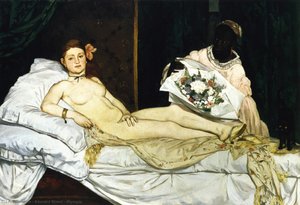
Olympia
複製画のサイズ
Édouard Manet's Olympia (1863) isn't merely a painting; it’s an audacious declaration, a seismic shift in the landscape of 19th-century art. Initially met with outrage and derision by Parisian society, this seemingly simple depiction of a nude woman has become one of the most iconic and endlessly debated works in Western art history. The canvas immediately confronts the viewer with a stark realism, devoid of the idealized beauty favored by academic painters of the time. Olympia, a courtesan, lies on her bed, attended by her black servant, Laure, who presents her with flowers – an act laden with complex social and economic implications. Manet deliberately avoids romanticizing the scene; there’s no idyllic pastoral setting, no mythological narrative to soften the blow of Olympia's nakedness. Instead, he offers a brutally honest portrayal of modern life, one that challenged the prevailing artistic conventions and sparked a furious debate about taste, morality, and representation.
Beyond the immediate depiction of a nude woman, Olympia is saturated with symbolic meaning. The inclusion of Laure, a black servant, was particularly controversial. It challenged the racial stereotypes prevalent in French society at the time and implicitly addressed issues of colonialism and slavery. The flowers presented by Laure are not a gesture of romantic affection but rather a transaction – a payment for services rendered. The gaze of Olympia, direct and unflinching, confronts the viewer with an uncomfortable awareness of her power and agency. The inclusion of the clock in the background subtly references time and mortality, adding another layer to the painting’s complex narrative.
Olympia debuted at the 1863 Salon, Paris's most prestigious art exhibition. The reaction was immediate and overwhelmingly negative. Critics condemned Manet for his unflinching realism, his lack of classical training, and his perceived vulgarity. They accused him of copying Delacroix’s *Saturn* and of depicting a prostitute in a manner that was both shocking and morally reprehensible. However, despite the initial outrage, Olympia ultimately played a crucial role in paving the way for Impressionism and other modern art movements. Manet's refusal to conform to academic standards forced the art world to confront new possibilities in representation and subject matter. His work demonstrated that beauty could be found not just in idealized forms but also in the complexities of everyday life, forever changing the course of art history.


1832 - 1883 , フランス
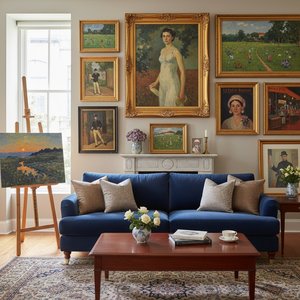
エドゥアール・マネの傑作25選🎨印象派を代表する画家、マネの世界を旅する。油絵「草上の昼食」や「オランピア」…革新的な色彩とモダンアートの魅力をMost-Famous-Paintingsで。高品質なアートプリントで、お部屋に芸術を🖼️

Explore the life & art of Édouard Manet, a pivotal figure bridging Realism and Impressionism. Discover his revolutionary techniques, controversial masterpieces like 'Olympia,' and lasting impact on modern art history.
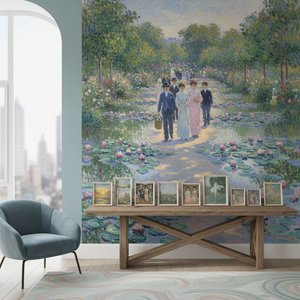
印象派を代表する10傑の世界へ。モネ、ルノワールら巨匠の技と色彩が織りなす至高の名作を紐解きます。美術、インテリアに新たなインスピレーションを。Most-Famous-Paintings.comで、博物館品質のアート複製と洗練された空間演出を見つけましょう。

Journey through Impressionism's heart with 10 iconic paintings by Monet, Renoir & Degas. Explore light, color & the stories behind these masterpieces. Find museum-quality art reproductions and elevate your home decor on Most-Famous-Paintings.com.

Journey through Impressionistic Realism with 10 iconic masterpieces by Monet, Renoir & Van Gogh. Explore art history, techniques & find museum-quality reproductions for your home at Most-Famous-Paintings.com. Discover all masterpieces online!


最新の美術ニュース、限定オファー、そしてインテリアのアイデアをいち早くお届けします。
お客様のプロジェクトについてお聞かせください。当社の美術専門家が、お客様に合わせた3つのパーソナライズされた芸術提案をご提供いたします。
あなたにぴったりの3作品を無料で厳選いたします


 プレビュー
プレビュー
 シェアする
シェアする シェアする
シェアする
 詳細を見る
詳細を見る

 ダウンロード
 似ている作品
 X線調査
X線調査 スライドショー

 詳細を見る
詳細を見る









 ガラスオプションは、110cm未満のサイズでのみご利用いただけます。