x
 Oil On CanvasWallArtContemporary Realism
 1952High Medieval
 79.0 x 102.0 cm
迅速な制作と多彩な仕上げオプションを備えた、ミュージアムクオリティのジークレーまたはキャンバスプリント。 ( 手描きの絵画を購入 画像を購入)





























作品のオリジナル比率に合わせた、当店の規定サイズからお選びください。

特定のフレームやスペースに合わせて、ご自身でサイズを指定することも可能です。選択されたサイズが元の画像の比率と一致しない場合、作品をトリミングするか、鏡面反射または単色での塗りつぶしによって画像を拡張いたします。制作を開始する前に、ご確認用のデジタルモックアップをお送りいたします。
画面上のプレビューには、実際のトリミングや拡張は反映されませんのでご注意ください。最終的な構図を正確に確認できるのは、モックアップのみとなります。
カスタムサイズも承っておりますが、元の比率を維持するためには、あらかじめ用意されたリストからサイズを選択することをお勧めいたします。

Hotel by a Railroad
複製画のサイズ
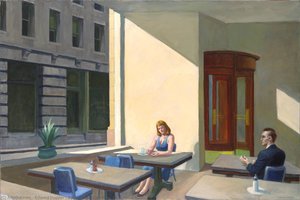
Edward Hopper's "Hotel by a Railroad," painted in 1952, isn’t merely a depiction of an interior scene; it’s a carefully constructed meditation on loneliness, isolation, and the subtle anxieties of modern American life. This oil-on-canvas masterpiece, measuring a substantial 101.9 x 79.3 cm, resides within the Hirshhorn Museum's collection, offering viewers a poignant glimpse into Hopper’s signature style – a world rendered with stark realism and an undercurrent of melancholic beauty.
The painting immediately draws the eye to its central figures: a man and a woman positioned within a dimly lit hotel room. The woman, seated at the left, is absorbed in reading a book, her posture suggesting quiet contemplation. Across from her, the man stands near an open doorway, holding a cigarette between his fingers – a gesture that simultaneously conveys both weariness and a yearning for something beyond the confines of the room. Notably, they don’t acknowledge each other; their gazes are directed outwards, hinting at separate worlds and unspoken distances. The perspective is subtly flattened, creating a sense of claustrophobia despite the presence of an open window, suggesting that even in connection, true intimacy remains elusive.
Hopper's mastery lies not just in his subject matter but also in his meticulous technique. He employs a restrained palette dominated by muted browns, grays, and earthy greens, contributing to the painting’s somber atmosphere. The lighting is dramatic, originating from the exterior light streaming through the doorway – a powerful source that casts sharp shadows and highlights key elements like the man's face and hands. Lines are used with precision to define shapes—particularly in the architectural details of the room and the figures’ forms—creating a sense of solidity and realism. The brushstrokes themselves are visible, adding texture and a slightly rough surface that enhances the painting’s tactile quality.
The use of reflected light is particularly noteworthy. The mirror on the wall subtly amplifies the exterior light, creating an echo within the room and further emphasizing the contrast between interior gloom and external brightness. This clever manipulation of light not only adds depth to the scene but also reinforces the theme of isolation – the figures are trapped in their own private worlds, separated by both physical distance and emotional barriers.
"Hotel by a Railroad" firmly places Hopper within the tradition of American Realism. Influenced by artists like George Bellows and Winslow Homer, Hopper sought to depict everyday life with unflinching honesty, capturing the psychological complexities of his subjects rather than focusing on grand narratives or idealized beauty. The painting’s quiet intensity invites viewers to contemplate the unspoken stories behind the figures' actions—their loneliness, their disappointments, and their yearning for connection.
Interestingly, Hopper himself described the painting as a reflection of “the loneliness of a large city,” suggesting that he wasn’t simply depicting a specific location but rather capturing a universal feeling. The painting’s enduring appeal lies in its ability to resonate with viewers on an emotional level—to evoke a sense of familiarity and recognition despite its seemingly simple subject matter.
The inclusion of the cigarette is a subtle yet significant detail. It represents a moment of contemplation, a brief escape from the confines of the room, or perhaps even a silent plea for connection. It’s a small gesture that speaks volumes about the man's internal state—his weariness and his desire to find solace in something beyond his immediate surroundings. The cigarette also subtly connects him to the outside world, reminding us of the vastness of the city and the potential for both opportunity and isolation.
Furthermore, the open doorway acts as a visual metaphor for possibility – a gateway to the unknown, but one that remains perpetually closed to the figures within. “Hotel by a Railroad” is more than just a painting; it’s a poignant reminder of the complexities of human relationships and the enduring search for meaning in an increasingly impersonal world.

1931 - 1967 , アメリカ合衆国

Explore the profound history of American Regionalism. Discover how Grant Wood captured the heart of the Midwest through masterpieces like American Gothic. An expert guide to the movement, its cultural impact, and the enduring beauty of American Realism.


最新の美術ニュース、限定オファー、そしてインテリアのアイデアをいち早くお届けします。
お客様のプロジェクトについてお聞かせください。当社の美術専門家が、お客様に合わせた3つのパーソナライズされた芸術提案をご提供いたします。
あなたにぴったりの3作品を無料で厳選いたします


 プレビュー
プレビュー
 シェアする
シェアする シェアする
シェアする
 詳細を見る
詳細を見る

 ダウンロード
 似ている作品
 X線調査
X線調査 スライドショー
 詳細を見る
詳細を見る









 ガラスオプションは、110cm未満のサイズでのみご利用いただけます。