x
迅速な制作と多彩な仕上げオプションを備えた、ミュージアムクオリティのジークレーまたはキャンバスプリント。 ( 手描きの絵画を購入 画像を購入)





























作品のオリジナル比率に合わせた、当店の規定サイズからお選びください。

特定のフレームやスペースに合わせて、ご自身でサイズを指定することも可能です。選択されたサイズが元の画像の比率と一致しない場合、作品をトリミングするか、鏡面反射または単色での塗りつぶしによって画像を拡張いたします。制作を開始する前に、ご確認用のデジタルモックアップをお送りいたします。
画面上のプレビューには、実際のトリミングや拡張は反映されませんのでご注意ください。最終的な構図を正確に確認できるのは、モックアップのみとなります。
カスタムサイズも承っておりますが、元の比率を維持するためには、あらかじめ用意されたリストからサイズを選択することをお勧めいたします。

untitled (3175)
複製画のサイズ
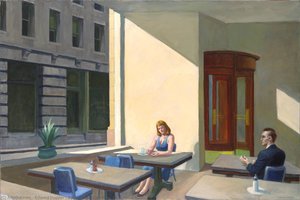
In the vast landscape of American Realism, few works capture the profound weight of silence as effectively as Edward Hopper’s “untitled (3175)”. At first glance, the scene presents a deceptively simple tableau: two figures seated at a table within an interior space, caught in a moment of shared yet solitary occupation. However, beneath this unremarkable surface lies a psychological depth that has captivated collectors and art enthusiasts for decades. Hopper, a master of distilling complex human emotions into visual form, invites the viewer into a room where time seems to have decelerated, allowing the subtle tension of the unspoken to take center stage.
The composition is a masterclass in geometric precision and atmospheric restraint. Utilizing the hallmarks of American Regionalism, Hopper eschews grand, dramatic gestures in favor of meticulously observed details that evoke a sense of introspection. The architecture of the room—defined by straight lines and structured furniture—creates an environment of stillness and detachment. While the painting is rendered in a striking monochrome palette, the interplay of light and shadow provides a structural complexity that guides the eye across the canvas, from the focused gaze of the figures to the distant, shadowed corners of the room.
Technically, “untitled (3175)” demonstrates Hopper’s incredible command over tonal gradation. Through the skillful application of hatching and cross-hatching, the artist builds a rich texture that lends weight to the figures and depth to the surrounding surfaces. This meticulous technique allows for a subtle play of light that breathes life into the inanimate objects within the frame. Every element in the room serves a symbolic purpose; even the presence of a piano in the background acts as a poignant juxtaposition, representing human aspiration and creativity set against the backdrop of quiet isolation.
The emotional resonance of the piece is deeply tied to its historical context. Painted in 1948, during the burgeoning anxieties of the post-World War II era, the work reflects the pervasive sense of alienation felt within an increasingly impersonal urban landscape. The figures, though physically close, are separated by an invisible psychological barrier. As they gaze down at a piece of paper—a symbol of communication—their lack of direct engagement underscores the profound loneliness that can exist even in moments of proximity. It is this haunting duality of connection and disconnection that makes the painting such a powerful subject for contemplation.
For interior designers and art collectors, a high-quality reproduction of this Hopper masterpiece offers more than just aesthetic beauty; it provides an emotional anchor for a space. The stark, evocative nature of the monochrome tones allows it to integrate seamlessly into modern, minimalist, or classic sophisticated interiors. It serves as a conversation piece that invites guests to pause and reflect, much like the figures within the painting themselves.
Whether you are seeking to add a sense of contemplative calm to a study or looking for a profound statement piece for a gallery wall, “untitled (3175)” stands as a testament to the enduring power of psychological realism. Owning a reproduction of this work means preserving a fragment of mid-century American soul, bringing the masterful light and shadow of Edward Hopper into the contemporary home.

1931 - 1967 , アメリカ合衆国

Explore the profound history of American Regionalism. Discover how Grant Wood captured the heart of the Midwest through masterpieces like American Gothic. An expert guide to the movement, its cultural impact, and the enduring beauty of American Realism.

Explore the raw, evocative beauty of the Ashcan School. Discover how masters like Bellows and Glackens captured New York's urban soul through American Realism, and learn to bring this gritty, historical elegance into your modern art collection.


最新の美術ニュース、限定オファー、そしてインテリアのアイデアをいち早くお届けします。
お客様のプロジェクトについてお聞かせください。当社の美術専門家が、お客様に合わせた3つのパーソナライズされた芸術提案をご提供いたします。
あなたにぴったりの3作品を無料で厳選いたします


 プレビュー
プレビュー
 シェアする
シェアする シェアする
シェアする
 詳細を見る
詳細を見る

 ダウンロード
 似ている作品
 X線調査
X線調査 スライドショー

 詳細を見る
詳細を見る









 ガラスオプションは、110cm未満のサイズでのみご利用いただけます。