x
 OilWallArtDutch Golden Age
 1658
1658 168.0 x 230.0 cm
 国立美術館 (Rijksmuseum)
迅速な制作と多彩な仕上げオプションを備えた、ミュージアムクオリティのジークレーまたはキャンバスプリント。 ( 手描きの絵画を購入 画像を購入)





























作品のオリジナル比率に合わせた、当店の規定サイズからお選びください。

特定のフレームやスペースに合わせて、ご自身でサイズを指定することも可能です。選択されたサイズが元の画像の比率と一致しない場合、作品をトリミングするか、鏡面反射または単色での塗りつぶしによって画像を拡張いたします。制作を開始する前に、ご確認用のデジタルモックアップをお送りいたします。
画面上のプレビューには、実際のトリミングや拡張は反映されませんのでご注意ください。最終的な構図を正確に確認できるのは、モックアップのみとなります。
カスタムサイズも承っておりますが、元の比率を維持するためには、あらかじめ用意されたリストからサイズを選択することをお勧めいたします。

Venus and Adonis
複製画のサイズ
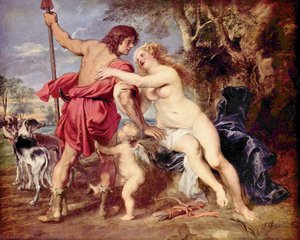
Ferdinand Bol's "Venus and Adonis" isn’t merely a depiction of a classical myth; it’s a carefully constructed tableau brimming with psychological depth, masterful technique, and the very essence of the Dutch Golden Age. Completed in 1658, this oil on canvas – measuring a substantial 168 x 230 cm and currently residing within the hallowed halls of the Rijksmuseum in Amsterdam – transcends simple illustration to become a profound meditation on love, desire, and the tension between earthly impulse and divine grace. Bol, a student of Rembrandt’s, skillfully balances the master's dramatic lighting with his own burgeoning artistic voice, creating an image that is both intensely personal and remarkably refined.
The scene itself captures a pivotal moment from Ovid’s “Metamorphoses,” where Venus, the goddess of love, attempts to persuade Adonis, her mortal lover, to abandon his pursuit of hunting. Venus, seated with an almost languid grace, holds a mirror reflecting her own image – a subtle gesture that speaks volumes about vanity and self-admiration, yet also hints at a deeper longing for connection. Her pose is one of quiet contentment, juxtaposed dramatically against the dynamic energy surrounding her. Beside her stands Cupid, not as the cherubic child of later depictions, but as a powerful, almost predatory figure – his red tunic ablaze with color and his bow and arrow radiating an undeniable force of attraction. This isn’t simply a depiction of love; it's a portrayal of its potent, sometimes overwhelming, nature.
Bol’s technical skill is immediately apparent in the painting’s masterful use of light and shadow. Characteristic of the Dutch Golden Age, the composition employs *chiaroscuro* – a dramatic contrast between illuminated areas and deep shadows – to sculpt the figures and create a palpable sense of volume and depth. The soft glow illuminating Venus's face contrasts sharply with the darker recesses of the background, drawing the viewer’s eye directly to her captivating presence. The meticulous rendering of fabric, from the flowing folds of Venus’s gown to the textured surface of Adonis’s hunting attire, demonstrates Bol’s incredible attention to detail and his commitment to capturing the tactile qualities of the world.
Furthermore, note the subtle details – the delicate veins in Adonis's hand, the way light catches on the leaves of the trees in the distance, the slight furrow in Venus’s brow. These are not mere decorative flourishes; they contribute significantly to the painting’s overall realism and emotional impact. Bol wasn’t simply copying a classical scene; he was breathing new life into it through his own artistic sensibility.
Beyond the straightforward narrative of Venus's pursuit, “Venus and Adonis” is rich in symbolic meaning. The mirror held by Venus can be interpreted as a representation of vanity, but also of self-awareness and the goddess’s own desire for admiration. The dogs in the background – often identified as representing loyalty or companionship – add another layer to the scene, suggesting a potential conflict between earthly bonds and divine passion. The cloudy sky hints at an uncertain future, mirroring the precariousness of Adonis's mortal existence.
Bol’s choice to depict Cupid not as a playful sprite but as a forceful, almost dangerous figure underscores the intensity of desire. This isn’t a gentle courtship; it’s a struggle for control – Venus attempting to shape Adonis’s fate through her influence, while Adonis resists her advances. The painting, therefore, becomes a powerful exploration of power dynamics and the complexities of human relationships.
Ferdinand Bol's "Venus and Adonis" stands as a testament to the artistic achievements of the Dutch Golden Age. His work, alongside that of Rembrandt and Vermeer, continues to captivate audiences with its technical brilliance, emotional depth, and profound insights into the human condition. Most-Famous-Paintings offers meticulously crafted hand-painted reproductions of this iconic masterpiece, allowing you to experience its beauty and complexity in stunning detail. Owning a reproduction is not simply acquiring an image; it’s bringing home a piece of art history – a window into the world of one of the most important artists of his time.

1616 - 1680 , オランダ

Explore the captivating world of Ferdinand Bol (1616-1680), a master Dutch portraitist deeply influenced by Rembrandt. Discover his life, style, and enduring legacy with Most-Famous-Paintings.

Discover the breathtaking beauty of Dutch Golden Age landscapes. Explore the mastery of light, chiaroscuro, and 17th-century realism through an expert art history lens, celebrating the enduring legacy of the Dutch Masters for discerning collectors and art lovers.

オランダ黄金時代の10大傑作を紐解く!レンブラント、フェルメール…バロック絵画の魅力と時代背景を深く探求。Most-Famous-Paintingsで、至高のアートコレクションと空間演出のヒントを見つけよう。高品質なアートプリントで、お部屋を華やかに。
Explore the Dutch Golden Age of painting! Discover key artists like Vermeer & ter Borch, their innovative techniques, and the rich cultural context behind these Baroque masterpieces. Learn about collecting & appreciating this iconic art period.

Embark on a cultural journey through the Dutch Golden Age. Explore the masterful interplay of light and shadow in 17th-century masterpieces, from Rembrandt to Vermeer, and discover how this era of profound realism continues to inspire fine art collectors today.


最新の美術ニュース、限定オファー、そしてインテリアのアイデアをいち早くお届けします。
お客様のプロジェクトについてお聞かせください。当社の美術専門家が、お客様に合わせた3つのパーソナライズされた芸術提案をご提供いたします。
あなたにぴったりの3作品を無料で厳選いたします


 プレビュー
プレビュー
 シェアする
シェアする シェアする
シェアする
 詳細を見る
詳細を見る

 ダウンロード
 似ている作品
 X線調査
X線調査 スライドショー
 詳細を見る
詳細を見る









 ガラスオプションは、110cm未満のサイズでのみご利用いただけます。