


x





























作品のオリジナル比率に合わせた、当店の規定サイズからお選びください。

特定のフレームやスペースに合わせて、ご希望のサイズをご入力いただけます。選択されたサイズが元の画像の比率と異なる場合、アートワークをトリミングするか、手描きで要素を追加して絵画を拡張いたします。デジタルモックアップ を制作し、制作開始前にご確認(承認)をいただきます。
画面上のプレビューは、実際のトリミングや拡張を正確に反映しているものではありません。最終的な構図は、モックアップによってのみ正確にご確認いただけます。
カスタムサイズもご利用いただけますが、元の比率を維持するためには、あらかじめ用意されたリストからサイズを選択することをお勧めいたします。

Three figures and three portraits Study
複製画のサイズ
Fernand Léger’s “Three Figures and Three Portraits Study” isn't merely a painting; it’s a manifesto of artistic engagement with the burgeoning industrial landscape of the early 20th century. Born Joseph Fernand Henri Léger in Argentan, Normandy, in 1881, Léger possessed an innate fascination for form—a preoccupation that would define his entire oeuvre and propel him to become one of the most influential artists of his generation.
Unlike many artists who sought refuge from realism within pure abstraction, Léger championed a method he termed “constructive painting.” He believed in retaining visual references to the tangible world while simultaneously stripping away superfluous detail. This approach is brilliantly exemplified in "Three Figures and Three Portraits Study," where six individuals are depicted amidst scattered bottles and bowls—objects that serve as both compositional anchors and symbolic representations of everyday life.
Léger’s distinctive style is characterized by bold geometric shapes – cubes, cylinders, spheres – arranged with meticulous precision. However, these forms aren't presented in a sterile manner; they are overlaid with textured surfaces achieved through a technique known as “impasto.” Thick layers of paint create palpable physicality, conveying the energy and dynamism of industrial processes while simultaneously hinting at underlying organic rhythms.
"Three Figures and Three Portraits Study" emerged during a period of profound societal transformation—the dawn of the machine age. Léger witnessed firsthand the rapid urbanization and mechanization sweeping across Europe, fueled by advancements in engineering and manufacturing. His artwork reflects this zeitgeist, capturing not only the visual aesthetic but also the psychological impact of confronting the relentless march of progress.
The bottles scattered throughout the composition aren’t simply decorative elements; they symbolize containment—the bottled-up anxieties and aspirations of humanity amidst an increasingly complex world. Similarly, the figures themselves embody a tension between human presence and mechanical influence. Léger deliberately disrupts traditional notions of portraiture, presenting faces as fragmented geometric shapes, suggesting that identity itself is subject to constant reconfiguration.
Despite its abstract style, “Three Figures and Three Portraits Study” possesses a remarkable emotional resonance. The painting exudes a subtle vibrancy—a quiet assertion of vitality—that speaks to Léger’s belief in the transformative power of art. It invites viewers to contemplate not only the visual spectacle but also the deeper questions about human experience within the context of an evolving world.

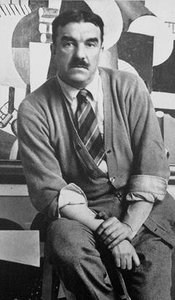
1881 - 1955 , フランス

Explore the profound impact of Minimalism and Geometric Abstraction. From Mondrian to Malevich, discover how stripping art to its essential forms revolutionized modern aesthetics through our expert-led historical guide.

Master the complexities of Geometric Abstraction. Our expert guide explores the evolution from Cubist deconstruction to Bauhaus precision, decoding the power of shape and form. Perfect for art students seeking deep historical context and academic insight into modern masterpieces.


最新の美術ニュース、限定オファー、そしてインテリアのアイデアをいち早くお届けします。
お客様のプロジェクトについてお聞かせください。当社の美術専門家が、お客様に合わせた3つのパーソナライズされた芸術提案をご提供いたします。
あなたにぴったりの3作品を無料で厳選いたします


 プレビュー
プレビュー
 プリントを購入
 シェアする
シェアする シェアする
シェアする
 詳細を見る
詳細を見る

 ダウンロード
 似ている作品
 X線調査
X線調査 スライドショー

 詳細を見る
詳細を見る









 ガラスオプションは、110cm未満のサイズでのみご利用いただけます。


