x
迅速な制作と多彩な仕上げオプションを備えた、ミュージアムクオリティのジークレーまたはキャンバスプリント。 ( 手描きの絵画を購入 画像を購入)





























作品のオリジナル比率に合わせた、当店の規定サイズからお選びください。

特定のフレームやスペースに合わせて、ご自身でサイズを指定することも可能です。選択されたサイズが元の画像の比率と一致しない場合、作品をトリミングするか、鏡面反射または単色での塗りつぶしによって画像を拡張いたします。制作を開始する前に、ご確認用のデジタルモックアップをお送りいたします。
画面上のプレビューには、実際のトリミングや拡張は反映されませんのでご注意ください。最終的な構図を正確に確認できるのは、モックアップのみとなります。
カスタムサイズも承っておりますが、元の比率を維持するためには、あらかじめ用意されたリストからサイズを選択することをお勧めいたします。

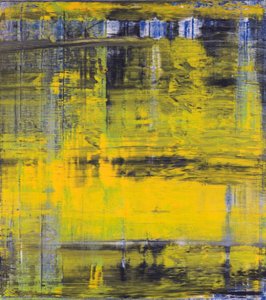
Untitled (167)
複製画のサイズ
Gerhard Richter's "Untitled (167)," a seemingly simple black and white photograph of a woman nursing her child, is far more than a portrait; it’s a profound exploration of memory, time, and the inherent ambiguity of representation. Created in an era deeply marked by division – Richter’s childhood unfolded under the shadow of post-war Germany and the subsequent rise of authoritarianism – the work speaks to a persistent sense of uncertainty and a questioning spirit that would become hallmarks of his artistic practice. This photograph, created around 1989, captures a tender yet subtly unsettling moment, inviting viewers to contemplate the fragility of human connection and the elusive nature of recollection.
Richter’s approach is characteristic of his broader oeuvre: he masterfully employs techniques borrowed from both photography and painting. The image itself isn't a direct reproduction but rather an interpretation, a distillation of memory through the lens of the camera. Richter frequently worked with photographs, often creating multiple versions of the same subject – a technique that highlights the subjective nature of visual perception. Here, he’s not simply documenting reality; he’s constructing a narrative, layering meaning onto a seemingly straightforward scene. The stark black and white palette further emphasizes this process, stripping away extraneous detail and focusing attention on form, texture, and the emotional weight of the figures.
A key element of Richter’s work – and particularly evident in “Untitled (167)” – is his use of absence. The background figures are deliberately vague, their identities obscured by distance and shadow. This deliberate lack of specificity forces the viewer to actively participate in constructing the scene, filling in the gaps with their own memories and associations. The woman’s gaze, fixed intently on her child, is both loving and distant, suggesting a complex mix of emotions – perhaps nostalgia, worry, or simply the quiet contemplation that accompanies motherhood. The baby's proximity to her chest isn’t merely a depiction of physical closeness; it symbolizes nourishment, protection, and the continuity of life.
Richter’s technique is deceptively simple. He utilizes a soft focus, characteristic of his ‘photorealistic’ period, lending the image an almost dreamlike quality. The subtle gradations of tone create a sense of depth and atmosphere, while the slightly blurred edges contribute to the feeling that we are glimpsing a memory rather than witnessing a concrete event. This blurring is not a flaw but a deliberate artistic choice, mirroring the imperfect nature of recollection itself – how memories fade, shift, and ultimately become reconstructions.
“Untitled (167)” was created during a period when Gerhard Richter's work began to be recognized for its exploration of the complexities of post-war Germany. His style, often described as “Capitalist Realism,” reflected the societal shifts and anxieties of the time. This approach involved creating paintings that mimicked the appearance of photographs but lacked their inherent truthfulness – a deliberate commentary on the increasing reliance on media and the manipulation of reality. The photograph’s quiet intimacy contrasts sharply with the grand narratives often associated with historical art, suggesting a focus on the individual experience within a broader context of societal change.
Richter's work during this period was deeply influenced by his personal history – his childhood experiences under Nazi rule and the subsequent division of Germany. The photograph’s sense of vulnerability and uncertainty can be interpreted as a reflection of this historical trauma, a quiet acknowledgment of the enduring impact of past events on the present.
Despite its subtle complexities, “Untitled (167)” ultimately offers a profoundly moving portrayal of human connection. The image transcends specific details and speaks to universal themes of love, care, and the passage of time. It’s a reminder that even in moments of quiet intimacy, there is always an element of mystery and ambiguity. Richter's masterful use of light, shadow, and composition creates a work that is both visually arresting and emotionally resonant – a testament to his enduring legacy as one of the most important artists of our time.

1932 - , ドイツ

Explore the profound artistry of black and white photography. From the chemistry of gelatin silver to the chiaroscuro of the Old Masters, discover how monochrome captures the eternal essence of light, form, and emotion for the discerning art collector.

Explore the profound history of documentary photography. From early daguerreotypes to social reform movements, discover how the lens captures truth, preserves vanishing cultures, and shapes our global visual narrative through an expert art-historical lens.


最新の美術ニュース、限定オファー、そしてインテリアのアイデアをいち早くお届けします。
お客様のプロジェクトについてお聞かせください。当社の美術専門家が、お客様に合わせた3つのパーソナライズされた芸術提案をご提供いたします。
あなたにぴったりの3作品を無料で厳選いたします


 プレビュー
プレビュー
 シェアする
シェアする シェアする
シェアする
 詳細を見る
詳細を見る

 ダウンロード
 似ている作品
 X線調査
X線調査 スライドショー
 詳細を見る
詳細を見る









 ガラスオプションは、110cm未満のサイズでのみご利用いただけます。