


x
迅速な制作と多彩な仕上げオプションを備えた、ミュージアムクオリティのジークレーまたはキャンバスプリント。 ( 手描きの絵画を購入 画像を購入)





























作品のオリジナル比率に合わせた、当店の規定サイズからお選びください。

特定のフレームやスペースに合わせて、ご自身でサイズを指定することも可能です。選択されたサイズが元の画像の比率と一致しない場合、作品をトリミングするか、鏡面反射または単色での塗りつぶしによって画像を拡張いたします。制作を開始する前に、ご確認用のデジタルモックアップをお送りいたします。
画面上のプレビューには、実際のトリミングや拡張は反映されませんのでご注意ください。最終的な構図を正確に確認できるのは、モックアップのみとなります。
カスタムサイズも承っておりますが、元の比率を維持するためには、あらかじめ用意されたリストからサイズを選択することをお勧めいたします。

Untitled (828)
複製画のサイズ
In the vast landscape of contemporary art, few works possess the ability to simultaneously anchor the viewer in reality and dissolve it into pure abstraction as effectively as Gerhard Richter’s Untitled (828). This evocative piece serves as a profound meditation on the nature of sight, presenting an image that feels like a half-remembered dream or a fading photograph from a lost era. At first glance, the eye seeks a recognizable subject—a human presence emerges from the depths of the canvas, a face partially veiled by layers of pigment. Yet, Richter deliberately resists this easy identification. Through a masterful manipulation of blue and black tones, he creates a composition that is both intimate and profoundly distant, making it an irresistible centerpiece for those who appreciate art that invites deep, contemplative inquiry.
The power of the work lies in its technical duality, a hallmark of Richter’s legendary career. Utilizing a process reminiscent of the photogram technique, the artist applies pigment to surfaces that bridge the gap between photographic precision and painterly spontaneity. In Untitled (828), this results in a textured surface where broad, sweeping brushstrokes seem to sweep across the figure like mist over water. This deliberate blurring does not merely obscure the subject; it transforms the human form into an emotional landscape. For the collector or interior designer, this technique offers a unique aesthetic advantage: the painting possesses a dynamic energy that changes depending on the light and the viewer's perspective, providing a sophisticated layer of movement to any curated space.
To truly appreciate the emotional weight of this work, one must look toward the turbulent history that shaped Richter’s gaze. Born in Dresden in 1932, Richter’s formative years were defined by the fractures of German history—the rise of National Socialism, the devastation of World War II, and the subsequent division of his homeland. These experiences of displacement and uncertainty are woven into the very fabric of Untitled (828). The way the figure is partially erased by amorphous strokes can be seen as a metaphor for the fragility of memory and the way trauma can obscure the clarity of our personal and collective pasts. There is a profound sense of absence within the painting; what is not shown is just as vital as what is visible.
This interplay between presence and disappearance creates an atmosphere of haunting ambiguity. The monochromatic palette, dominated by deep blacks and ethereal blues, evokes a nocturnal or underwater sensation, pulling the viewer into a quiet, introspective state. It is this very quality—the ability to evoke intense feeling without relying on explicit narrative—that makes Richter’s work so enduringly relevant. For those seeking to bring a sense of intellectual depth and emotional resonance to a room, Untitled (828) offers more than just visual beauty; it offers a window into the complexities of the human condition, making it a timeless acquisition for any serious collection.


1932 - , ドイツ
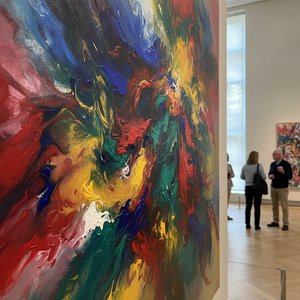
Explore the profound emotional depth of Lyrical Abstraction. Discover how masters like Raymond Parker used color and form to bridge Impressionism and Abstract Expressionism. Learn about this pivotal movement through our expert-led art history guide.

Explore the profound emotional depth of Color Field painting. Discover the history of mid-century abstraction, from Rothko to Newman, and learn how pure color transforms the viewer's experience through our expert art history guide.


最新の美術ニュース、限定オファー、そしてインテリアのアイデアをいち早くお届けします。
お客様のプロジェクトについてお聞かせください。当社の美術専門家が、お客様に合わせた3つのパーソナライズされた芸術提案をご提供いたします。
あなたにぴったりの3作品を無料で厳選いたします


 プレビュー
プレビュー
 シェアする
シェアする シェアする
シェアする
 詳細を見る
詳細を見る

 ダウンロード
 似ている作品
 X線調査
X線調査 スライドショー

 詳細を見る
詳細を見る









 ガラスオプションは、110cm未満のサイズでのみご利用いただけます。


