x
当社のアーティストが、お客様のご希望のサイズと額縁に合わせて、キャンバスに手描きで制作する油彩画です。 ( プリント版に切り替え 画像に切り替え)





























作品のオリジナル比率に合わせた、当店の規定サイズからお選びください。

特定のフレームやスペースに合わせて、ご希望のサイズをご入力いただけます。選択されたサイズが元の画像の比率と異なる場合、アートワークをトリミングするか、手描きで要素を追加して絵画を拡張いたします。デジタルモックアップ を制作し、制作開始前にご確認(承認)をいただきます。
画面上のプレビューは、実際のトリミングや拡張を正確に反映しているものではありません。最終的な構図は、モックアップによってのみ正確にご確認いただけます。
カスタムサイズもご利用いただけますが、元の比率を維持するためには、あらかじめ用意されたリストからサイズを選択することをお勧めいたします。

L'HIVER
複製画のサイズ
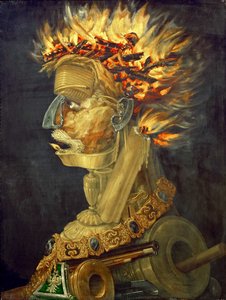
In the grand tapestry of the late Renaissance, few threads are as eccentric or as intellectually stimulating as those woven by Giuseppe Arcimboldo. His masterpiece, L'Hiver (Winter), is not merely a portrait but a profound visual riddle that challenges the very boundaries between humanity and the natural world. At first glance, the viewer is confronted with a face that seems to emerge from the earth itself—a weathered, elderly visage constructed entirely from the organic remnants of a cold season. This is the pinnacle of Mannerist ingenuity, where the artist transcends traditional portraiture to create a trompe-l'œil marvel that delights the eye and puzzles the mind.
The composition is a breathtaking feat of meticulous arrangement. Arcimboldo does not use brushstrokes to define a nose or an eye; instead, he utilizes the sculptural qualities of nature. A split tree stump forms the rugged structure of the face and neck, while tangled branches and creeping ivy create a wild, textured mane. Within this botanical architecture, subtle hints of life remain: a bright orange and a lemon provide rare flickers of warmth against the muted, earthy tones of the winter landscape. For the discerning collector or interior designer, this piece offers a captivating focal point that brings a sense of whimsical sophistication and intellectual depth to any curated space.
Beyond its surface-level trickery, L'Hiver is steeped in the complex allegories favored by the 16th-century European courts. Created around 1573, likely as part of a series celebrating the four seasons, the work served as a sophisticated tribute to the Habsburg Emperor Maximilian II. The painting functions as an esoteric metaphor for the cyclical nature of power and time; just as winter precedes the rebirth of spring, the emperor’s reign is presented as an eternal force that transcends the decay of the seasons. The inclusion of specific elements, such as the ivy representing fidelity or the heraldic swords on the collar, invites a deeper, more scholarly engagement with the canvas.
The emotional resonance of the work lies in its duality. There is a playful, almost humorous quality to seeing a human countenance rendered through mushrooms, roots, and dried fruits, yet there is also a poignant sense of mortality. The textures—ranging from the rough, desiccated bark to the smooth, waxy skin of citrus—evoke the sensory experience of the season itself. It is an artwork that demands slow contemplation, rewarding those who linger with new discoveries hidden within its layers of organic detail.
For those seeking to adorn a home or gallery with art that sparks conversation, a high-quality reproduction of L'Hiver offers an unparalleled opportunity. The painting’s unique palette of deep greens, ochres, and rich browns allows it to integrate seamlessly into diverse interior styles, from classical European aesthetics to contemporary eclectic decors. It serves as more than decoration; it is an invitation to wonder.
Owning a piece that embodies Arcimboldo's mastery of trompe-l'œil means possessing a fragment of art history’s most imaginative era. Whether viewed as a triumph of botanical precision or a surrealist precursor, L'Hiver remains an enduring icon of creativity, making it an essential acquisition for anyone who appreciates the intersection of nature, science, and fine art.

1527 - 1593 , イタリア

Explore the rich history of still life painting & the symbolism of fruit across art movements. Discover masterpieces from Caravaggio to Cézanne with Most-Famous-Paintings – expert guidance & museum-quality reproductions.

Explore the rich history & symbolism of still life painting with Most-Famous-Paintings. Discover masterpieces from the Dutch Golden Age, learn about vanitas art, and find expert guidance for collecting timeless artworks.

Explore the captivating world of Severin Roesen, a major American still life painter influenced by Dutch masters. Discover his lush compositions and the symbolism within his art – a window into 19th-century America.

ルネサンスから現代アートまで、高品質な美術複製をMost-Famous-Paintings.comで。静物画、ヴァニタス、抽象絵画など、ヴィラ空間を格上げする一点を見つけましょう。カスタムメイドやアートアドバイザーによる無料相談も。

Explore the evolution of contemplation in Western art from Renaissance masters to Modernism. Discover iconic artworks & find museum-quality reproductions at Most-Famous-Paintings.


最新の美術ニュース、限定オファー、そしてインテリアのアイデアをいち早くお届けします。
お客様のプロジェクトについてお聞かせください。当社の美術専門家が、お客様に合わせた3つのパーソナライズされた芸術提案をご提供いたします。
あなたにぴったりの3作品を無料で厳選いたします


 シェアする
シェアする シェアする
シェアする
 詳細を見る
詳細を見る

 ダウンロード
 似ている作品
 スライドショー


 詳細を見る
詳細を見る









 ガラスオプションは、110cm未満のサイズでのみご利用いただけます。