


x





























作品のオリジナル比率に合わせた、当店の規定サイズからお選びください。

特定のフレームやスペースに合わせて、ご希望のサイズをご入力いただけます。選択されたサイズが元の画像の比率と異なる場合、アートワークをトリミングするか、手描きで要素を追加して絵画を拡張いたします。デジタルモックアップ を制作し、制作開始前にご確認(承認)をいただきます。
画面上のプレビューは、実際のトリミングや拡張を正確に反映しているものではありません。最終的な構図は、モックアップによってのみ正確にご確認いただけます。
カスタムサイズもご利用いただけますが、元の比率を維持するためには、あらかじめ用意されたリストからサイズを選択することをお勧めいたします。

erasmus
複製画のサイズ
Hans Holbein the Younger's “Portrait of Erasmus of Rotterdam,” painted around 1523, isn’t merely a likeness; it’s an intimate glimpse into the soul of one of the most influential humanists of his time. This remarkable work transcends simple portraiture, offering a profound meditation on scholarship, contemplation, and the very act of creation. The painting immediately draws the viewer in with its remarkably realistic depiction of Erasmus, a man whose intellectual pursuits shaped the course of European thought. Holbein’s skill isn't just evident in the meticulous rendering of wrinkles and textures – the slightly furrowed brow, the subtle sag beneath the chin – but also in his ability to convey a sense of profound concentration.
The scene unfolds within an interior setting, subtly suggesting Erasmus’s scholarly world. A tapestry depicting fantastical flora and beasts hints at the vastness of classical knowledge he sought to master. The wooden paneling, a hallmark of Renaissance interiors, anchors the composition while simultaneously drawing attention to the central figure. Crucially, Holbein doesn't present Erasmus as an aloof sage; instead, he captures him actively engaged in his work – poised over a writing desk, quill in hand, immersed in the process of intellectual labor. This dynamic pose is revolutionary for its time, moving away from static depictions of learned men and offering a more relatable image of the scholar at work.
Erasmus himself was a pivotal figure in the burgeoning humanist movement, advocating for a return to classical learning and a critical examination of religious dogma. His “Annotations on the New Testament,” groundbreaking works that championed textual accuracy and ethical reasoning, profoundly impacted the Reformation. Holbein’s portrait perfectly embodies this humanist ideal – Erasmus is presented as an individual driven by reason, intellect, and a deep engagement with the world of ideas. The open book on the desk, likely containing excerpts from his own writings, further reinforces this connection to scholarship.
The inclusion of the Latin couplet, “I am Johannes (i.e. Hans) Holbein, whom it is easier to denigrate than to emulate,” inscribed on the back of the panel, adds a layer of self-awareness and playful irony. It’s a subtle acknowledgment of Holbein's own artistic prowess and a testament to the enduring challenge of capturing true likeness. This inscription also highlights the reciprocal relationship between artist and subject – Erasmus recognized Holbein’s skill while simultaneously acknowledging the difficulty in replicating his essence.
Holbein's mastery is immediately apparent in the painting’s technical execution. The use of oil paint on wood allows for incredible detail, depth, and luminosity. Notice the subtle gradations of light and shadow that model Erasmus’s face, creating a sense of volume and realism. The artist employs *sfumato*, a technique borrowed from Leonardo da Vinci, to soften edges and create an atmospheric effect, lending the portrait a sense of immediacy and intimacy.
Furthermore, Holbein demonstrates remarkable attention to texture – the rough weave of the fur collar, the sheen of the leather-bound book, the delicate brushstrokes that capture the quill’s point. These details elevate the painting beyond mere representation, transforming it into a tangible embodiment of Erasmus's world and his intellectual pursuits. The presence of *pentimenti*—evidence of alterations made during the painting process—further underscores Holbein’s meticulous approach and his willingness to refine his work until it perfectly captured the subject’s essence.
“Portrait of Erasmus of Rotterdam” remains a powerful testament to the enduring legacy of Renaissance humanism. It's more than just a beautiful painting; it’s a window into the mind of a brilliant scholar and a celebration of the pursuit of knowledge. The portrait’s continued appeal lies in its ability to evoke a sense of intellectual curiosity, quiet contemplation, and the profound connection between art and ideas. Reproductions of this iconic work offer a chance to bring this timeless image into any space, serving as a constant reminder of the power of human intellect and the beauty of artistic expression.

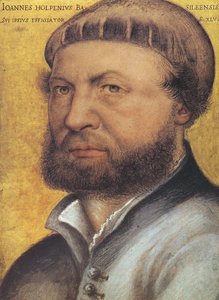
1497 - 1543 , イタリア

Explore the hidden secrets of Old Master paintings. Discover how X-ray radiography and infrared reflectography reveal pentimenti, hidden portraits, and the original sketches beneath the surface of history's greatest masterpieces.


最新の美術ニュース、限定オファー、そしてインテリアのアイデアをいち早くお届けします。
お客様のプロジェクトについてお聞かせください。当社の美術専門家が、お客様に合わせた3つのパーソナライズされた芸術提案をご提供いたします。
あなたにぴったりの3作品を無料で厳選いたします


 プレビュー
プレビュー
 プリントを購入
 シェアする
シェアする シェアする
シェアする
 詳細を見る
詳細を見る

 ダウンロード
 似ている作品
 X線調査
X線調査 スライドショー

 詳細を見る
詳細を見る









 ガラスオプションは、110cm未満のサイズでのみご利用いただけます。


![ジャン・ド・ダンティヴィルとジョルジュ・ド・セルヴの二重肖像画(別名:大使たち)[細部]](/media/artworks/images-thumb/bb/ab/bbab7ce77b7dd15d23d21114a63b51a4.jpg)

![ジャン・ド・ダンティヴィルとジョルジュ・ド・セルヴの二重肖像画(別名『大使たち』)[細部]](/media/artworks/images-thumb/42/81/42813dc49b2f72bce897aaf8b747ad5b.jpg)

