x
 1927
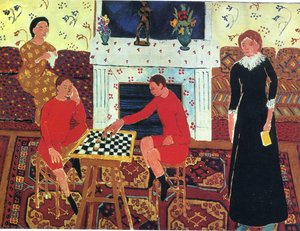
1927 62.0 x 75.0 cm
作品のオリジナル比率に合わせた、当店の規定サイズからお選びください。

特定のフレームやスペースに合わせて、ご希望のサイズをご入力いただけます。選択されたサイズが元の画像の比率と異なる場合、アートワークをトリミングするか、手描きで要素を追加して絵画を拡張いたします。デジタルモックアップ を制作し、制作開始前にご確認(承認)をいただきます。
画面上のプレビューは、実際のトリミングや拡張を正確に反映しているものではありません。最終的な構図は、モックアップによってのみ正確にご確認いただけます。
カスタムサイズもご利用いただけますが、元の比率を維持するためには、あらかじめ用意されたリストからサイズを選択することをお勧めいたします。

The Chess Board
複製画のサイズ

Herbert Ashwin Budd (1881–1950) was an artist whose brush captured the very essence of a changing England, weaving together the quiet dignity of portraiture with the atmospheric vitality of the British landscape. Born in the industrial heart of Staffordshire, specifically at Ford Green, Smallthorne, Budd’s early life was rooted in a landscape that would later inform his deep appreciation for texture and tonal depth. His journey from a promising student at the Hanley School of Art to a respected figure in the London art scene is a testament to a lifelong devotion to the craft of oil painting. As he progressed through the prestigious halls of the Royal College of Art, where he was an associate from 1907, Budd began to refine a style that balanced the meticulous detail of classical traditions with the burgeoning sensibilities of modern impressionism.
The trajectory of his career was marked by both academic rigor and a profound connection to the pulse of London life. His service as a Lance Corporal in the Royal Engineers during the First World War provided a somber interlude to his creative development, yet the resilience forged in those years seemed to deepen the emotional resonance of his later works. Upon returning to civilian life, Budd established himself as a dual force in the art world: a prolific creator and an influential educator. For over two decades, from 1929 until his retirement, he shared his mastery at St Martin's School of Art, shaping the next generation of British painters while simultaneously contributing to the vibrant visual culture of the capital through his commercial and fine art endeavors.
Budd’s artistic language was one of subtle nuance, heavily influenced by the Impressionist masters who sought to capture the ephemeral nature of light. One can trace the echoes of Claude Monet in his ability to render atmosphere, yet there remains a distinct English character in his work, perhaps a nod to the idealized classical beauty championed by Frederic Leighton. This synthesis allowed him to move seamlessly between subjects; he could evoke the soft, hazy mood of a field of Lavender or capture the bustling, gritty charm of urban life. His command over tonal gradation is particularly evident in his celebrated depictions of London’s street life, such as Piccadilly Flower Sellers, where the play of light on petals and fabric creates a sense of lived-in reality.
Beyond the canvas, Budd’s versatility extended into the realm of graphic design, most notably through his commissions for London Transport during the 1930s. These posters required a different kind of precision—a way to communicate movement and destination through striking, legible imagery—yet they remained infused with his painterly sensibility. His ability to bridge the gap between high art and public utility solidified his reputation as an artist who was deeply integrated into the social fabric of his time.
The significance of Herbert Ashwin Budd lies not only in the beauty of his individual compositions but in his role as a chronicler of the Edwardian and interwar periods. His membership in prestigious institutions such as the Royal Institute of Oil Painters, the New Society of Artists, and the New English Art Club placed him at the center of the British art establishment. The accolades he received, including an Honourable Mention at the 1927 Paris Salon, reflect a talent that resonated far beyond the borders of London.
Today, his legacy is preserved in several esteemed collections, ensuring that his vision of a bygone era continues to inspire:
Through his portraits, landscapes, and designs, Budd remains a vital link to the artistic spirit of the early 20th century, reminding us of a time when the painter's eye was essential in capturing the fleeting beauty of the everyday.

1881 - 1950


最新の美術ニュース、限定オファー、そしてインテリアのアイデアをいち早くお届けします。
お客様のプロジェクトについてお聞かせください。当社の美術専門家が、お客様に合わせた3つのパーソナライズされた芸術提案をご提供いたします。
あなたにぴったりの3作品を無料で厳選いたします


 プレビュー
プレビュー
 プリントを購入
 シェアする
シェアする シェアする
シェアする
 詳細を見る
詳細を見る

 ダウンロード
 似ている作品
 X線調査
X線調査 スライドショー
 詳細を見る
詳細を見る






































 ガラスオプションは、110cm未満のサイズでのみご利用いただけます。