x
迅速な制作と多彩な仕上げオプションを備えた、ミュージアムクオリティのジークレーまたはキャンバスプリント。 ( 手描きの絵画を購入 画像を購入)





























作品のオリジナル比率に合わせた、当店の規定サイズからお選びください。

特定のフレームやスペースに合わせて、ご自身でサイズを指定することも可能です。選択されたサイズが元の画像の比率と一致しない場合、作品をトリミングするか、鏡面反射または単色での塗りつぶしによって画像を拡張いたします。制作を開始する前に、ご確認用のデジタルモックアップをお送りいたします。
画面上のプレビューには、実際のトリミングや拡張は反映されませんのでご注意ください。最終的な構図を正確に確認できるのは、モックアップのみとなります。
カスタムサイズも承っておりますが、元の比率を維持するためには、あらかじめ用意されたリストからサイズを選択することをお勧めいたします。

Seashore.
複製画のサイズ
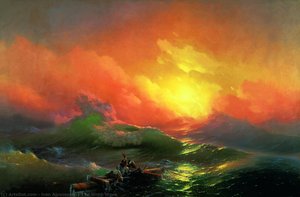
Ivan Konstantinovich Aivazovsky's "Seashore," painted in 1840, isn’t merely a depiction of a seascape; it’s an immersive experience, a visceral journey into the heart of the Black Sea. More than just a landscape, this work represents a pivotal moment in Russian art – a shift towards Romanticism deeply influenced by Aivazovsky's profound connection to the ocean. Born in Feodosia, Crimea, a city intrinsically linked to the sea through its maritime history and turbulent geopolitical shifts, Aivazovsky’s entire life was shaped by its moods, its power, and its relentless beauty. He didn’t simply paint what he saw; he painted what he felt – the salty spray on his face, the rumble of distant storms, the ethereal glow of twilight reflecting off the waves.
The painting itself is a masterclass in atmospheric perspective and color theory. Aivazovsky expertly utilizes a muted palette dominated by deep blues, greens, and grays, punctuated by flashes of white foam and the warm ochre of distant cliffs. The sky isn’t a uniform expanse; it's layered with swirling clouds, rendered with delicate brushstrokes that capture the dynamic movement of the atmosphere. Notice how he employs a technique known as ‘sfumato,’ blurring the edges of objects to create an illusion of depth and distance – the boats become almost spectral, swallowed by the vastness of the sea. This masterful use of light and shadow isn’t just aesthetic; it serves to evoke a sense of drama and impending change.
“Seashore” is a quintessential example of Russian Romanticism, a movement that prioritized emotion, individualism, and the power of nature. Unlike earlier Neoclassical depictions of the sea as a symbol of order and reason, Aivazovsky presents it as an untamed force – both beautiful and terrifying. The painting embodies the concept of the ‘sublime,’ a term coined by Edmund Burke to describe experiences that inspire awe and terror simultaneously. The sheer scale of the ocean, combined with the suggestion of an approaching storm, creates a feeling of vulnerability and insignificance in the face of nature’s grandeur.
The inclusion of several sailing vessels adds another layer of complexity. These aren't heroic explorers charting new territories; they are humble boats, dwarfed by the immensity of the sea. They represent humanity’s fleeting presence within this vast and ancient realm. The placement of these small figures on the horizon subtly underscores the insignificance of human endeavors against the backdrop of nature’s enduring power.
Aivazovsky revolutionized marine painting through his innovative technique, largely developed in his studio in Feodosia. He meticulously prepared his canvases with a special mixture of oil and turpentine to create a smooth, absorbent surface – crucial for achieving the luminous effects he so expertly employed. He often worked *en plein air* (outdoors) for extended periods, directly observing the sea’s changing light and color. This direct engagement informed every brushstroke, resulting in an unparalleled sense of immediacy and authenticity.
Furthermore, Aivazovsky was a pioneer in using layering techniques to build up his paintings gradually, applying thin glazes of paint over previous layers to create depth and luminosity. This painstaking process, combined with his mastery of color mixing, allowed him to capture the subtle nuances of light reflecting off the water’s surface – a feat that had previously eluded most artists.
“Seashore” is more than just a beautiful painting; it's a meditation on humanity’s relationship with nature, a reflection on the power of memory, and an exploration of the human condition. The painting’s enduring appeal lies in its ability to evoke a profound emotional response – a sense of wonder, awe, and perhaps even a touch of melancholy. It speaks to our primal connection to the sea, a force that has shaped civilizations and inspired countless artists throughout history.
Aivazovsky's influence on subsequent generations of marine painters is undeniable. His work continues to captivate viewers today, reminding us of the beauty and power of the natural world and the enduring legacy of one of Russia’s greatest artistic masters. Reproductions like this offer a remarkable opportunity to bring this iconic image into your home, allowing you to experience the magic of Aivazovsky's vision firsthand.


1817 - 1900 , ロシア

Explore the profound evolution of Russian art, from Imperial grandeur and religious icons to the radical geometric revolution of Malevich and the Avant-Garde. Discover a journey through history, soul, and the enduring legacy of Russia's greatest masterpieces.


最新の美術ニュース、限定オファー、そしてインテリアのアイデアをいち早くお届けします。
お客様のプロジェクトについてお聞かせください。当社の美術専門家が、お客様に合わせた3つのパーソナライズされた芸術提案をご提供いたします。
あなたにぴったりの3作品を無料で厳選いたします


 プレビュー
プレビュー
 シェアする
シェアする シェアする
シェアする
 詳細を見る
詳細を見る

 ダウンロード
 似ている作品
 X線調査
X線調査 スライドショー


 詳細を見る
詳細を見る









 ガラスオプションは、110cm未満のサイズでのみご利用いただけます。