


x





























作品のオリジナル比率に合わせた、当店の規定サイズからお選びください。

特定のフレームやスペースに合わせて、ご希望のサイズをご入力いただけます。選択されたサイズが元の画像の比率と異なる場合、アートワークをトリミングするか、手描きで要素を追加して絵画を拡張いたします。デジタルモックアップ を制作し、制作開始前にご確認(承認)をいただきます。
画面上のプレビューは、実際のトリミングや拡張を正確に反映しているものではありません。最終的な構図は、モックアップによってのみ正確にご確認いただけます。
カスタムサイズもご利用いただけますが、元の比率を維持するためには、あらかじめ用意されたリストからサイズを選択することをお勧めいたします。

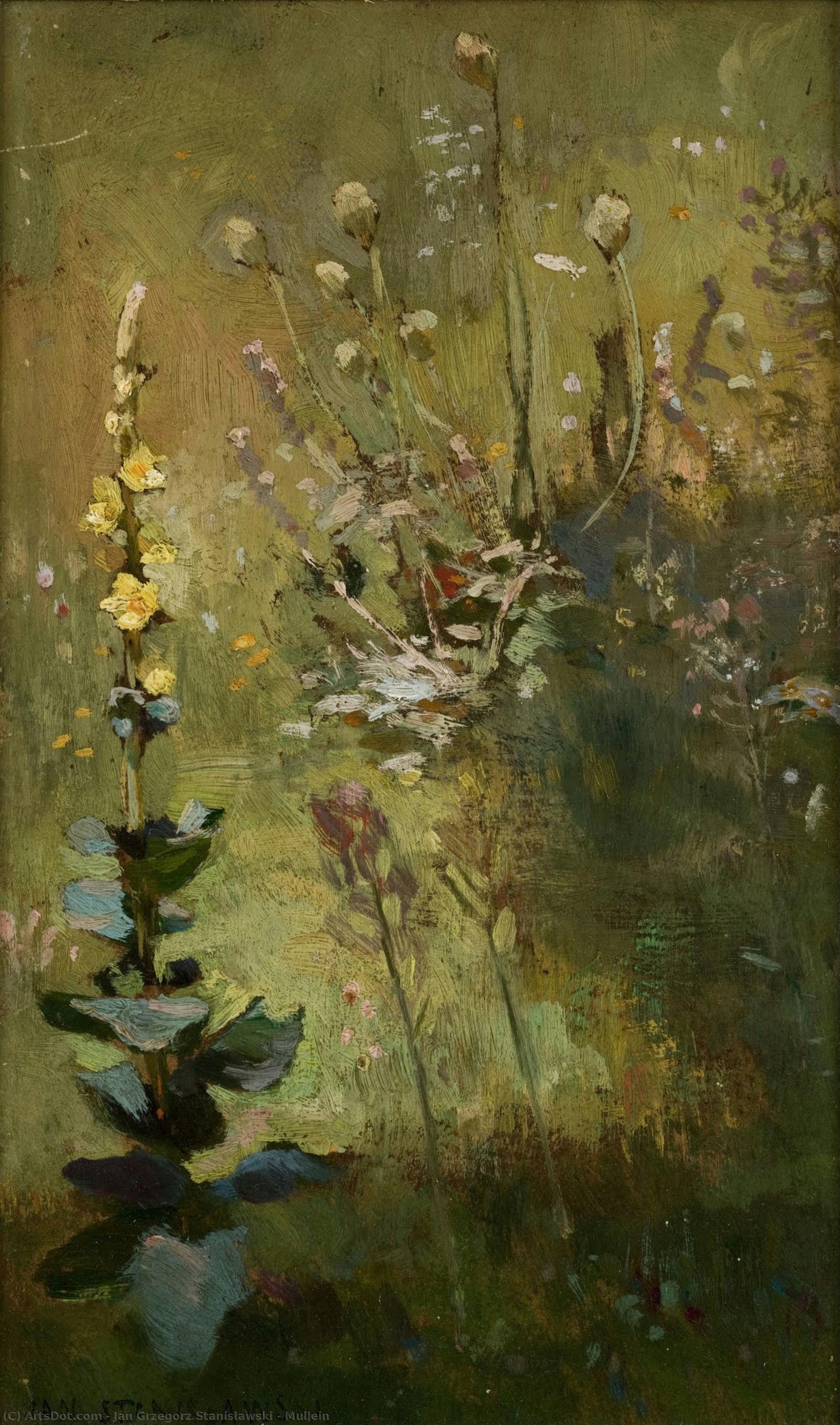
Mullein
複製画のサイズ

Jan Grzegorz Stanisławski stands as a pivotal figure in the burgeoning landscape art scene of Poland at the turn of the century, a master who breathed life into the very atmosphere of his homeland. Born in 1860 in Velsk, Russia, his path to artistic greatness was unexpectedly paved by a foundation in mathematics. This early intellectual rigor provided him with a unique lens through which to view the world, allowing him to approach the canvas with a precise understanding of structure and light, even as he surrendered himself to the fluid emotions of painting. His decisive embrace of art was fueled by formative encounters with masters such as Wojciech Gerson and Charles Emile Auguste Durand, mentors who helped transform his scientific observation into a profound aesthetic sensibility.
His formal education began at the Warsaw School of Fine Arts under the guidance of Gerson, a celebrated figure whose influence instilled in Stanisławski a deep reverence for capturing the true essence of nature. Seeking to expand his horizons beyond the borders of Poland, he pursued studies at the Imperial Technical Institute in St Petersburg and later immersed himself in the vibrant, revolutionary artistic currents of Paris. It was in the heart of France that he encountered the shimmering light of Impressionism and the flowing, organic lines of Art Nouveau. These international experiences equipped him with an invaluable toolkit, allowing him to translate fleeting visual impressions into enduring works of art that resonated with both modern innovation and classical beauty.
The canvases of Stanisławski pulsate with a rhythmic vitality, reflecting a masterful command of Impressionist principles while subtly weaving in the delicate ornamentation characteristic of Art Nouveau. His oeuvre is dominated by landscapes that do more than merely represent terrain; they evoke a sense of place through the manipulation of color and atmosphere. He possessed a singular ability to render the misty valleys of the Tatra Mountains, bathing them in golden sunlight or shrouding them in the soft, melancholic hues of twilight. His palette favored harmonious blends of colors, prioritizing atmospheric perspective to create a sense of depth that draws the viewer into a world of tranquility and wonder.
Beyond the grand vistas, Stanisławski found profound beauty in the intimate details of the natural world. His still lifes and smaller-scale studies demonstrate a meticulous attention to detail, where every petal and shadow contributes to a larger narrative of existence. The recurring motifs of his work—panoramic alpine scenery, sun-drenched meadows, and quiet, contemplative corners of nature—serve as a testament to his devotion to the landscape as a living, breathing entity. His technique, echoing the stylistic innovations of Durand, allowed him to capture the ephemeral quality of light, making the static medium of oil paint feel as transient and moving as a passing breeze.
The historical significance of Jan Stanisławski extends far beyond his individual technical achievements; he was a cornerstone of the Polish modernist movement. As a leading figure in influential art groups such as Sztuka, he helped foster a collective identity for Polish artists, bridging the gap between local traditions and the broader European avant-garde. His work provided a visual language for a nation seeking to define its cultural essence during a period of profound political and social change.
Today, Stanisławski is remembered not just as a painter of landscapes, but as a pioneer who redefined the boundaries of Polish Impressionism. His ability to blend scientific precision with emotive expression remains a hallmark of his greatness. The enduring legacy of his work can be seen in:
Through his eyes, the mountains were not merely stone and snow, but vessels of light and spirit, ensuring that his vision of the Polish landscape remains eternally vibrant in the annals of art history.

1860 - 1907 , Russia

Explore the profound intersection of science and beauty in botanical illustration. From ancient herbals to Renaissance masters, discover the history, technical mastery, and enduring elegance of nature's most precise artistic records.


最新の美術ニュース、限定オファー、そしてインテリアのアイデアをいち早くお届けします。
お客様のプロジェクトについてお聞かせください。当社の美術専門家が、お客様に合わせた3つのパーソナライズされた芸術提案をご提供いたします。
あなたにぴったりの3作品を無料で厳選いたします


 プレビュー
プレビュー
 プリントを購入
 シェアする
シェアする シェアする
シェアする
 詳細を見る
詳細を見る

 ダウンロード
 似ている作品
 X線調査
X線調査 スライドショー


 詳細を見る
詳細を見る









 ガラスオプションは、110cm未満のサイズでのみご利用いただけます。


