


x
 Acrylic On CanvasWallArtBaroque Painting
 1703
1703 345.0 x 206.0 cm
 アルテ・ピナコテーク
オンラインプレビューをはるかに凌ぐ、高解像度で鮮明なデジタル画像をご購入いただけます。
各ファイルは、社内の専門家が高度なツールと熟練した手作業によるレタッチを用いて、細心の注意を払って準備されています。すべての画像において、卓越した鮮明度、正確な色彩再現性、そして繊細なディテールを保証いたします。
最終ファイルは、プロフェッショナルな編集・印刷環境ですぐにご利用いただけるよう最適化された状態で、72時間以内にメールにてお届けいたします。これは、一流のデザインスタジオ、出版社、ギャラリーから信頼されているものと同等の品質です。
Most-Famous-Paintings.com を選ぶことは、単に画像を手に入れることではありません。それは、プロの手によって精密に仕上げられ、満足保証が付いた高品質なデジタルアートワークを受け取ることを意味します。ご注文いただいた際に自動的に付随する内容は、以下の通りです:

ご注文から72時間以内に、高解像度のデジタル画像ファイルがメールでお手元に届きます。すぐにそのままご利用いただけます。

お客様の作品は、高度なAIツールと専門家による手作業の編集を組み合わせてプロフェッショナルに最適化されており、細部のディテール、鮮明さ、そして正確な色再現性を最大限に引き出しています。

ファイルを誤って削除したり、紛失してしまったりしましたか?ご安心ください。いつでも無料で再送いたします。

関税や手数料、配送料を気にすることなく、お気に入りのアートワークをすぐにお楽しみいただけます。デジタルダウンロードは常に免税です。

プロ仕様のツールとカラーマネジメント技術を用いることで、デジタル画像が元の色を最大限に忠実に再現することを保証いたします。

ご購入いただいたデジタル画像にご満足いただけない場合は、60日以内であれば、修正または100%の返金(理由を問う必要はありません)をさせていただきます。

ご満足いただけない場合は、デジタルファイルを受け取ってから60日以内であれば、理由を問わず全額返金いたします。

3枚購入で10%OFF - 5枚購入で15%OFF - 10枚以上購入で20%OFF。クリエイティブなプロジェクト、ギャラリー、エージェンシーに最適です。
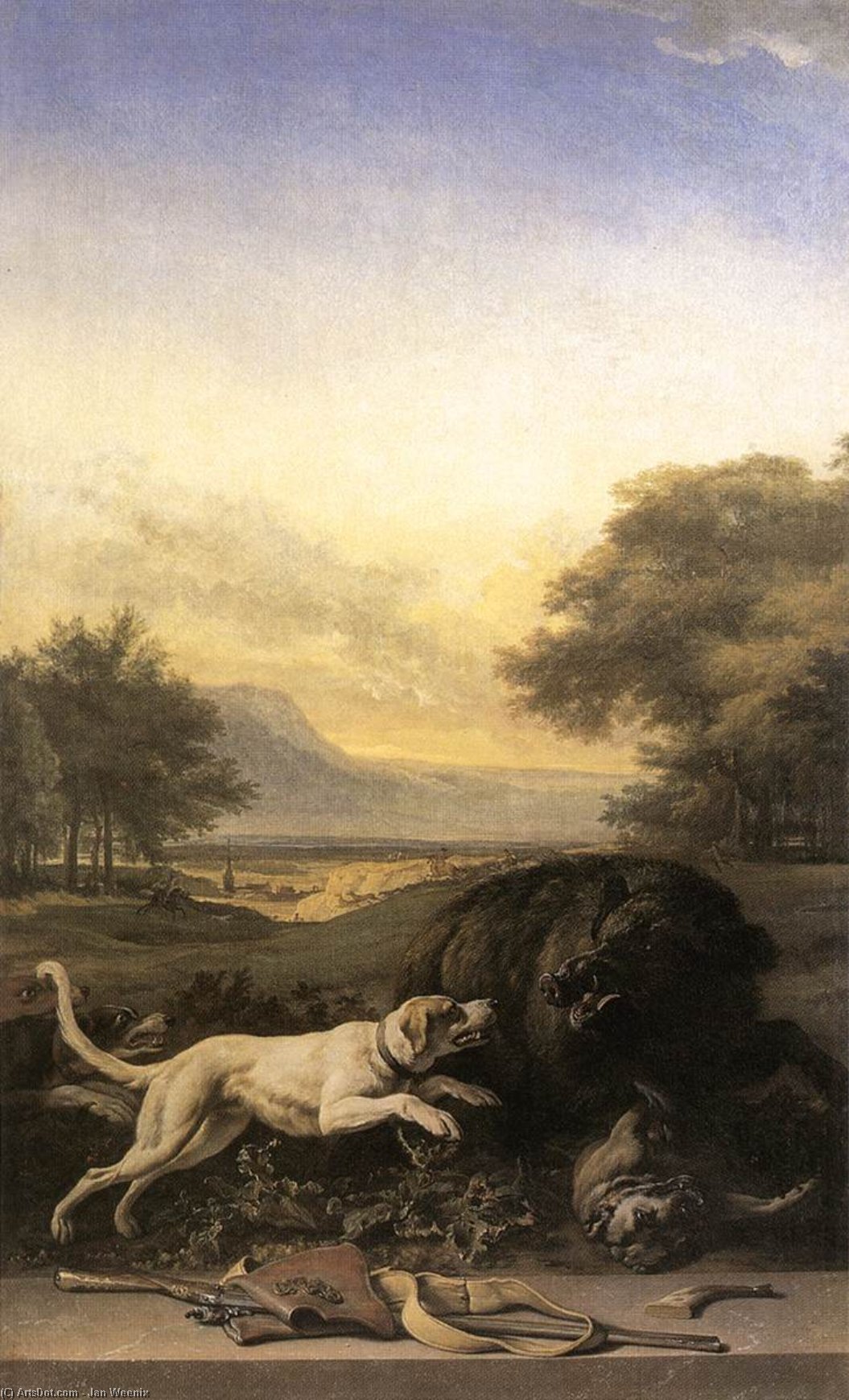
Jan Weenix's "Boar Hunt," painted around 1703, isn’t merely a depiction of a hunt; it’s a meticulously crafted tableau of primal instinct, stoic heroism, and the fleeting beauty of a dramatic moment. This remarkable work, housed within the walls of a museum setting – subtly suggested by the diffused lighting and reflective glass – transports us to a world where man and beast engage in a timeless dance of pursuit and consequence. Weenix, a master of Dutch Baroque realism, elevates the commonplace subject of hunting into an exercise in profound observation and emotional resonance.
The scene unfolds with startling clarity. A magnificent boar, sprawled on its back in a posture of defeated grandeur, dominates the right side of the composition. Its thick hide, rendered with astonishing detail – each bristling hair meticulously captured – speaks to both its formidable power and its imminent demise. Beside it lies a smaller animal, likely a hare or rabbit, adding a layer of poignant vulnerability to the tableau. To the left, a hunting dog, a breed known for its keen tracking abilities, stands poised, either actively pursuing or having just completed its task. The dog’s posture is one of focused intensity, mirroring the boar's own struggle. The background landscape—rolling hills and scattered trees—provides a sense of depth and reinforces the feeling that this event unfolds within a vast, untamed wilderness.
Weenix’s mastery lies in his ability to fuse meticulous realism with an underlying sense of drama. He employs a technique deeply rooted in the Dutch Golden Age, characterized by its careful observation of light and shadow – *chiaroscuro*—to sculpt form and create a palpable atmosphere. Notice how the light catches on the boar's hide, highlighting its texture and musculature, while simultaneously casting deep shadows that emphasize its vulnerability. The artist’s use of color is restrained yet effective; earthy tones dominate, punctuated by the rich browns and reds of the animal’s fur and the subtle greens of the landscape. This palette contributes to a sense of groundedness and authenticity.
The composition itself is carefully balanced, drawing the eye across the scene with a deliberate rhythm. The placement of the animals—the dominant boar on one side, the pursuing dog on the other—creates a dynamic tension that mirrors the hunt’s inherent drama. Furthermore, Weenix's attention to detail extends beyond mere representation; he captures not just the physical appearance of the animals but also their expressions – the boar’s defiant stance, the dog’s focused gaze – imbuing them with a sense of life and personality.
The “Boar Hunt” is rich in symbolic meaning. The hunt itself represents the human desire for mastery over nature, a theme that resonated deeply within the context of 17th-century Europe. However, Weenix doesn’t glorify this pursuit; instead, he presents it with a sobering awareness of mortality and consequence. The fallen boar, lying vulnerable on its back, serves as a potent reminder of the inevitability of death. The dog's role highlights the relationship between hunter and prey, emphasizing the cycle of life and death that governs the natural world.
Moreover, the scene can be interpreted as an allegory for human ambition and the pursuit of glory. The hunters, driven by a desire to prove their skill and courage, engage in a dangerous undertaking with uncertain outcomes. The success of the hunt—represented by the fallen boar—is ultimately tempered by the knowledge that it comes at a cost.
Reproductions of “Boar Hunt” offer a remarkable opportunity to bring this masterpiece into any setting, from a grand salon to a more intimate space. The meticulous detail and evocative atmosphere of the original are faithfully reproduced, allowing viewers to appreciate Weenix’s artistic skill and his profound understanding of human nature. When displayed, consider framing the artwork in a manner that complements its rich colors and dramatic composition. The subdued lighting suggested by the museum setting can be replicated through strategic use of ambient light or accent lighting, further enhancing the work's impact.
Ultimately, “Boar Hunt” is more than just a painting; it’s a window into a bygone era—a testament to the enduring power of art to capture both the beauty and the brutality of the natural world. It invites contemplation on themes of mortality, ambition, and the complex relationship between humanity and its environment.


1641 - 1719 , オランダ


最新の美術ニュース、限定オファー、そしてインテリアのアイデアをいち早くお届けします。
お客様のプロジェクトについてお聞かせください。当社の美術専門家が、お客様に合わせた3つのパーソナライズされた芸術提案をご提供いたします。
あなたにぴったりの3作品を無料で厳選いたします


 プレビュー
プレビュー
 プリントを購入
 シェアする
シェアする シェアする
シェアする
 詳細を見る
詳細を見る

 ダウンロード
 似ている作品
 X線調査
X線調査 スライドショー
 詳細を見る
詳細を見る


