


x
 Oil On CanvasWallArtBaroque
 1668Early Modern
 111.0 x 99.0 cm
 Residenzgalerie
当社のアーティストが、お客様のご希望のサイズと額縁に合わせて、キャンバスに手描きで制作する油彩画です。 ( プリント版に切り替え 画像に切り替え)





























作品のオリジナル比率に合わせた、当店の規定サイズからお選びください。

特定のフレームやスペースに合わせて、ご希望のサイズをご入力いただけます。選択されたサイズが元の画像の比率と異なる場合、アートワークをトリミングするか、手描きで要素を追加して絵画を拡張いたします。デジタルモックアップ を制作し、制作開始前にご確認(承認)をいただきます。
画面上のプレビューは、実際のトリミングや拡張を正確に反映しているものではありません。最終的な構図は、モックアップによってのみ正確にご確認いただけます。
カスタムサイズもご利用いただけますが、元の比率を維持するためには、あらかじめ用意されたリストからサイズを選択することをお勧めいたします。

The Prodigal Son
複製画のサイズ
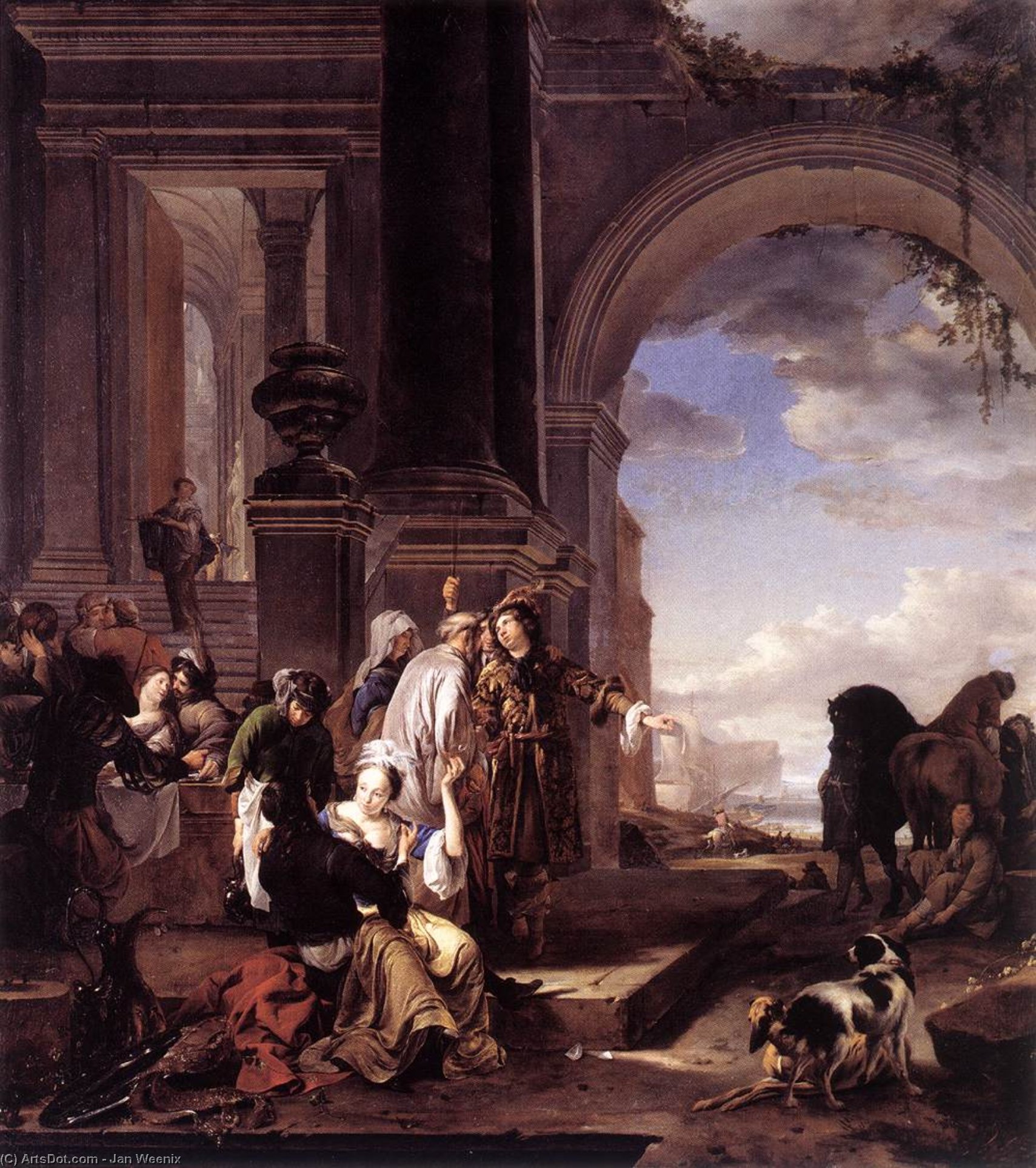
In the profound depths of Jan Weenix’s 1668 masterpiece, The Prodigal Son, viewers are transported into a world of intense theatricality and raw human emotion. This classical oil painting serves as a breathtaking window into the Baroque era, capturing a moment of profound vulnerability and communal grief. The composition is masterfully orchestrated, drawing the eye through a complex arrangement of figures gathered around a fallen protagonist. Set against the evocative backdrop of an architectural ruin, the scene utilizes a powerful arched doorway to create a sense of immense depth, pulling the observer into the very heart of the tragedy. The interplay of light and shadow—a hallmark of the period—casts a dramatic glow upon the central figures, highlighting the textures of weathered stone and the heavy folds of drapery, while plunging the periphery into mysterious, somber shadows.
The technical prowess displayed in this work reflects the pinnacle of Dutch Golden Age skill. Weenix employs a sophisticated layering technique, utilizing glazes to achieve a luminous quality that breathes life into skin tones and the rich, earthy palette of ochres, deep reds, and warm browns. Every brushstroke serves a purpose, from the delicate rendering of facial expressions caught in moments of anguish to the more vigorous, textured applications used to define the decaying masonry of the ruins. This meticulous attention to detail creates a tactile experience for the viewer, where the smoothness of fine silk contrasts sharply with the rugged, crumbling edges of the ancient architecture, suggesting a world where human fragility meets the inexorable passage of time.
Beyond its visual splendor, The Prodigal Son is a profound meditation on loss, decay, and the cyclical nature of life. The fallen figure at the center of the composition acts as a powerful symbol of mortality, serving as the emotional anchor for the surrounding crowd. The architectural ruins that frame the scene are not merely decorative; they represent the inevitable decline of all earthly structures and the transient nature of human glory. As the eye wanders toward the distant seascape visible through the archway, there is a poignant contrast between the stillness of death within the ruins and the eternal, rhythmic movement of the sea. This juxtaposition invites collectors and enthusiasts to contemplate themes of redemption, consequence, and the enduring legacy of our actions.
For the discerning interior designer or art collector, this painting offers more than just aesthetic beauty; it provides a narrative soul for a space. The warm, somber tones and the commanding presence of the composition make it an ideal focal point for a room designed to evoke contemplation and grandeur. Whether placed in a traditional study or as a conversation piece in a contemporary gallery setting, The Prodigal Son commands attention through its ability to stir the spirit. It is a work that transcends mere decoration, offering a timeless connection to the mastery of Jan Weenix and the enduring power of classical storytelling.


1641 - 1719 , オランダ

Explore the profound mastery of light and shadow in Dutch Golden Age art. From Rembrandt's chiaroscuro to Vermeer's luminosity, discover the techniques that defined an era and learn how to bring these museum-quality masterpieces into your home through expert oil reproductions.


最新の美術ニュース、限定オファー、そしてインテリアのアイデアをいち早くお届けします。
お客様のプロジェクトについてお聞かせください。当社の美術専門家が、お客様に合わせた3つのパーソナライズされた芸術提案をご提供いたします。
あなたにぴったりの3作品を無料で厳選いたします


 プレビュー
プレビュー
 シェアする
シェアする シェアする
シェアする
 詳細を見る
詳細を見る

 ダウンロード
 似ている作品
 X線調査
X線調査 スライドショー
 詳細を見る
詳細を見る









 ガラスオプションは、110cm未満のサイズでのみご利用いただけます。


