


x
迅速な制作と多彩な仕上げオプションを備えた、ミュージアムクオリティのジークレーまたはキャンバスプリント。 ( 手描きの絵画を購入 画像を購入)





























作品のオリジナル比率に合わせた、当店の規定サイズからお選びください。

特定のフレームやスペースに合わせて、ご自身でサイズを指定することも可能です。選択されたサイズが元の画像の比率と一致しない場合、作品をトリミングするか、鏡面反射または単色での塗りつぶしによって画像を拡張いたします。制作を開始する前に、ご確認用のデジタルモックアップをお送りいたします。
画面上のプレビューには、実際のトリミングや拡張は反映されませんのでご注意ください。最終的な構図を正確に確認できるのは、モックアップのみとなります。
カスタムサイズも承っておりますが、元の比率を維持するためには、あらかじめ用意されたリストからサイズを選択することをお勧めいたします。

Black circle
複製画のサイズ
Kazimir Malevich's "Black Circle," painted in 1923, is not merely an image; it is a portal. A stark black form suspended within the infinite expanse of white, it represents a pivotal moment in art history – the culmination of a radical pursuit to distill painting down to its most essential elements. Emerging from the tumultuous years following the Russian Revolution, this work embodies the core tenets of Suprematism, an artistic movement Malevich himself founded, seeking to liberate art from representation and connect with pure feeling. It’s a deceptively simple composition that demands contemplation, inviting viewers to shed preconceived notions about what art *should* be and instead experience it as a direct conduit to spiritual understanding.
To understand “Black Circle,” one must grasp the context of its creation. Malevich’s journey began with explorations in Impressionism, Cubism, and Futurism, but he ultimately rejected these styles as being too tethered to the visible world. He yearned for an art that transcended imitation, an art capable of expressing a higher reality. This led him to Suprematism – from the Russian word “supremus,” meaning supreme – which prioritized pure geometric forms floating in limitless space. The circle, square, rectangle, and line became his vocabulary, devoid of any symbolic reference beyond themselves. "Black Circle" isn’t *about* something; it *is*. It's a manifestation of this belief, pushing abstraction to its absolute limit. The painting wasn’t created as an isolated event but was part of a series of explorations with basic geometric shapes, each one representing a step further into the realm of non-objectivity and pure sensation.
The power of “Black Circle” lies not only in its conceptual weight but also in Malevich’s masterful execution. While seemingly straightforward, the painting reveals subtle nuances upon closer inspection. The black circle isn't a flat, uniform void; instead, it possesses a delicate internal texture, built up through layers of oil paint. This layering creates tonal variations within the form, preventing it from appearing static and lending it a sense of depth and presence. The crispness of the circle’s circumference, though not perfectly precise, contributes to a feeling of controlled order. The surrounding white ground isn't simply blank space; its subtly textured surface adds another layer of visual interest, grounding the floating form and enhancing its impact. Malevich wasn’t striving for technical virtuosity in the traditional sense; rather, he used his skill to create an image that was both visually arresting and conceptually profound.
Despite its deliberate rejection of representational symbolism, “Black Circle” resonates with deep emotional and spiritual undertones. The circle itself is a universal symbol – representing wholeness, eternity, the cosmos, and divine perfection. Its placement within the white square creates a dynamic tension between the infinite and the finite, the boundless and the contained. The stark contrast evokes feelings of quietude, contemplation, and even a sense of mystery. It’s an emptiness that invites introspection, allowing viewers to project their own thoughts and emotions onto its surface. Some interpret it as a representation of a black hole, others as a symbol of spiritual awakening, while still others see it simply as a pure expression of form and color. Ultimately, the meaning of “Black Circle” is subjective, residing in the eye – and the soul – of the beholder.
The enduring appeal of “Black Circle” makes it an exceptional addition to modern and contemporary interiors. Its monochromatic palette offers remarkable versatility, complementing a wide range of color schemes and design styles. Whether displayed as a focal point in a minimalist living space or incorporated into a more eclectic collection, this reproduction brings a touch of art historical significance and sophisticated elegance to any environment. It’s not merely a decorative object; it's a conversation starter, a source of inspiration, and a testament to the power of abstract thought – a reminder that sometimes, less truly is more.


1878 - 1935 , ウクライナ

Explore the radical world of Suprematism. Discover how Kazimir Malevich revolutionized modern art through pure geometric abstraction, non-objective form, and the supremacy of feeling. An essential guide for art students and collectors seeking deep historical context.

Explore the profound impact of Minimalism and Geometric Abstraction. From Mondrian to Malevich, discover how stripping art to its essential forms revolutionized modern aesthetics through our expert-led historical guide.
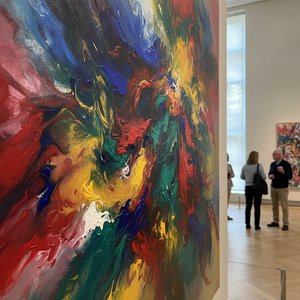
Explore the profound emotional depth of Lyrical Abstraction. Discover how masters like Raymond Parker used color and form to bridge Impressionism and Abstract Expressionism. Learn about this pivotal movement through our expert-led art history guide.


最新の美術ニュース、限定オファー、そしてインテリアのアイデアをいち早くお届けします。
お客様のプロジェクトについてお聞かせください。当社の美術専門家が、お客様に合わせた3つのパーソナライズされた芸術提案をご提供いたします。
あなたにぴったりの3作品を無料で厳選いたします


 プレビュー
プレビュー
 シェアする
シェアする シェアする
シェアする
 詳細を見る
詳細を見る

 ダウンロード
 似ている作品
 X線調査
X線調査 スライドショー

 詳細を見る
詳細を見る









 ガラスオプションは、110cm未満のサイズでのみご利用いただけます。


![Black Circle [1913] State Russian Museum, — カジミール・マレーヴィチ, Suprematism](/media/artworks/images-thumb/62/67/6267e452b0c8476772a6511e19ce1616.jpg)


