作品を販売する
ウィッシュリスト ショッピングカート Cart
x
プレビュープレビュー ARで試着ARで試着 プリントを購入 プリントを購入手描きの絵画を購入 手描きの絵画を購入 シェアするシェアする
詳細を見る詳細を見る お気に入りに追加 お気に入りに追加 ダウンロードダウンロード 似ている作品似ている作品 X線調査X線調査 スライドショースライドショー

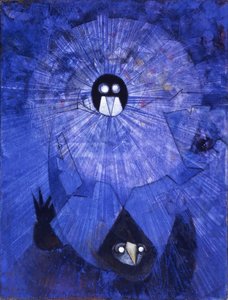
Abstract Composition

Konrad Zuse (1910-1995): German computer pioneer & artist. Inventor of the first programmable computer, Z3, & Plankalkül language. Explore his abstract compositions.

オンラインプレビューをはるかに凌ぐ、高解像度で鮮明なデジタル画像をご購入いただけます。

各ファイルは、社内の専門家が高度なツールと熟練した手作業によるレタッチを用いて、細心の注意を払って準備されています。すべての画像において、卓越した鮮明度、正確な色彩再現性、そして繊細なディテールを保証いたします。

最終ファイルは、プロフェッショナルな編集・印刷環境ですぐにご利用いただけるよう最適化された状態で、72時間以内にメールにてお届けいたします。これは、一流のデザインスタジオ、出版社、ギャラリーから信頼されているものと同等の品質です。

デジタルアート

個人での鑑賞、印刷、クリエイティブなプロジェクト用に、高解像度ファイルをダウンロードできます。 (プリントを購入 プリントを購入手描きの絵画を購入 手描きの絵画を購入)

最終合計金額

$ 24.90

デジタル画像のご注文に付随する特典

高品質なデジタル画像配信を、確かな品質で。

Most-Famous-Paintings.com を選ぶことは、単に画像を手に入れることではありません。それは、プロの手によって精密に仕上げられ、満足保証が付いた高品質なデジタルアートワークを受け取ることを意味します。ご注文いただいた際に自動的に付随する内容は、以下の通りです:

shipping_icon
メールですぐにお届け

ご注文から72時間以内に、高解像度のデジタル画像ファイルがメールでお手元に届きます。すぐにそのままご利用いただけます。

canvas_icon
AI技術で最適化されたデジタルファイル

お客様の作品は、高度なAIツールと専門家による手作業の編集を組み合わせてプロフェッショナルに最適化されており、細部のディテール、鮮明さ、そして正確な色再現性を最大限に引き出しています。

insurance_icon
一生涯無料の再送サービス

ファイルを誤って削除したり、紛失してしまったりしましたか?ご安心ください。いつでも無料で再送いたします。

tax_icon
輸入手数料は一切かかりません

関税や手数料、配送料を気にすることなく、お気に入りのアートワークをすぐにお楽しみいただけます。デジタルダウンロードは常に免税です。

color_icon
色彩再現の保証

プロ仕様のツールとカラーマネジメント技術を用いることで、デジタル画像が元の色を最大限に忠実に再現することを保証いたします。

return_icon
60日間満足保証

ご購入いただいたデジタル画像にご満足いただけない場合は、60日以内であれば、修正または100%の返金(理由を問う必要はありません)をさせていただきます。

guarantee_icon
100% 返金保証

ご満足いただけない場合は、デジタルファイルを受け取ってから60日以内であれば、理由を問わず全額返金いたします。

discount_icon
まとめ買い割引

3枚購入で10%OFF - 5枚購入で15%OFF - 10枚以上購入で20%OFF。クリエイティブなプロジェクト、ギャラリー、エージェンシーに最適です。


作家の略歴

Konrad Ernst Otto Zuse: Pioneer of Computing

Early Life and Education

  • Konrad Ernst Otto Zuse was born on June 22, 1910, in Berlin, Germany.
  • He studied mechanical engineering at the Technical University of Braunschweig, graduating in 1933.
  • Even during his studies, Zuse demonstrated a keen interest in automation and calculation, laying the groundwork for his future innovations.

The Genesis of Computing: Early Machines

  • Driven by frustration with repetitive calculations during his engineering work, Zuse began designing calculating machines in the 1930s.
  • His first creation was the Z1 (1936-1938), a mechanical binary computer using floating-point numbers and limited programmability. Though mechanically unreliable, it demonstrated key concepts.
  • The Z2 (1939) improved upon the Z1 with electromechanical relays, offering greater reliability but was destroyed during World War II.

The Z3: The First Functional Programmable Computer

  • In May 1941, Zuse completed the Z3, widely considered the world’s first functional program-controlled Turing-complete computer.
  • It was electromechanical, using relays, and operated with binary floating-point arithmetic.
  • The Z3 was destroyed during a bombing raid in 1943, but its design principles were revolutionary.

Further Developments: The Z4 and Beyond

  • Zuse continued his work, developing the Z4 (completed in 1945), which became the world’s first commercial computer. It was sold to the Aerodynamische Versuchsanstalt (AVA) for aerodynamic calculations.
  • He founded one of the earliest computer businesses, Zuse KG, to produce and sell computers.

Plankalkül: A Visionary Programming Language

  • Between 1943 and 1945, amidst wartime conditions, Zuse designed Plankalkül, the first high-level programming language.
  • It was remarkably advanced for its time, featuring concepts like data structures and conditional statements. However, it remained largely unimplemented during his lifetime due to lack of resources and computing power.

Later Life and Theoretical Work

  • In 1969, Zuse published Rechnender Raum (Calculating Space), proposing the concept of a computation-based universe – a precursor to digital physics.
  • He received belated recognition for his pioneering work in the latter part of his life, including the Turing Award in 1968.
  • Konrad Zuse died in Hünfeld, Germany, on December 18, 1995.

Historical Significance and Legacy

  • Zuse’s work was largely overlooked during World War II due to the conflict and limited communication with Allied researchers.
  • His contributions were crucial in laying the foundations for modern computing, influencing subsequent generations of computer scientists and engineers.
  • He is rightfully regarded as a founding father of computer science, whose vision extended beyond mere calculation to encompass the very nature of reality itself.
konrad ernst otto zuse

konrad ernst otto zuse

1910 - 1995 , Germany

プロフィール概要

  • Birth Date: 1910
  • Birth Place: Berlin, Germany
  • Death Date: 1995
  • Movement: Early Computing / Pioneer of Computer Science
  • Name: Konrad Ernst Otto Zuse
  • Nationality: German
  • Notable Works:
    • Z3
    • Plankalkül
    • Z4