


x
 Acrylic On CanvasWallArtNorthern Renaissance
 101.0 x 76.0 cm
 ザ・ローリー美術館
オンラインプレビューをはるかに凌ぐ、高解像度で鮮明なデジタル画像をご購入いただけます。
各ファイルは、社内の専門家が高度なツールと熟練した手作業によるレタッチを用いて、細心の注意を払って準備されています。すべての画像において、卓越した鮮明度、正確な色彩再現性、そして繊細なディテールを保証いたします。
最終ファイルは、プロフェッショナルな編集・印刷環境ですぐにご利用いただけるよう最適化された状態で、72時間以内にメールにてお届けいたします。これは、一流のデザインスタジオ、出版社、ギャラリーから信頼されているものと同等の品質です。
Most-Famous-Paintings.com を選ぶことは、単に画像を手に入れることではありません。それは、プロの手によって精密に仕上げられ、満足保証が付いた高品質なデジタルアートワークを受け取ることを意味します。ご注文いただいた際に自動的に付随する内容は、以下の通りです:

ご注文から72時間以内に、高解像度のデジタル画像ファイルがメールでお手元に届きます。すぐにそのままご利用いただけます。

お客様の作品は、高度なAIツールと専門家による手作業の編集を組み合わせてプロフェッショナルに最適化されており、細部のディテール、鮮明さ、そして正確な色再現性を最大限に引き出しています。

ファイルを誤って削除したり、紛失してしまったりしましたか?ご安心ください。いつでも無料で再送いたします。

関税や手数料、配送料を気にすることなく、お気に入りのアートワークをすぐにお楽しみいただけます。デジタルダウンロードは常に免税です。

プロ仕様のツールとカラーマネジメント技術を用いることで、デジタル画像が元の色を最大限に忠実に再現することを保証いたします。

ご購入いただいたデジタル画像にご満足いただけない場合は、60日以内であれば、修正または100%の返金(理由を問う必要はありません)をさせていただきます。

ご満足いただけない場合は、デジタルファイルを受け取ってから60日以内であれば、理由を問わず全額返金いたします。

3枚購入で10%OFF - 5枚購入で15%OFF - 10枚以上購入で20%OFF。クリエイティブなプロジェクト、ギャラリー、エージェンシーに最適です。
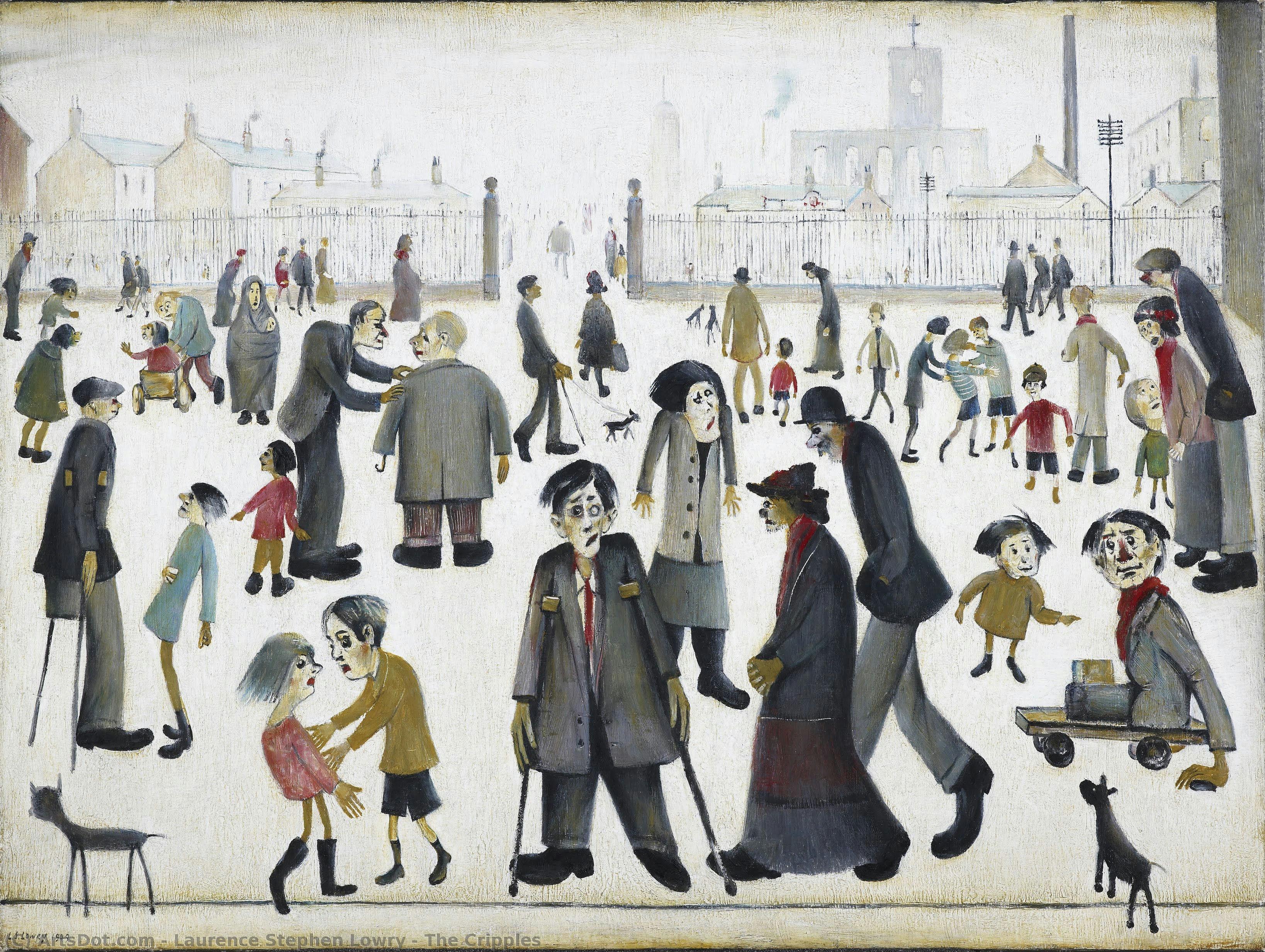
Laurence Stephen Lowry's "The Cripples," painted in 1949, isn’t merely a depiction of Manchester street life; it’s a poignant and unsettling meditation on anonymity, social exclusion, and the quiet dignity of those often overlooked. This iconic work, now housed within the collection of The Lowry in Salford, offers a rare glimpse into the artist's unique perspective – one that eschewed sentimentality for a starkly observed reality, revealing a profound sensitivity to the human condition amidst the relentless march of industrial progress. Lowry’s decision to avoid explicit emotional expression is key to understanding the painting’s enduring power; instead, he invites viewers to contemplate the lives and experiences of his subjects through their very absence of overt feeling.
The scene unfolds within a densely populated urban square, rendered in Lowry's signature monochrome palette – a deliberate choice that strips away any potential distraction, forcing the viewer to confront the figures with unflinching honesty. A multitude of pedestrians, predominantly men, populate the frame, their faces largely obscured and their movements seemingly aimless. They are not individuals engaged in conversation or activity; rather, they exist as anonymous components within a larger, impersonal landscape. The composition itself is deliberately chaotic, mirroring the perceived disorder of urban life – figures overlap, merge into one another, and recede into the distance, creating a sense of overwhelming density and isolation. The buildings lining the street are simplified architectural forms, serving primarily to establish a spatial context rather than offering any detailed representation.
Lowry’s technique is instantly recognizable: a direct, almost childlike approach characterized by loose brushstrokes and a deliberate avoidance of meticulous detail. The figures are rendered with simplified geometric shapes – cylinders for limbs, rectangles for bodies – creating an effect that is both immediate and slightly unsettling. The lines delineating the forms are often imprecise, contributing to their anonymity and reinforcing the painting’s overall sense of detachment. Notably, Lowry employed a medium likely consisting of graphite or charcoal on paper, lending the work a subtle textural quality—a delicate balance between precision and spontaneity. The lack of blending or layering suggests an immediate, intuitive approach, as if Lowry were capturing fleeting impressions rather than constructing a carefully planned composition.
The title itself, “The Cripples,” immediately introduces a layer of complexity. While the painting depicts individuals with physical disabilities – a woman leaning heavily on a cane, a man with a limp – it’s crucial to understand that Lowry wasn't simply portraying charity cases or victims of misfortune. He was drawing inspiration from his own observations of Manchester’s streets and its inhabitants, many of whom were struggling with poverty, illness, and the social consequences of rapid industrialization. The figures are not presented as objects of pity; rather, they are integrated into the fabric of everyday life, existing alongside their able-bodied counterparts without receiving any particular attention or consideration. The presence of carnival headgear – a cardboard crown, a paper shako, a beret – adds another layer of symbolic meaning, suggesting that these individuals represent various social classes and roles within the community.
Further research reveals intriguing connections to Lowry’s own life and artistic sensibilities. The debate surrounding his potential Asperger's syndrome offers a compelling lens through which to interpret "The Cripples." His meticulous observation of detail, coupled with a seeming indifference to conventional notions of beauty or emotional expression, aligns remarkably well with the characteristics associated with this neurodevelopmental condition. Moreover, Lowry’s work reflects a broader trend in British art during the mid-20th century – a shift away from idealized representations and towards a more realistic, often unflinching portrayal of social realities. "The Cripples" stands as a testament to Lowry's unique vision, inviting viewers to contemplate the complexities of urban life and the enduring power of observation.

1887年、チェシャー州ストレトフォードの中心部で生まれたローレンス・スティーブン・ローリーは、20世紀美術におけるイギリスで最も愛され、かつ独特な存在感を放つ芸術家の一人です。今日、彼の名は北イングランドの荒々しくも情緒豊かな風景と分かちがたく結びついていますが、国際的な称賛へと至る道のりは、ゆっくりとした、切実な歩みでした。人生の大部分において、ローリーは「静かなる観察者」として生きました。日中は家賃徴収人として働き、夜には自らの技を磨くという二重の生活を送っていたのです。この日常的な営みが、産業化が進む街の、リズムを刻みながらも時に過酷な鼓動を、比類なき親密さをもって見つめることを可能にしました。彼の作品は、単にサルフォードやペンドルベリーの煙に覆われた地平を描写しているだけではありません。そこには人間存在への深い感受性が宿っており、産業時代の峻厳な現実の中に、静かな尊厳を見出しているのです。
ローリーの芸術的発展は、彼を取り巻く環境に深く根ざしていましたが、その技術的な基盤は、形態と光に対する緻密な研究の上に築かれました。初期には印象派やポスト印象派の原理に影響を受け、表面的な描写を超えて、情景の本質を捉えようと試みました。マンチェスター美術学校での初期の訓練は、広大な工場群や混雑した街路を、より象徴的なものへと昇華させるための道具を彼に授けました。画風が成熟するにつれ、彼は壮大な物語から離れ、観察による微細なニュアンスに焦点を当てる道を選びました。また、フレークホワイト、アイボリーブラック、バーミリオン、プルシアンブルー、イエローオーカーといった極めて限定されたパレットを駆使することで、現実感に根ざしながらも、どこか夢幻的でシュールレアリスムにも似た高揚感を湛えた構図を生み出したのです。
ローリーが遺した最も不朽のレガシーは、いわゆる「マッチスティック・メン(棒人間)」の創造と言えるでしょう。影や明確な顔立ちを持たない、様式化され簡略化されたこれらの人物像は、彼の描く都市風景の中に、集団的な動きと共有された運命を感じさせながら点在しています。ローリーはこれらの人物を通じて、賑やかな街角の情景を、共同体と孤独に関する詩的な瞑想へと変容させました。サッカーの試合へと向かう人々、紡績工場の近くに集まる群衆、あるいは公園を彷彿とさせる場所を彷徨う姿――それらのキャラクターは、労働者階級の強靭さを体現しています。巨大で重々しい産業構造物の背景の中に、これら小さく脆い形態を配置する手法には、抗いがたい美しさが宿っています。そこには、産業の記念碑的なスケールと、人間の生命の繊細さとの間に生まれる、緊張感に満ちたドラマが存在しています。
有名な都市風景以外にも、ローリーのレパートリーは驚くほど多様であり、深い洞察力と好奇心に満ちた芸術家としての側面を露わにしています。産業風景が最も名高い主題ではありますが、彼は以下のような領域も探求しました。
1939年のロンドンでの初個展を経て、彼は国内的な名声を得ることとなりましたが、ローリーの真の影響力は、イングランドの風景を再定義したその手法にあります。彼は進歩を美化したり、英雄的な景色を描こうとしたりしたわけではありません。むしろ、ありふれた日常や憂鬱な情景の中にこそ、美を見出したのです。北西部の煤に汚れた街路の中に切実な美しさを見出すその才能は、彼の作品をイギリスの文化的アイデンティートの礎石へと押し上げました。今日、サルフォード・キーズのザ・ローリー(The Lowry)のような施設は、彼の膨大な遺産の重要な守護者として、世界最大級のコレクションを収蔵しています。
ローリーの重要性は、自らの時代の困難な現実から目を逸らさなかったその姿勢にあります。共感と様式的な革新をもって普通の人々の生活を記録することで、彼は産業化されたイングランドの精神が、単なる歴史としてではなく、「芸術」として保存されることを確かなものにしたのです。彼は今なお空気感の巨匠であり、どれほど混雑した産業的な環境であっても、そこには深遠で静かな魔法が見出せるのだということを証明し続けています。

1887 - 1976 , イギリス


最新の美術ニュース、限定オファー、そしてインテリアのアイデアをいち早くお届けします。
お客様のプロジェクトについてお聞かせください。当社の美術専門家が、お客様に合わせた3つのパーソナライズされた芸術提案をご提供いたします。
あなたにぴったりの3作品を無料で厳選いたします


 プレビュー
プレビュー
 プリントを購入
 シェアする
シェアする シェアする
シェアする
 詳細を見る
詳細を見る

 ダウンロード
 似ている作品
 X線調査
X線調査 スライドショー
 詳細を見る
詳細を見る


