x
 Acrylic On CanvasWallArtSpatialism
 191.0 x 115.0 cm
 Galleria Civica di Arte Moderna e Contemporanea Torino
オンラインプレビューをはるかに凌ぐ、高解像度で鮮明なデジタル画像をご購入いただけます。
各ファイルは、社内の専門家が高度なツールと熟練した手作業によるレタッチを用いて、細心の注意を払って準備されています。すべての画像において、卓越した鮮明度、正確な色彩再現性、そして繊細なディテールを保証いたします。
最終ファイルは、プロフェッショナルな編集・印刷環境ですぐにご利用いただけるよう最適化された状態で、72時間以内にメールにてお届けいたします。これは、一流のデザインスタジオ、出版社、ギャラリーから信頼されているものと同等の品質です。
Most-Famous-Paintings.com を選ぶことは、単に画像を手に入れることではありません。それは、プロの手によって精密に仕上げられ、満足保証が付いた高品質なデジタルアートワークを受け取ることを意味します。ご注文いただいた際に自動的に付随する内容は、以下の通りです:

ご注文から72時間以内に、高解像度のデジタル画像ファイルがメールでお手元に届きます。すぐにそのままご利用いただけます。

お客様の作品は、高度なAIツールと専門家による手作業の編集を組み合わせてプロフェッショナルに最適化されており、細部のディテール、鮮明さ、そして正確な色再現性を最大限に引き出しています。

ファイルを誤って削除したり、紛失してしまったりしましたか?ご安心ください。いつでも無料で再送いたします。

関税や手数料、配送料を気にすることなく、お気に入りのアートワークをすぐにお楽しみいただけます。デジタルダウンロードは常に免税です。

プロ仕様のツールとカラーマネジメント技術を用いることで、デジタル画像が元の色を最大限に忠実に再現することを保証いたします。

ご購入いただいたデジタル画像にご満足いただけない場合は、60日以内であれば、修正または100%の返金(理由を問う必要はありません)をさせていただきます。

ご満足いただけない場合は、デジタルファイルを受け取ってから60日以内であれば、理由を問わず全額返金いたします。

3枚購入で10%OFF - 5枚購入で15%OFF - 10枚以上購入で20%OFF。クリエイティブなプロジェクト、ギャラリー、エージェンシーに最適です。
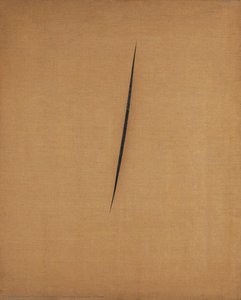
Lucio Fontana's "Spatial Concept, Waiting," painted in 1960, isn’t merely a canvas bearing cuts; it’s an invitation – a deliberate disruption of the established boundaries between painting and space. Born in Rosario, Argentina, in 1899, Fontana embarked on a lifelong quest to redefine artistic expression, ultimately founding Spatialism, a movement that sought to liberate art from the constraints of traditional two-dimensionality. This particular work embodies the core tenets of his philosophy: a radical rejection of illusion, an embrace of the tangible, and a profound exploration of the infinite.
The painting itself is deceptively simple – a pristine white canvas, seemingly untouched until you examine it closely. A series of precisely executed cuts, arranged in a dynamic, almost organic pattern, traverse the surface. These aren’t random gestures; they are meticulously planned interventions, often described by Fontana as “buchi” (holes) or “tagli” (slashes). The technique involved using a utility knife to create these incisions, a method that deliberately introduced an element of controlled violence – a forceful assertion against the static nature of conventional painting. The cuts aren’t uniformly spaced; instead, they cluster and disperse, creating a sense of movement and suggesting a hidden depth beyond the visible surface.
Fontana's journey to this groundbreaking style began in the late 1940s. Frustrated with the limitations he perceived in traditional painting – its reliance on illusion and representation – he sought a new language for art, one that engaged directly with space. This pursuit led him to develop the concept of “Spatialism,” articulated in his 1946 Manifesto Bianco (White Manifesto). He envisioned an art form that transcended the flat plane of the canvas, incorporating elements of color, sound, movement, and time into a unified whole. The "buchi" and "tagli" were not simply decorative; they were fundamental to this vision – a way of revealing the underlying structure of space and inviting the viewer to participate in its creation.
The historical context surrounding this work is crucial to understanding its significance. Post-World War II Europe was grappling with profound shifts in perspective, questioning established norms and seeking new ways to interpret reality. Fontana’s art resonated deeply with this spirit of experimentation and a desire for radical change. His work mirrored the broader cultural currents of the time – a fascination with technology, a growing interest in psychology, and a yearning for something beyond the confines of the familiar.
The symbolism embedded within “Spatial Concept, Waiting” is layered and complex. The cuts themselves represent a rupture – a breaking through of the surface to reveal an unseen space. Fontana described this act as "creating a new dimension," suggesting that the painting wasn’t simply depicting reality but actively constructing it. The use of gauze behind the canvas further enhances this sense of mystery, creating an illusion of depth and inviting the viewer to contemplate what lies beyond.
The title, “Waiting,” adds another layer of interpretation. It suggests a suspension, a pause before revelation – a feeling of anticipation as if something profound is about to emerge. Fontana’s intention wasn't to provide answers but to pose questions, prompting the viewer to engage in a dialogue with the artwork and their own perceptions of space and reality. The work evokes a sense of both vulnerability and exhilaration, reflecting the sublime – that paradoxical experience of awe and terror that lies at the heart of Fontana’s vision.
Lucio Fontana's influence on 20th-century art is undeniable. His radical approach to painting paved the way for countless artists who followed, challenging conventional notions of form and pushing the boundaries of artistic expression. Today, high-quality reproductions of “Spatial Concept, Waiting” offer a unique opportunity to experience this groundbreaking work firsthand, bringing its profound ideas into any interior space.
When selecting a reproduction, consider the detail and accuracy with which the cuts are rendered – a crucial element in capturing the essence of Fontana’s vision. Most-Famous-Paintings offers meticulously hand-painted reproductions that faithfully recreate the texture, depth, and emotional impact of the original painting, allowing you to bring this iconic work into your home or studio.
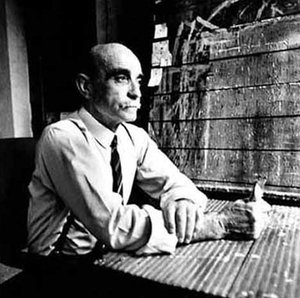
1899 - 1968 , アルゼンチン


最新の美術ニュース、限定オファー、そしてインテリアのアイデアをいち早くお届けします。
お客様のプロジェクトについてお聞かせください。当社の美術専門家が、お客様に合わせた3つのパーソナライズされた芸術提案をご提供いたします。
あなたにぴったりの3作品を無料で厳選いたします


 プレビュー
プレビュー
 プリントを購入
 シェアする
シェアする シェアする
シェアする
 詳細を見る
詳細を見る

 ダウンロード
 似ている作品
 X線調査
X線調査 スライドショー
 詳細を見る
詳細を見る