x
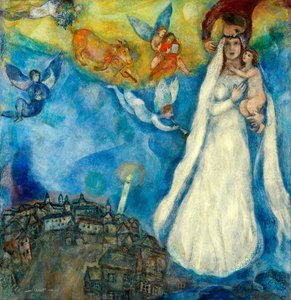
 Oil On CanvasWallArtCubist Landscape
 1918
1918 100.0 x 59.0 cm
迅速な制作と多彩な仕上げオプションを備えた、ミュージアムクオリティのジークレーまたはキャンバスプリント。 ( 手描きの絵画を購入 画像を購入)





























作品のオリジナル比率に合わせた、当店の規定サイズからお選びください。

特定のフレームやスペースに合わせて、ご自身でサイズを指定することも可能です。選択されたサイズが元の画像の比率と一致しない場合、作品をトリミングするか、鏡面反射または単色での塗りつぶしによって画像を拡張いたします。制作を開始する前に、ご確認用のデジタルモックアップをお送りいたします。
画面上のプレビューには、実際のトリミングや拡張は反映されませんのでご注意ください。最終的な構図を正確に確認できるのは、モックアップのみとなります。
カスタムサイズも承っておりますが、元の比率を維持するためには、あらかじめ用意されたリストからサイズを選択することをお勧めいたします。

Cubist landscape
複製画のサイズ
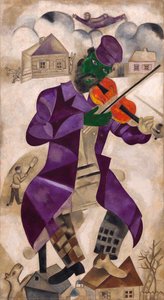
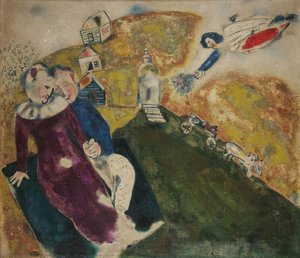
Marc Chagall’s “Cubist Landscape,” painted in 1918, isn’t merely a depiction of a cityscape; it’s an immersion into the artist’s intensely personal and profoundly symbolic world. Born Moishe Shagal in Vitebsk, Belarus – a town that would forever haunt his memory and artistic vision – Chagall navigated a turbulent century, yet consistently channeled his experiences through a lens uniquely his own. This particular canvas captures a pivotal moment in his artistic evolution, bridging the expressive fervor of early Fauvism with the nascent geometric explorations of Cubism, while retaining the deeply rooted emotionality that defined his entire oeuvre.
The painting immediately confronts the viewer with an unsettling yet captivating scene. Buildings, rendered not as realistic structures but as fractured planes and interlocking geometric forms – rectangles, triangles, and circles – dominate the foreground. These aren’t the precise lines of architectural blueprints; they are fragments, echoes of memory, suggesting a city both familiar and utterly transformed. A solitary figure, seemingly adrift within this constructed space, adds to the sense of disorientation and introspection. The color palette is vibrant yet restrained, dominated by deep blues, ochres, and earthy reds – colors that evoke the landscapes of his childhood in Vitebsk, blending with the muted tones of urban life.
Vitebsk itself is crucial to understanding this work. The town’s unique cultural tapestry—a confluence of Russian Orthodox churches alongside bustling Jewish marketplaces – provided a rich source of inspiration for Chagall. This duality, the juxtaposition of religious and secular life, finds its way into his art through recurring motifs: flying figures, whimsical animals, and a pervasive sense of dreamlike nostalgia. “Cubist Landscape” is no exception; it’s as if fragments of Vitebsk's vibrant streets and sacred spaces have been deconstructed and reassembled in the artist’s mind.
The influence of Cubism is evident in the fragmented forms and multiple perspectives presented within the painting. Inspired by artists like Pablo Picasso and Georges Braque, Chagall experiments with presenting a single subject from various viewpoints simultaneously, creating an effect of dynamism and instability. This technique wasn’t simply about replicating reality; it was about conveying the subjective experience of seeing – how memory shapes our perception of space and time. The painting isn't aiming for photographic accuracy but rather to capture the *feeling* of a place, its essence distilled through the artist’s unique sensibility.
Painted in 1918, during a period of immense social and political upheaval, “Cubist Landscape” reflects the broader artistic shifts occurring at the time. Chagall was actively experimenting with new approaches to representation, moving away from the more overtly expressive styles of his earlier work. Yet, despite these explorations, he never abandoned his deeply personal vision. The painting retains a distinctly Chagallean quality – a sense of lyricism, emotional intensity, and a profound connection to Jewish folklore and tradition.
Consider the solitary figure in the center of the composition. Often interpreted as a self-portrait, it embodies Chagall’s own feelings of displacement and longing—a common theme throughout his work. The figure's posture suggests contemplation, perhaps even a sense of isolation within this fragmented cityscape. The painting invites us to contemplate our own memories and perceptions, questioning the nature of reality itself. “Cubist Landscape” is not just a depiction of a place; it’s an invitation to enter into Chagall’s dreamscape – a world where the familiar becomes strange, and the boundaries between memory and imagination blur.
Most-Famous-Paintings offers meticulously crafted hand-painted reproductions of this iconic artwork, allowing you to bring this evocative piece into your home or office. Each reproduction captures the nuances of Chagall’s brushstrokes and color palette, ensuring an authentic representation of this masterpiece. Explore our collection today and experience the magic of “Cubist Landscape” firsthand.

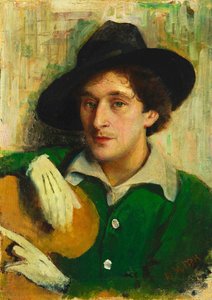
1887 - 1985 , ベラルーシ

Explore the profound history of landscape masterpieces. From the Barbizon School to Monet's Impressionism, discover how timeless natural scenes bring serenity and prestige to your collection through museum-quality, hand-painted oil reproductions.


最新の美術ニュース、限定オファー、そしてインテリアのアイデアをいち早くお届けします。
お客様のプロジェクトについてお聞かせください。当社の美術専門家が、お客様に合わせた3つのパーソナライズされた芸術提案をご提供いたします。
あなたにぴったりの3作品を無料で厳選いたします


 プレビュー
プレビュー
 シェアする
シェアする シェアする
シェアする
 詳細を見る
詳細を見る

 ダウンロード
 似ている作品
 X線調査
X線調査 スライドショー
 詳細を見る
詳細を見る









 ガラスオプションは、110cm未満のサイズでのみご利用いただけます。