作品の詳細
A Surrealist Reverie: Marc Chagall’s “The Dream (The Rabbit)”
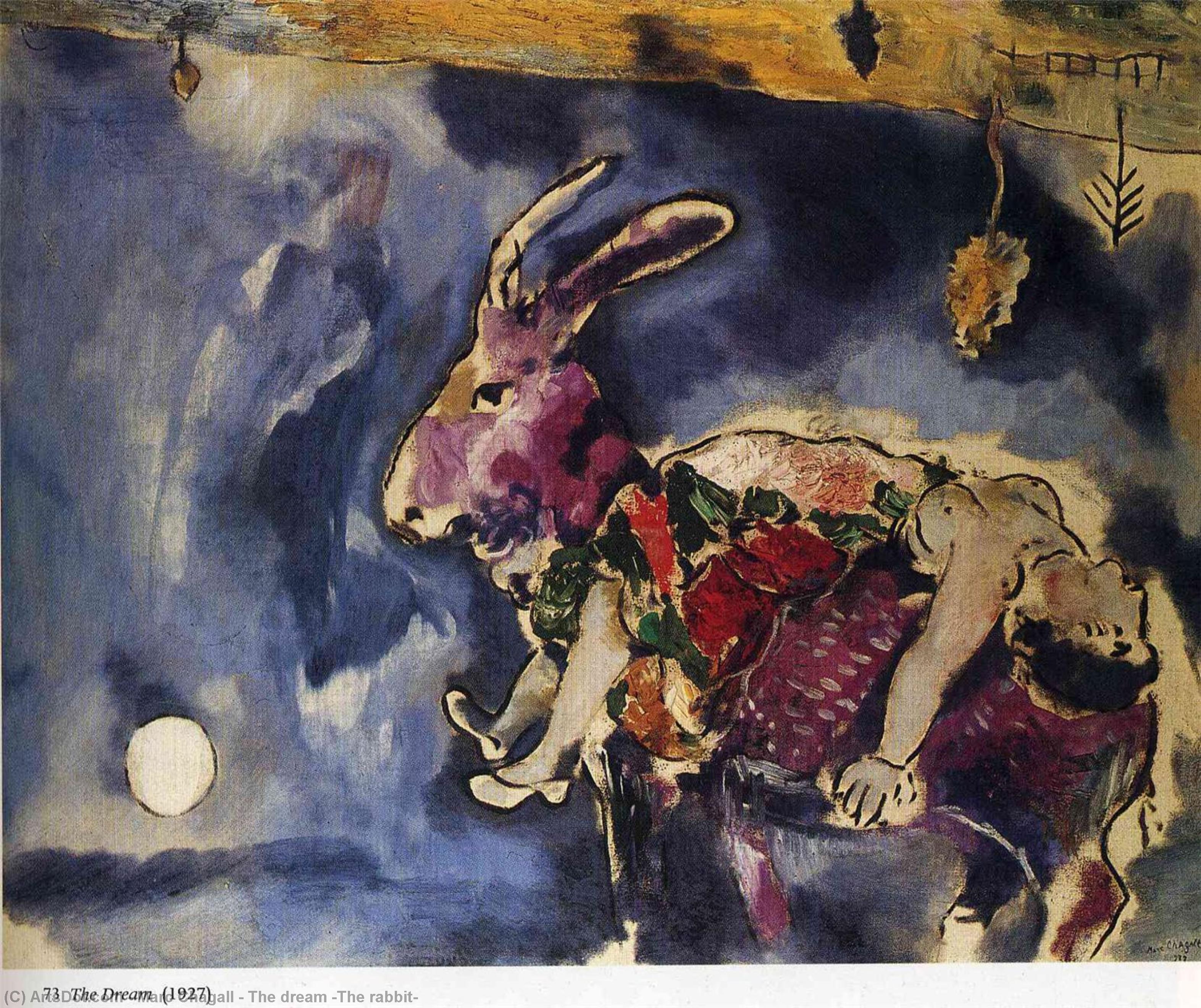
Marc Chagall's "The Dream (The Rabbit)," painted in 1927, isn’t merely a depiction of an image; it’s an immersion into the artist’s intensely personal and profoundly symbolic world. This captivating work, measuring 81 x 100 cm and currently residing within the Musée d'Art Moderne de la Ville de Paris, embodies the heart of surrealism while simultaneously echoing Chagall’s deep-rooted connection to his Jewish heritage and childhood memories in Vitebsk. The painting immediately draws the viewer into a dreamscape—a vibrant, slightly unsettling realm where logic bends and familiar forms are playfully distorted. At its core is a rabbit, not simply as an animal but as a potent symbol of innocence, fertility, and even fleeting moments of joy, elevated to almost mythical status by Chagall’s audacious vision.
The scene unfolds with a remarkable dynamism: a rabbit, rendered in bold, expressive strokes, rides a bicycle with its feet firmly planted in the air, gripping the handlebars with an earnest determination. This immediately establishes a sense of disorientation and whimsy—a deliberate rejection of conventional representation. Behind the rabbit stands another figure, partially obscured yet radiating a quiet solemnity, while a third, more distant form hints at further narrative possibilities. Scattered throughout the composition are carefully placed elements that contribute to the painting’s layered meaning: a clock hanging precariously from the upper left corner, suggesting the passage of time and perhaps the anxieties of modern life; a vase brimming with flowers, symbolizing beauty and abundance; and potted plants adding touches of domesticity to this fantastical tableau. The color palette is intensely vibrant—a riot of blues, yellows, reds, and greens—creating an atmosphere that’s both joyous and slightly melancholic. Chagall's signature use of flattened perspective and elongated forms further enhances the painting’s dreamlike quality, blurring the boundaries between reality and imagination.
Chagall’s Artistic Language: Fauvism Meets Fantasy
To understand “The Dream (The Rabbit),” it’s crucial to recognize Chagall's place within the broader context of early 20th-century art. While often associated with Surrealism, his work is deeply rooted in Fauvism—a movement characterized by its unrestrained use of color and expressive brushstrokes. This influence is readily apparent in the painting’s bold hues and dynamic lines, which contribute to its overall sense of energy and emotional intensity. However, Chagall transcends mere stylistic imitation; he infuses these techniques with his own unique vision, drawing heavily on his personal experiences and cultural background. The flattened perspective, reminiscent of Russian folk art, creates a sense of intimacy and immediacy, inviting the viewer into this private world of dreams and memories.
Symbolism and Personal Narrative
The rabbit itself is arguably the most significant symbol in “The Dream (The Rabbit).” In Jewish folklore, rabbits are often associated with fertility, abundance, and even fleeting moments of joy. Chagall’s depiction of the rabbit riding a bicycle—a decidedly modern image—suggests a yearning for freedom, adventure, and perhaps a rejection of traditional constraints. The other figures in the painting remain somewhat enigmatic, but their presence adds to the sense of mystery and invites speculation about their relationship to the central figure. Some art historians interpret them as representations of Chagall’s wife, Bella, or even aspects of his own psyche. The clock, with its hands frozen in time, could symbolize a longing for the past or a reflection on the ephemeral nature of life.
A Legacy of Imagination: Chagall and Modern Art
Marc Chagall (1887-1985), born Moishe Shagal in Liozna, Belarus, was a pivotal figure in early modernism. His work spanned numerous mediums—painting, book illustrations, stained glass, and more—and consistently explored themes of Jewish identity, folklore, and the human condition. “The Dream (The Rabbit)” stands as a testament to his extraordinary ability to blend realism with fantasy, creating images that are both deeply personal and universally resonant. It’s a painting that continues to captivate viewers with its dreamlike atmosphere, vibrant colors, and profound symbolism. As part of Most-Famous-Paintings's collection of meticulously hand-painted oil reproduction reproductions, this piece offers a unique opportunity to experience the magic of Chagall’s vision firsthand. For those seeking further exploration into Chagall’s oeuvre, “Song of Songs II (10)” – also available as a stunning reproduction – showcases his mastery of symbolic painting and continues to be a compelling example of his artistic genius.



 キャンバスにアクリル絵具
 1927
1927 81.0 x 100.0 cm






 プレビュー
プレビュー
 プリントを購入
 シェアする
シェアする シェアする
シェアする
 詳細を見る
詳細を見る

 ダウンロード
 似ている作品
 X線調査
X線調査 スライドショー
 詳細を見る
詳細を見る