x































作品のオリジナル比率に合わせた、当店の規定サイズからお選びください。

特定のフレームやスペースに合わせて、ご自身でサイズを指定することも可能です。選択されたサイズが元の画像の比率と一致しない場合、作品をトリミングするか、鏡面反射または単色での塗りつぶしによって画像を拡張いたします。制作を開始する前に、ご確認用のデジタルモックアップをお送りいたします。
画面上のプレビューには、実際のトリミングや拡張は反映されませんのでご注意ください。最終的な構図を正確に確認できるのは、モックアップのみとなります。
カスタムサイズも承っておりますが、元の比率を維持するためには、あらかじめ用意されたリストからサイズを選択することをお勧めいたします。

Sonata
複製画のサイズ
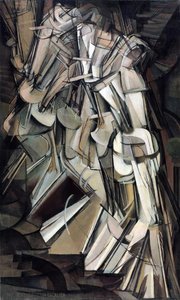
Marcel Duchamp’s “Sonata,” painted in 1911, is not merely a depiction of a musical performance; it’s a carefully constructed disruption – a visual puzzle that embodies the revolutionary spirit driving early 20th-century art. This watercolor, rendered in predominantly brown and white with strategic yellow accents, captures a scene brimming with potential narrative, yet deliberately fractured through the lens of Cubism. The image portrays a woman seated at a piano, surrounded by onlookers, a violinist poised nearby – a tableau ripe with artistic and social significance. However, Duchamp doesn’t offer a straightforward representation; instead, he dismantles the subject into geometric forms, presenting multiple perspectives simultaneously. This technique, characteristic of his exploration of perception and reality, anticipates the radical shifts in art that would define the Dada movement.
Created during a pivotal moment in artistic history – just before World War I – “Sonata” reflects Duchamp’s engagement with Cubism. Unlike the Impressionists who sought to capture fleeting moments of light, Cubism aimed to represent objects from multiple viewpoints at once, challenging traditional notions of perspective and representation. Duchamp's use of fragmented forms—the woman’s body rendered as overlapping planes, the instruments abstracted into geometric shapes—forces the viewer to actively participate in constructing meaning. The deliberate ambiguity invites speculation about the relationships between the figures, their motivations, and the nature of the performance itself. This rejection of a single, unified viewpoint is a key element of Duchamp's artistic philosophy: questioning established conventions and exploring alternative ways of seeing.
The scene depicted in “Sonata” carries layers of symbolic weight. The act of playing music itself has long been associated with emotion, contemplation, and transcendence. The presence of a violinist suggests harmony and collaboration, while the audience represents judgment and appreciation – elements central to the artistic process. Duchamp’s Cubist treatment subtly undermines these traditional associations, suggesting that art is not simply about representing reality but about actively constructing it. The color palette—earthy browns and whites punctuated by vibrant yellows—further enhances this sense of tension between order and chaos, stability and disruption. The yellow accents could represent the spotlight illuminating the performer, or perhaps a critical eye observing the scene.
"Sonata" possesses a haunting beauty born from its deliberate incompleteness. The fragmented composition evokes a sense of unease and invites contemplation about the nature of perception, representation, and artistic value. Duchamp’s work paved the way for Conceptual Art, where the idea behind the artwork often takes precedence over its aesthetic qualities. This piece remains a powerful example of Duchamp's intellectual rigor and his willingness to challenge the very foundations of art. A hand-painted reproduction offers an opportunity to experience this seminal work firsthand, appreciating the intricate details and the profound questions it raises about our relationship with art and the world around us.


1887 - 1968 , フランス

Find serenity with 10 minimalist masterpieces! Explore Agnes Martin, Rothko & more. Discover the stories behind iconic abstract art, neutral palettes & calming designs. Museum-quality reproductions at Most-Famous-Paintings.com – elevate your home decor today!

Elevate your interiors with impactful statement walls! Expert guide on scaling artwork for perfect proportions & design harmony. Custom solutions & free consultations at Most-Famous-Paintings.

ルネサンスから現代アートまで、高品質な美術複製をMost-Famous-Paintings.comで。静物画、ヴァニタス、抽象絵画など、ヴィラ空間を格上げする一点を見つけましょう。カスタムメイドやアートアドバイザーによる無料相談も。

モダンヴィラデザインにおけるキュビズムアートの統合を専門家が解説。美的革新と法的側面から、高級住宅のアート選定、投資価値、著作権対策まで網羅。Most-Famous-Paintings.comで理想の空間を実現。

Explore 10 Cubist masterpieces by Picasso, Braque & more! Discover the stories behind these revolutionary paintings and their impact on modern art. Find museum-quality reproductions for your home at Most-Famous-Paintings.com – where art comes to life.


最新の美術ニュース、限定オファー、そしてインテリアのアイデアをいち早くお届けします。
お客様のプロジェクトについてお聞かせください。当社の美術専門家が、お客様に合わせた3つのパーソナライズされた芸術提案をご提供いたします。
あなたにぴったりの3作品を無料で厳選いたします


 手描き複製画を注文する
 シェアする
シェアする シェアする
シェアする
 詳細を見る
詳細を見る

 ダウンロード
 似ている作品
 X線調査
X線調査 スライドショー

 詳細を見る
詳細を見る









 ガラスオプションは、110cm未満のサイズでのみご利用いただけます。