


x





























作品のオリジナル比率に合わせた、当店の規定サイズからお選びください。

特定のフレームやスペースに合わせて、ご希望のサイズをご入力いただけます。選択されたサイズが元の画像の比率と異なる場合、アートワークをトリミングするか、手描きで要素を追加して絵画を拡張いたします。デジタルモックアップ を制作し、制作開始前にご確認(承認)をいただきます。
画面上のプレビューは、実際のトリミングや拡張を正確に反映しているものではありません。最終的な構図は、モックアップによってのみ正確にご確認いただけます。
カスタムサイズもご利用いただけますが、元の比率を維持するためには、あらかじめ用意されたリストからサイズを選択することをお勧めいたします。

Trinity (detail)
複製画のサイズ
Masaccio’s “Trinity (detail),” housed within the magnificent Santa Maria Novella in Florence, isn't merely a fresco; it’s a pivotal moment in art history – a visual manifesto declaring the arrival of the High Renaissance. Painted between 1425 and 1427, this intimate section captures the essence of Masaccio’s revolutionary approach to depicting reality, a departure from the stylized elegance of the preceding Gothic era and a profound influence on generations of artists to come. The scene, centered around an elder figure representing God the Father, is imbued with a startling sense of depth, volume, and emotional resonance that was unprecedented for its time.
The fresco’s immediate impact lies in its masterful use of linear perspective. Masaccio didn't simply depict space; he created it – a meticulously constructed illusion of three-dimensionality that draws the viewer directly into the scene. The architecture, modeled after Roman precedents and likely informed by Filippo Brunelleschi’s groundbreaking experiments with perspective, recedes realistically towards a vanishing point, anchoring the figures within a believable environment. This isn't a flat surface; it’s a stage where forms exist in relation to each other, creating an astonishingly convincing sense of space.
Masaccio’s palette is restrained yet remarkably effective. Earth tones – ochres, siennas, and umbers – dominate the composition, lending it a dignified solemnity. However, within this muted range, he skillfully employs chiaroscuro—the dramatic interplay of light and shadow—to sculpt the figures and define their forms. The light source, emanating from an unseen point above and to the right, casts deep shadows that accentuate the musculature of the Father’s body, imbuing him with a palpable sense of weight and presence. This subtle manipulation of light isn't merely decorative; it’s integral to Masaccio’s goal of creating realistic figures that appear to exist within a tangible world.
The figure of the Father is particularly striking. His face, rendered with astonishing detail – the furrowed brow, the thoughtful gaze—conveys an intense contemplation. He isn't depicted as a distant deity but as a human being grappling with profound questions. The folds of his garment are meticulously modeled, demonstrating Masaccio’s mastery of drapery and his commitment to accurately representing the texture and weight of fabric.
Beyond its technical brilliance, “Trinity (detail)” is rich in symbolic meaning. The central figure represents God the Father, while the dove hovering above symbolizes the Holy Spirit. The presence of Mary and Saint John—both deeply revered figures within Christian iconography—adds layers of spiritual significance to the scene. The inclusion of a *memento mori* – a reminder of death – beneath the depiction of the Trinity serves as a poignant counterpoint, reminding viewers of the ephemeral nature of earthly existence and the importance of seeking salvation.
The donor figures flanking the central archway are particularly intriguing. Their placement within the architectural framework suggests that they represent patrons who commissioned the fresco—likely members of the Florentine elite. The gesture of prayer, with their hands raised in supplication, underscores the devotional purpose of the artwork and its intended audience.
Masaccio’s “Trinity (detail)” represents a watershed moment in art history. It marked a decisive shift away from the stylized conventions of the Gothic era and toward a more naturalistic and intellectually rigorous approach to painting. His innovations in perspective, his mastery of chiaroscuro, and his profound understanding of human anatomy profoundly influenced artists like Leonardo da Vinci and Michelangelo, shaping the course of Western art for centuries to come. Reproductions of this masterpiece offer a unique opportunity to experience firsthand the genius of one of the Renaissance’s most visionary painters.
Additional Research:

トマッソ・ディ・セル・ジョヴァンニ・ディ・シモーネ、一般的にはマサッチョ(“不器用なトマッソ”の意味)として知られる画家は、初期イタリア・ルネサンスを代表する重要な人物です。1401年12月21日にサン・ジョヴァンニ・ヴァルドアルノで生まれ、1428年に若くして亡くなった彼の短い生涯は、革新的な写実性、遠近法、明暗法(キアロスクーロ)によって絵画に革命をもたらしました。短い人生にもかかわらず、マサッチョのその後の世代の芸術家への影響は深く、自然主義の新たな基準を確立し、西洋美術の流れを変えました。
マサッチョは、公証人のジョヴァンニ・ディ・シモーネ・カッサイとジャコパ・ディ・マルティンツォの間に生まれました。彼の家族名であるカッサイは、父方の祖父が家具職人であったことに由来します。5歳の時に父親を亡くし、兄のジョヴァンニ(ロ・スケッジャ)も画家になることになります。マサッチョの芸術的修業に関する詳細はほとんど不明であり、これはルネサンス期の画家としては珍しいことです。12歳頃に弟子入りしたと考えられていますが、決定的な師は特定されていません。この記録に残されていない修業期間が、彼の急速な発展と革新的な技術に対する謎を深めています。
初期にはジョット・ディ・ボンドーネの影響を受けていましたが、マサッチョはすぐに彼を超越し、遠近法と解剖学への理解を深めました。また、フィリッポ・ブルネレスキの建築革新、特にブルネレスキが再発見した線形遠近法からもインスピレーションを受けました。彼はいくつかの画期的な技術を確立しました。線形遠近法は、消失点と数学的精度を用いて、二次元の表面に説得力のある奥行きを作り出しました。また、キアロスクーロを巧みに使い、光と影を使って形態をモデル化し、それまで絵画には見られなかった立体感と写実性を生み出しました。自然主義は、解剖学的に正確で感情表現豊かな人物を描き、初期の様式化された表現から脱却しました。
マサッチョの短い生涯にもかかわらず、西洋美術の流れへの影響は計り知れません。遠近法、キアロスクーロ、自然主義における彼の革新は、芸術家が世界を描く方法を根本的に変えました。彼は中世の芸術的慣習とルネサンスの新たな理想との間の橋渡しを果たしました。
マサッチョの遺産は、歴史上最も重要で影響力のある芸術家の一人としての地位を確立しています。彼は中世からルネサンス美術への移行における重要な人物であり、絵画を通して世界を知覚し表現する方法を永遠に変えました。彼の短いながらも輝かしいキャリアは、革新の力と芸術的才能の永続的な影響の証です。

1401 - 1429 , イタリア
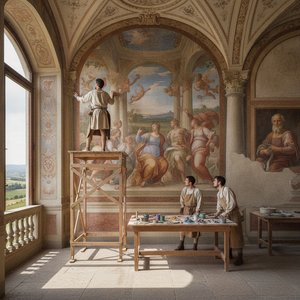
Explore the profound history and technical mastery of fresco painting. From ancient Roman murals to Michelangelo's Sistine Chapel, discover the enduring chemistry and artistry behind this timeless wall painting technique used by the world's greatest masters.


最新の美術ニュース、限定オファー、そしてインテリアのアイデアをいち早くお届けします。
お客様のプロジェクトについてお聞かせください。当社の美術専門家が、お客様に合わせた3つのパーソナライズされた芸術提案をご提供いたします。
あなたにぴったりの3作品を無料で厳選いたします


 プレビュー
プレビュー
 プリントを購入
 シェアする
シェアする シェアする
シェアする
 詳細を見る
詳細を見る

 ダウンロード
 似ている作品
 X線調査
X線調査 スライドショー


 詳細を見る
詳細を見る









 ガラスオプションは、110cm未満のサイズでのみご利用いただけます。


![Stanze Vaticane - The Parnassus (detail) [07] — ラファエロ, High Renaissance](/media/artworks/images-thumb/3c/a1/3ca1620e84d3f2fe4e94d9bb954e0eca.jpg)


