


x
オンラインプレビューをはるかに凌ぐ、高解像度で鮮明なデジタル画像をご購入いただけます。
各ファイルは、社内の専門家が高度なツールと熟練した手作業によるレタッチを用いて、細心の注意を払って準備されています。すべての画像において、卓越した鮮明度、正確な色彩再現性、そして繊細なディテールを保証いたします。
最終ファイルは、プロフェッショナルな編集・印刷環境ですぐにご利用いただけるよう最適化された状態で、72時間以内にメールにてお届けいたします。これは、一流のデザインスタジオ、出版社、ギャラリーから信頼されているものと同等の品質です。
Most-Famous-Paintings.com を選ぶことは、単に画像を手に入れることではありません。それは、プロの手によって精密に仕上げられ、満足保証が付いた高品質なデジタルアートワークを受け取ることを意味します。ご注文いただいた際に自動的に付随する内容は、以下の通りです:

ご注文から72時間以内に、高解像度のデジタル画像ファイルがメールでお手元に届きます。すぐにそのままご利用いただけます。

お客様の作品は、高度なAIツールと専門家による手作業の編集を組み合わせてプロフェッショナルに最適化されており、細部のディテール、鮮明さ、そして正確な色再現性を最大限に引き出しています。

ファイルを誤って削除したり、紛失してしまったりしましたか?ご安心ください。いつでも無料で再送いたします。

関税や手数料、配送料を気にすることなく、お気に入りのアートワークをすぐにお楽しみいただけます。デジタルダウンロードは常に免税です。

プロ仕様のツールとカラーマネジメント技術を用いることで、デジタル画像が元の色を最大限に忠実に再現することを保証いたします。

ご購入いただいたデジタル画像にご満足いただけない場合は、60日以内であれば、修正または100%の返金(理由を問う必要はありません)をさせていただきます。

ご満足いただけない場合は、デジタルファイルを受け取ってから60日以内であれば、理由を問わず全額返金いたします。

3枚購入で10%OFF - 5枚購入で15%OFF - 10枚以上購入で20%OFF。クリエイティブなプロジェクト、ギャラリー、エージェンシーに最適です。
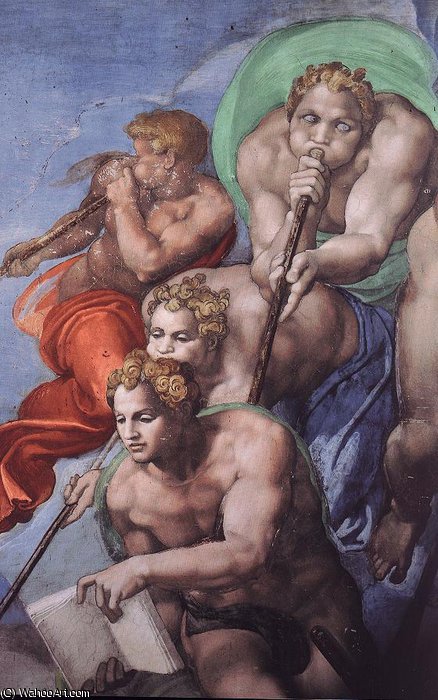
The image before us—often referred to as "Last Judgment d7"—is not merely a painting; it's an experience, a visceral plunge into the heart of humanity’s confrontation with mortality and divine justice. Created by the titan of the High Renaissance, Michelangelo Buonarroti, this monumental work, though shrouded in some mystery regarding its precise commission and location (likely intended for the altar wall of the Old St. Peter’s Basilica), pulsates with a raw energy that transcends time. Michelangelo, born in 1475 in Caprese Michelangelo, Italy, was already a master sculptor by his early twenties, but it was his ambition to tackle painting on this scale – a fresco covering an immense wall – that truly cemented his legacy as a polymath of unparalleled genius.
The scene unfolds with breathtaking dynamism. At its core is the figure holding the trumpet, a potent symbol of both the herald of doom and the call to judgment. His posture, rigid yet conveying a sense of urgent command, immediately draws the eye, anchoring the viewer within this chaotic tableau. Around him swirl figures in varying states of torment and ecstasy – souls being dragged downwards into hell by grotesque demons, while others ascend towards God’s radiant light. The sheer scale of the composition—a testament to Michelangelo's ambition—forces a confrontation with the overwhelming nature of divine judgment.
Michelangelo’s mastery is immediately evident in the anatomical precision of each figure, a hallmark inherited from his sculpting training. He doesn’t shy away from depicting the grotesque – the writhing limbs, contorted faces, and expressions of agony are brutally honest. Yet, within this depiction of suffering, there's an undeniable beauty; Michelangelo imbues even the damned with a tragic grandeur. The *terribilità*, a term often applied to his work, speaks to this potent combination of horror and sublime power.
Technically, “Last Judgment” is executed in fresco—a method requiring rapid application of wet paint onto freshly plastered walls. This necessitated a meticulous planning process, evident in the preparatory drawings that Michelangelo created, revealing the complex network of figures and their interconnected narratives. The vibrant colors, though faded over centuries, retain a remarkable intensity, particularly in the reds and golds used to depict the heavenly realm and the fiery depths of hell. Notice how he uses *chiaroscuro* – the dramatic contrast between light and dark – to heighten the emotional impact, guiding the viewer’s eye through the scene.
The “Last Judgment” is deeply rooted in Christian theology, drawing heavily from biblical accounts of Judgement Day. The trumpet signifies the arrival of Christ, signaling the end of time and the final reckoning. The figures themselves represent a diverse range of humanity – saints, sinners, and ordinary people—all subject to the same inescapable fate. The placement of the two birds, one near the top left corner and another towards the bottom right, is particularly intriguing; they are often interpreted as symbols of hope (the bird ascending) and despair (the bird descending), reflecting the dual nature of salvation and damnation.
Beyond its immediate religious context, the painting speaks to universal themes of mortality, guilt, redemption, and the human condition. Michelangelo’s depiction is not a comforting one; it's a stark reminder of our vulnerability in the face of an unknowable God. The raw emotion conveyed—the anguish, the fear, the desperate plea for mercy—resonates powerfully even today, making “Last Judgment” a timeless masterpiece.
Most-Famous-Paintings offers meticulously crafted hand-painted reproductions of this extraordinary work. We utilize traditional fresco techniques and archival quality pigments to faithfully recreate the intensity and drama of Michelangelo's original. Each reproduction is a testament to our commitment to preserving artistic heritage, allowing you to experience the profound emotional impact of “Last Judgment” in your own space.
Explore our collection today and bring the drama and spirituality of Michelangelo's “Last Judgment” into your home or office.


1475 - 1564 , イタリア


最新の美術ニュース、限定オファー、そしてインテリアのアイデアをいち早くお届けします。
お客様のプロジェクトについてお聞かせください。当社の美術専門家が、お客様に合わせた3つのパーソナライズされた芸術提案をご提供いたします。
あなたにぴったりの3作品を無料で厳選いたします


 プレビュー
プレビュー
 プリントを購入
 シェアする
シェアする シェアする
シェアする
 詳細を見る
詳細を見る

 ダウンロード
 似ている作品
 X線調査
X線調査 スライドショー
 詳細を見る
詳細を見る


