x
 Acrylic On CanvasWallArtPost-Impressionism
 1885Modern
 21.0 x 12.0 cm
迅速な制作と多彩な仕上げオプションを備えた、ミュージアムクオリティのジークレーまたはキャンバスプリント。 ( 手描きの絵画を購入 画像を購入)





























作品のオリジナル比率に合わせた、当店の規定サイズからお選びください。

特定のフレームやスペースに合わせて、ご自身でサイズを指定することも可能です。選択されたサイズが元の画像の比率と一致しない場合、作品をトリミングするか、鏡面反射または単色での塗りつぶしによって画像を拡張いたします。制作を開始する前に、ご確認用のデジタルモックアップをお送りいたします。
画面上のプレビューには、実際のトリミングや拡張は反映されませんのでご注意ください。最終的な構図を正確に確認できるのは、モックアップのみとなります。
カスタムサイズも承っておりますが、元の比率を維持するためには、あらかじめ用意されたリストからサイズを選択することをお勧めいたします。

Blue Flowerpot
複製画のサイズ
Paul Cézanne, born on January 19, 1839, in Aix-en-Provence, France, was a pivotal figure in the transition from late 19th-century Impressionism to early 20th-century Cubism. His father was a successful hatmaker who later became a banker, providing Cézanne with financial security that allowed him to pursue his artistic passions without immediate economic pressure. Initially intended to follow in his father’s footsteps and enter the legal profession, Cézanne eventually abandoned these plans to dedicate himself fully to art.
Early influences included Romanticism and the Barbizon school of landscape painting. He studied briefly at the Académie Suisse in Paris but largely developed his style independently. The works of Paul Gauguin and Georges Seurat, particularly their explorations of color and form, also played a significant role in shaping Cézanne’s artistic direction.
“Blue Flowerpot” (1885) exemplifies Cézanne's Post-Impressionist style, characterized by bold brushstrokes and vivid colours. The painting measures 21 x 12 cm and is executed in watercolour, a medium that allows for delicate yet expressive strokes. The blue flower pot, placed on a table or countertop, is the central focus of the composition. Surrounding it are several potted plants and grasses, creating a lively and cozy indoor scene.
Cézanne’s Post-Impressionist style sought to move beyond Impressionism's fleeting impressions of light and atmosphere by emphasizing underlying structure and form. He achieved this through thick, textured brushstrokes—often applying paint in parallel strokes—that built up layers of colour to create a sense of solidity and depth. The watercolour medium was particularly suited to capturing these effects, allowing for subtle gradations of tone and hue that conveyed the essence of his subjects.
The blue flower pot itself can be seen as a symbol of domesticity and tranquility. Cézanne’s careful arrangement of plants and grasses around it wasn't merely decorative; it served to create visual harmony and balance, mirroring the artist’s belief that art should reflect the natural world with an honest gaze. The use of watercolour allowed for subtle variations in colour and light, enhancing the overall sense of serenity.
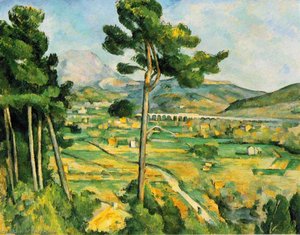
Cézanne's work was influenced by his contemporaries, including Paul Gauguin, who also explored Post-Impressionism. Gauguin's “Landscape with Cows in an Orchard” (available at /art/list/?Filter=8EWPBQ-Paul-Gauguin-Landscape-with-Cows-in-an-Orchard) showcases a similar blend of vibrant colours and everyday subjects. Cézanne’s legacy extends beyond his own works. His influence can be seen in the development of Cubism, with artists like Pablo Picasso drawing inspiration from his compositions. For example, Cézanne's “La Montagne Sainte-Victoire” (available at /art/list/?Filter=D47V82-Paul-Cezanne-La-Montagne-Sainte-Victoire) demonstrates his innovative approach to landscape painting.
“Blue Flowerpot” by Paul Cézanne is a testament to the artist’s skill in capturing the beauty of everyday life. The painting, with its vibrant colours and delicate strokes, invites viewers to appreciate the tranquility of a well-arranged indoor space. For those interested in exploring more of Cézanne's works, Most-Famous-Paintings.com offers high-quality reproductions that bring his artistry into your home.

1839 - 1906 , フランス

Explore the transformative era of Post-Impressionism. Discover how masters like Van Gogh moved beyond light to embrace emotion, structure, and vibrant color, redefining modern art history through expressive brushwork and symbolic depth.


最新の美術ニュース、限定オファー、そしてインテリアのアイデアをいち早くお届けします。
お客様のプロジェクトについてお聞かせください。当社の美術専門家が、お客様に合わせた3つのパーソナライズされた芸術提案をご提供いたします。
あなたにぴったりの3作品を無料で厳選いたします


 プレビュー
プレビュー
 シェアする
シェアする シェアする
シェアする
 詳細を見る
詳細を見る

 ダウンロード
 似ている作品
 X線調査
X線調査 スライドショー
 詳細を見る
詳細を見る









 ガラスオプションは、110cm未満のサイズでのみご利用いただけます。