作品詳細説明
A Moment Frozen in Time: Paul Cézanne’s “The Tree by the Bend”
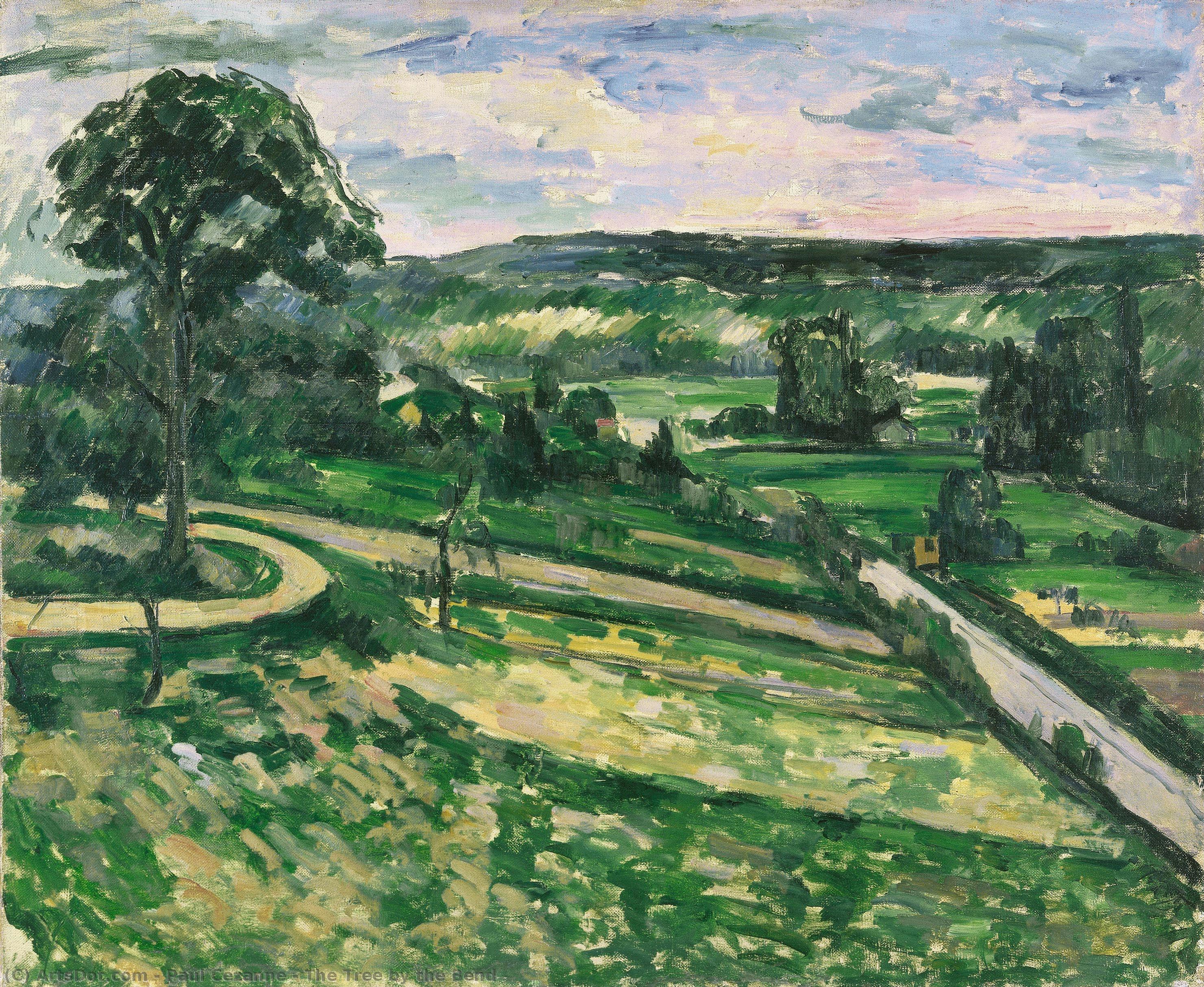
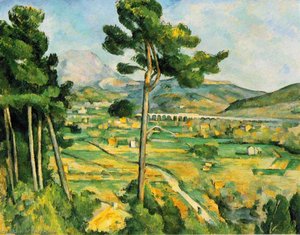
Paul Cézanne's "The Tree by the Bend," painted in 1882, isn’t merely a landscape; it’s an invitation. An invitation to step into a world where observation and emotion intertwine, where the familiar becomes subtly transformed, and where the very act of seeing is elevated to an art form. This painting, currently residing within The Israel Museum in Jerusalem, offers a profound glimpse into Cézanne's revolutionary approach to capturing nature – a foundation that would irrevocably shape the course of modern art. Measuring just 73 x 60 centimeters, it’s deceptively compact, holding within its frame an expansive and deeply considered vision. It’s a scene of quietude, yet brimming with a palpable sense of energy and observation.
The composition immediately draws the eye to two dominant trees, standing sentinel against a backdrop of lush green fields and a hazy sky. These aren't idealized representations; they are rendered with a deliberate solidity, almost sculptural in their form. Cézanne’s genius lies not in replicating reality exactly, but in distilling it – extracting its essential structure and presenting it to the viewer as an independent entity. Notice how he breaks down the trees into geometric planes of color, suggesting volume and depth through carefully placed brushstrokes. The placement of figures scattered throughout the landscape—a family enjoying a picnic, a solitary car parked on the right—adds a touch of modernity, hinting at the encroachment of civilization upon this idyllic scene, yet never disrupting the overall sense of serenity. The subtle use of light and shadow creates an atmospheric depth that is both captivating and profoundly calming.
Cézanne’s style firmly places “The Tree by the Bend” within the realm of Post-Impressionism, a movement he largely defined. He moved beyond the fleeting effects of Impressionism – capturing momentary impressions of light and color – to explore more enduring forms and structures. His brushwork is characterized by bold yet delicate strokes, creating a textured surface that seems to vibrate with life. He employed a technique known as *alla prima*, working directly onto the canvas without underdrawing, allowing for spontaneity and immediacy in his rendering. This approach, combined with his meticulous observation of nature, resulted in paintings that are both intensely personal and universally resonant. The influence of Cézanne is undeniable; he paved the way for movements like Fauvism and Cubism, demonstrating how art could move beyond mere representation to explore the very essence of form and space.
The painting’s historical context is crucial to understanding its significance. Cézanne was grappling with the limitations of traditional academic art—the rigid rules of perspective and composition—and seeking a new language for expressing his vision. He looked back to the Old Masters, particularly Renaissance artists like Poussin, but ultimately rejected their conventions in favor of a more intuitive approach. His work reflects a desire to capture not just what he *saw*, but also how he *felt* about what he saw – a deeply subjective and intensely personal response to the natural world. Furthermore, Cézanne’s exploration of color was revolutionary; he moved away from the pastel hues favored by Impressionists towards more saturated and expressive tones, creating paintings that are both visually striking and emotionally charged.
“The Tree by the Bend” is more than just a beautiful landscape painting; it's a testament to Cézanne’s artistic vision and his profound impact on the development of modern art. It invites us to slow down, to observe with intention, and to appreciate the beauty and complexity of the natural world. Reproductions offered by Most-Famous-Paintings.com allow you to bring this captivating scene into your own space, experiencing firsthand the genius of Paul Cézanne and his enduring legacy. To delve deeper into Cézanne’s artistic journey, we encourage you to explore other notable works such as “In the Woods,” also available on Most-Famous-Paintings.com, showcasing his mastery over diverse landscapes and themes. For those interested in understanding the broader context of Impressionist painting, Claude Monet's extensive body of work provides a valuable resource – a comprehensive list can be found on Wikipedia.