x
迅速な制作と多彩な仕上げオプションを備えた、ミュージアムクオリティのジークレーまたはキャンバスプリント。 ( 手描きの絵画を購入 画像を購入)





























作品のオリジナル比率に合わせた、当店の規定サイズからお選びください。

特定のフレームやスペースに合わせて、ご自身でサイズを指定することも可能です。選択されたサイズが元の画像の比率と一致しない場合、作品をトリミングするか、鏡面反射または単色での塗りつぶしによって画像を拡張いたします。制作を開始する前に、ご確認用のデジタルモックアップをお送りいたします。
画面上のプレビューには、実際のトリミングや拡張は反映されませんのでご注意ください。最終的な構図を正確に確認できるのは、モックアップのみとなります。
カスタムサイズも承っておりますが、元の比率を維持するためには、あらかじめ用意されたリストからサイズを選択することをお勧めいたします。

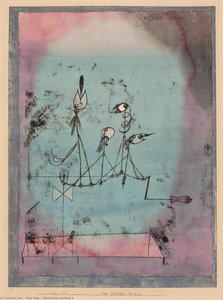
Like a Window Pane
複製画のサイズ
In the quiet, rhythmic dance of Paul Klee’s “Like a Window Pane,” we encounter more than just a collection of shapes; we enter a sanctuary of pure visual emotion. Painted during the twilight years of the artist's life, between 1936 and 1940, this masterpiece serves as a profound testament to Klee’s ability to distill the chaos of existence into a harmonious, geometric language. The composition, a delicate patchwork of interlocking squares, invites the viewer to peer through a translucent veil of color, much like looking through a stained-glass window caught in the soft glow of morning light. It is an exploration of Geometric Abstraction that transcends mere decoration, offering instead a meditative experience where every hue and line serves a higher structural purpose.
The technical mastery behind this work lies in Klee’s exquisite use of watercolor on paper. Unlike the heavy, opaque strokes found in much of the Expressionist movement, Klee employs translucent washes that allow for a breathtaking interplay of light. As the pigment disperses across the fibers of the paper, underlying tones bleed into one another, creating an ethereal depth that feels almost alive. This layering technique ensures that no two squares are truly identical; some vibrate with a concentrated intensity, while others recede into a soft, atmospheric haze. For the discerning collector or interior designer, this fluidity provides a sense of movement and luminosity, making it a piece that breathes within a room, changing its character as the natural light shifts throughout the day.
To truly appreciate “Like a Window Pane,” one must consider the turbulent era from which it emerged. Created amidst the gathering shadows of World War II, the painting reflects a period of immense political instability and societal upheaval. In response to a world fracturing into discord, Klee sought refuge in the pursuit of fundamental artistic truths. He turned inward, utilizing Jungian psychology and Eastern philosophies to construct a visual metaphor for stability. The interlocking squares are not merely random shapes; they represent a profound sense of unity and interconnectedness. Each cell in this colorful mosaic acts as a microcosm, suggesting that even within a fragmented reality, there exists an underlying order and a possibility for cosmic harmony.
For those seeking to integrate art into a modern living space, this work offers a unique balance of intellectual depth and aesthetic grace. It possesses the rare ability to act as both a focal point of vibrant energy and a calming presence of structured peace. The painting’s symbolism—the idea of the window pane as a threshold between the internal soul and the external world—resonates deeply with anyone who views art as a tool for introspection. Owning a high-quality reproduction of this Klee masterpiece is not simply about acquiring a beautiful object; it is about inviting a piece of history into one's home, a piece that celebrates the enduring human spirit’s quest for balance, color, and light amidst the darkness.


1879 - 1940 , スイス

Master the complexities of Geometric Abstraction. Our expert guide explores the evolution from Cubist deconstruction to Bauhaus precision, decoding the power of shape and form. Perfect for art students seeking deep historical context and academic insight into modern masterpieces.

Explore the profound impact of Minimalism and Geometric Abstraction. From Mondrian to Malevich, discover how stripping art to its essential forms revolutionized modern aesthetics through our expert-led historical guide.


最新の美術ニュース、限定オファー、そしてインテリアのアイデアをいち早くお届けします。
お客様のプロジェクトについてお聞かせください。当社の美術専門家が、お客様に合わせた3つのパーソナライズされた芸術提案をご提供いたします。
あなたにぴったりの3作品を無料で厳選いたします


 プレビュー
プレビュー
 シェアする
シェアする シェアする
シェアする
 詳細を見る
詳細を見る

 ダウンロード
 似ている作品
 X線調査
X線調査 スライドショー

 詳細を見る
詳細を見る









 ガラスオプションは、110cm未満のサイズでのみご利用いただけます。