x
 Oil On CanvasWallArtImpressionist Painting
 190819th Century
 151.0 x 109.0 cm
 National Gallery of Denmark




























作品のオリジナル比率に合わせた、当店の規定サイズからお選びください。

特定のフレームやスペースに合わせて、ご希望のサイズをご入力いただけます。選択されたサイズが元の画像の比率と異なる場合、アートワークをトリミングするか、手描きで要素を追加して絵画を拡張いたします。デジタルモックアップ を制作し、制作開始前にご確認(承認)をいただきます。
画面上のプレビューは、実際のトリミングや拡張を正確に反映しているものではありません。最終的な構図は、モックアップによってのみ正確にご確認いただけます。
カスタムサイズもご利用いただけますが、元の比率を維持するためには、あらかじめ用意されたリストからサイズを選択することをお勧めいたします。

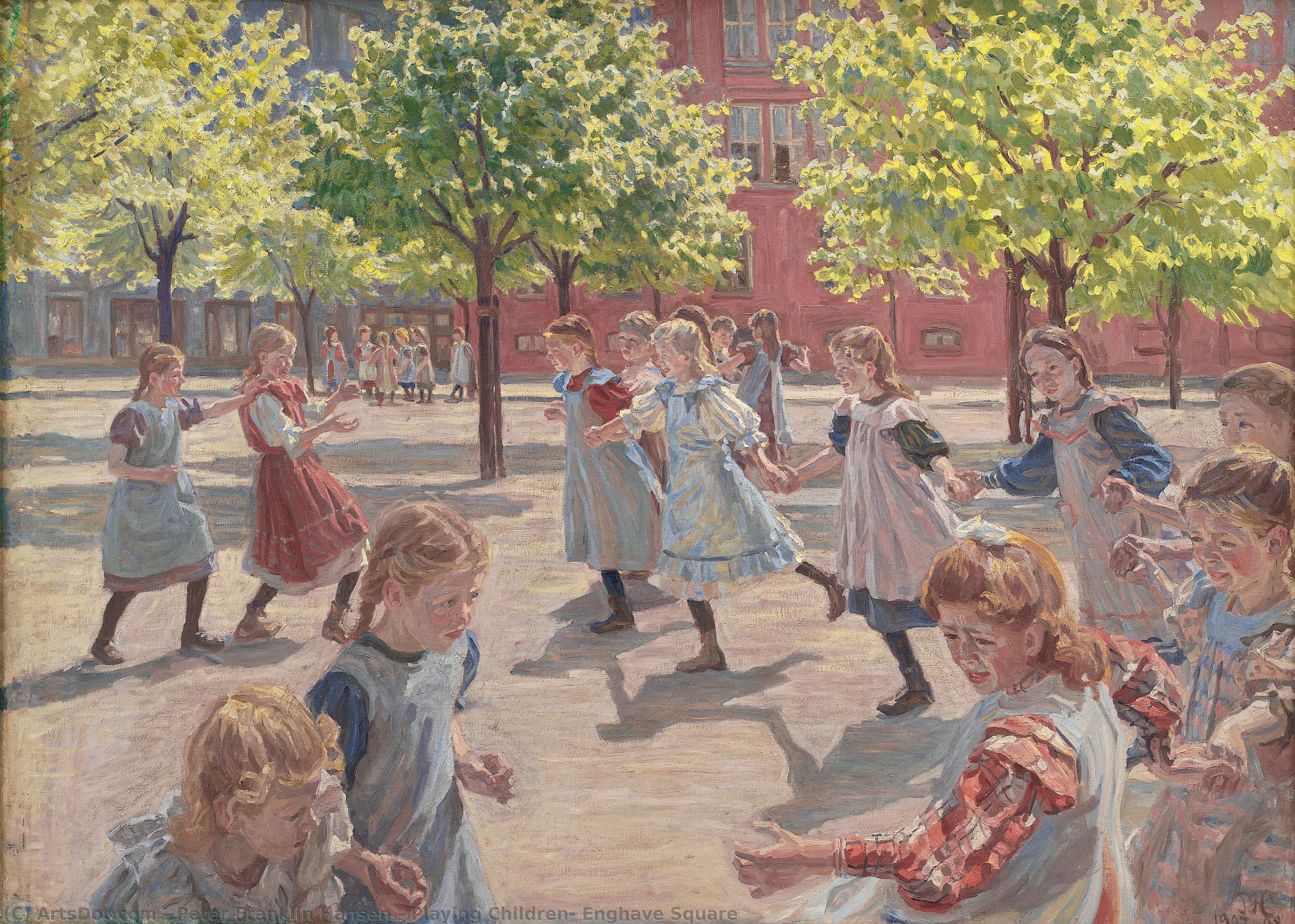
Playing Children, Enghave Square
複製画のサイズ
“Playing Children, Enghave Square,” painted in 1908 by Peter Franklin Hansen, is more than just a depiction of children at play; it's a vibrant distillation of Impressionistic sensibility and a poignant observation of everyday life. Created during a period of significant artistic experimentation – the late 19th and early 20th centuries saw a fervent embrace of new techniques and subject matter – this work exemplifies Hansen’s ability to capture fleeting moments with remarkable immediacy. The painting, measuring 151 x 109 cm, transports the viewer directly into the heart of Copenhagen's Enghave neighborhood, offering an intimate glimpse into a scene brimming with youthful energy and social connection.
Hansen’s masterful use of oil on canvas demonstrates a deep understanding of Impressionist principles. He eschews meticulous detail in favor of capturing the effects of light and color, resulting in a luminous and atmospheric portrayal. The palette is dominated by bright, vibrant hues – greens, blues, and yellows – reflecting the dappled sunlight filtering through the new-leaved trees. Note the way he uses broken brushstrokes to create a sense of movement and texture, particularly evident in the children’s clothing and the foliage. This technique wasn't simply about replicating what Hansen *saw*, but rather conveying his *impression* of the scene – a feeling of joy, spontaneity, and youthful exuberance.
Painted in 1908, “Playing Children” reflects the burgeoning interest in depicting everyday life within the art world. The rise of Impressionism challenged traditional academic styles, advocating for artists to capture scenes from modern life rather than historical or mythological subjects. Hansen’s focus on children playing also speaks to a broader social trend – an increasing fascination with childhood and its innocence. Furthermore, the painting subtly captures a moment of community interaction, highlighting the importance of social connection within the neighborhood.
The image resonates with a powerful sense of nostalgia and joy. The children’s hand-in-hand formation symbolizes unity and friendship, while their carefree play embodies the unburdened spirit of childhood. The flickering reflections in their faces suggest a fleeting moment captured in time – a reminder of the transient nature of beauty and happiness. “Playing Children, Enghave Square” is not merely a painting; it’s an emotional evocation of a cherished memory, inviting viewers to reconnect with their own sense of wonder and delight.

In the grand tapestry of twentieth-century American culture, few figures embody the unexpected intersection of performance and fine art as poignantly as Peter Franklin Hansen. While millions of viewers worldwide recognized his face through the decades of dramatic tension on the iconic soap opera General Hospital, a much more private, contemplative dialogue was unfolding within the quiet confines of his studio. To many, he was the steadfast Lee Baldwin, a character defined by legal precision and moral gravity; yet, beneath this celebrated persona lay an artist whose brush sought to capture the ephemeral beauty of the human form and the subtle nuances of light.
Born on December 5, 1921, in Urbana, Illinois, Hansen’s early life was shaped by a family lineage rooted in Detroit, Michigan. Though the specific details of his childhood remain shrouded in a certain biographical mystery, there is an undeniable sense that his formative years were steeped in a burgeoning sensitivity to visual aesthetics. This innate curiosity would later manifest in a stylistic language heavily influenced by the profound legacies of European Impressionism and Expressionism. These movements, characterized by their emotive use of color and their ability to convey atmosphere over mere anatomical accuracy, provided the foundational vocabulary for his later explorations into figurative painting.
Hansen’s artistic development was a slow, deliberate process that ran parallel to his meteoric rise in Hollywood. As he mastered the art of character portrayal on screen—learning to convey deep-seated emotion through a single glance or a subtle shift in posture—he simultaneously applied these lessons to the canvas. His work in figurative painting serves as a fascinating counterpoint to his dramatic roles; where his acting required the projection of persona, his painting demanded an inward retreat into observation and texture.
His approach to the canvas was never merely about reproduction, but rather about capturing the essence of his subjects. Through his use of light, one can discern the echoes of the Impressionist masters, particularly in how he allowed shadows to breathe and colors to bleed into one another, creating a sense of movement within static figures. His paintings often possess a certain psychological depth, perhaps a byproduct of his years spent inhabiting the complex emotional landscapes of dramatic scripts. In his hands, the human figure becomes more than just a subject; it becomes a vessel for light, shadow, and the silent narratives of existence.
The historical significance of Peter Franklin Hansen lies in this rare, seamless bridge between two seemingly disparate worlds: the ephemeral, public spectacle of television and the enduring, private intimacy of fine art. While his cinematic contributions—ranging from his long-standing tenure on General Hospital to appearances in films like The War of the Roses—secured his place in the annals of American entertainment, his paintings offer a more profound look into his soul.
To study Hansen’s oeuvre is to witness a life lived in pursuit of multifaceted expression. He reminds us that creativity is not a singular path but a sprawling landscape where the actor and the painter can coexist, each informing and enriching the other. His legacy remains a testament to the idea that true artistry knows no boundaries, flourishing equally under the bright lights of a television set and the soft, focused glow of a studio lamp.

1921 - 2017 , United States of America

印象派風景の革新を彩った10選。モネ、ルノワールら巨匠の名作を紐解き、色彩と光が生み出す感動の世界へ。アートの歴史とインテリアのインスピレーションをMost-Famous-Paintings.comで。高品質な複製画で、あなただけの空間を創造しましょう。

ルノワールの傑作25選🎨 印象派の光と色彩が輝く世界へ。絵画の背景、技法、そして時代を超えて愛される理由を紐解きます。Most-Famous-Paintingsで高品質な複製画やインテリアアートを見つけ、お部屋に芸術的な彩りを✨ Explore the full collection online!

Journey through Impressionistic Realism with 10 iconic masterpieces by Monet, Renoir & Van Gogh. Explore art history, techniques & find museum-quality reproductions for your home at Most-Famous-Paintings.com. Discover all masterpieces online!

Explore the ethereal beauty of Impressionist landscapes. Discover how masters like Monet captured fleeting light through color and texture, and learn to curate these timeless, luminous masterpieces for your home collection.

Journey into the heart of Impressionism! Explore 10 masterpieces by Monet, Renoir & Degas that revolutionized landscape art. Discover their stories, techniques & find museum-quality reproductions to elevate your home decor on Most-Famous-Paintings.com.


最新の美術ニュース、限定オファー、そしてインテリアのアイデアをいち早くお届けします。
お客様のプロジェクトについてお聞かせください。当社の美術専門家が、お客様に合わせた3つのパーソナライズされた芸術提案をご提供いたします。
あなたにぴったりの3作品を無料で厳選いたします


 プレビュー
プレビュー
 プリントを購入
 シェアする
シェアする シェアする
シェアする
 詳細を見る
詳細を見る

 ダウンロード
 似ている作品
 X線調査
X線調査 スライドショー
 詳細を見る
詳細を見る









 ガラスオプションは、110cm未満のサイズでのみご利用いただけます。