x
 Oil On CanvasWallArtBaroque Painting
 1655
1655 108.0 x 86.0 cm
 プラド美術館
迅速な制作と多彩な仕上げオプションを備えた、ミュージアムクオリティのジークレーまたはキャンバスプリント。 ( 手描きの絵画を購入 画像を購入)





























作品のオリジナル比率に合わせた、当店の規定サイズからお選びください。

特定のフレームやスペースに合わせて、ご自身でサイズを指定することも可能です。選択されたサイズが元の画像の比率と一致しない場合、作品をトリミングするか、鏡面反射または単色での塗りつぶしによって画像を拡張いたします。制作を開始する前に、ご確認用のデジタルモックアップをお送りいたします。
画面上のプレビューには、実際のトリミングや拡張は反映されませんのでご注意ください。最終的な構図を正確に確認できるのは、モックアップのみとなります。
カスタムサイズも承っておりますが、元の比率を維持するためには、あらかじめ用意されたリストからサイズを選択することをお勧めいたします。

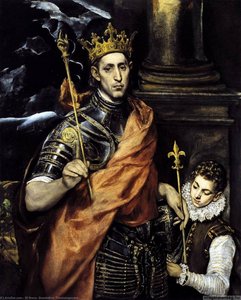
King Louis XIII
複製画のサイズ
Philippe de Champaigne’s “King Louis XIII” is more than just a royal portrait; it's a meticulously crafted distillation of power, authority, and the weighty responsibilities borne by a young king navigating a turbulent era. Painted in 1655 during the height of Louis XIII’s reign, this oil on canvas masterpiece offers a rare glimpse into the man behind the crown – a figure both formidable and subtly introspective. The painting resides within the esteemed collection of the Museo del Prado in Madrid, a testament to its enduring artistic merit and historical significance.
Champaigne's style is distinctly Baroque, characterized by dramatic lighting, rich textures, and an emphasis on realistic detail. He masterfully employs chiaroscuro – the interplay of light and shadow – to sculpt Louis XIII’s form, lending him a palpable sense of presence and gravitas. The king isn’t depicted in flamboyant splendor; rather, Champaigne favors a restrained elegance, focusing on conveying dignity and control through posture and expression. Note the deliberate positioning of his hands, resting calmly yet purposefully upon the armrest – a subtle display of authority that speaks volumes about his command over the kingdom.
Louis XIII’s reign was defined by constant challenges: the lingering threat of religious conflict between Catholics and Huguenots, the machinations of powerful Italian advisors like Cardinal Richelieu, and the ongoing struggle to consolidate royal authority after his father's assassination. This turbulent backdrop is subtly reflected in the painting’s composition. The somber palette – dominated by deep reds, browns, and blacks – evokes a sense of seriousness and responsibility. The carefully chosen details—the richly embroidered velvet robe, the ornate sword, the jeweled ring—are not merely decorative; they are symbols of his royal status and the burdens he carries.
Historical context is crucial to understanding this portrait. Louis XIII ascended the throne at a precarious age, inheriting a kingdom riddled with political intrigue and religious divisions. His early years were marked by instability and the constant need to balance competing factions. Champaigne’s decision to portray Louis XIII in a relatively austere manner—avoiding excessive ornamentation or theatrical gestures—suggests an awareness of this delicate situation. He sought to convey not just the king's power, but also his wisdom and restraint.
Beyond the obvious symbols of royalty, “King Louis XIII” is rich in subtle visual cues. The king’s gaze, direct and unwavering, conveys a sense of self-awareness and perhaps even melancholy. The inclusion of the sword – a traditional emblem of power and justice – underscores his role as protector of the realm. However, it's the small details—the slight furrow of his brow, the subtle tension in his muscles—that lend the portrait an unexpected intimacy. Champaigne doesn’t present us with a distant, idealized image of royalty; instead, he offers a glimpse into the inner life of a man grappling with immense responsibility.
Interestingly, the painting underwent a later transformation. Champaigne reworked it in 1662 to depict Louis XIII as Saint Louis, reflecting the growing influence of Jansenism within the French court and the king’s personal piety. This adaptation highlights Champaigne's versatility as an artist and his ability to respond to evolving cultural and religious currents. The original portrait remains a powerful testament to Louis XIII’s reign, while the later version offers a poignant reflection on the king’s spiritual life.
“King Louis XIII” by Philippe de Champaigne is a remarkable achievement of Baroque portraiture—a painting that transcends its historical context and continues to resonate with viewers today. Its masterful composition, evocative use of light and shadow, and subtle psychological insights combine to create an image of enduring power and beauty. Whether admired for its artistic merit or its historical significance, this portrait remains a captivating window into the life and times of one of France’s most complex and influential monarchs.


1602 - 1674 , オランダ

Explore the profound elegance of Baroque Classicism. Discover how 17th-century masters synthesized dramatic emotion with classical order through the lens of the Counter-Reformation and the works of legends like Carlo Maratta and Andrea Sacchi.

Explore the dramatic power of Baroque art through an expert guide to light, shadow, and emotion. Discover how the Counter-Reformation shaped 17th-century masterpieces and learn about the profound techniques used by the Old Masters to inspire awe.

Explore the dramatic world of Baroque portraiture. Discover how masters used chiaroscuro and light to evoke profound emotion during the Counter-Reformation. A definitive guide for art enthusiasts seeking to understand the power of 17th-century masterpieces.

Explore the profound differences between Baroque drama and Rococo elegance. Our expert guide delves into art history, chiaroscuro, and the evolution of European masterpieces for collectors and enthusiasts seeking deep historical context.

Explore the dramatic evolution from Mannerist distortion to Baroque grandeur. Discover how light, shadow, and emotion redefined art history through a masterclass in technical mastery and religious fervor.


最新の美術ニュース、限定オファー、そしてインテリアのアイデアをいち早くお届けします。
お客様のプロジェクトについてお聞かせください。当社の美術専門家が、お客様に合わせた3つのパーソナライズされた芸術提案をご提供いたします。
あなたにぴったりの3作品を無料で厳選いたします


 プレビュー
プレビュー
 シェアする
シェアする シェアする
シェアする
 詳細を見る
詳細を見る

 ダウンロード
 似ている作品
 X線調査
X線調査 スライドショー
 詳細を見る
詳細を見る









 ガラスオプションは、110cm未満のサイズでのみご利用いただけます。