A Vision of Harmony: Exploring Piet Mondrian’s Dune IV
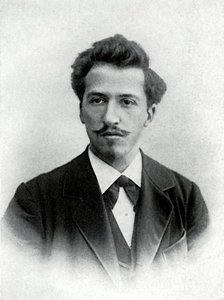
Piet Mondrian (1872-1944), a Dutch painter whose influence reverberates throughout modern art, embarked on his artistic journey with an initial fascination for landscape painting—a pursuit rooted in the traditions of the Hague School and Impressionism. Early canvases like *The Red Mill* demonstrate meticulous observation of nature alongside a nascent desire to transcend mere representation. Even at this formative stage, Mondrian wasn’t simply mirroring what he saw; he wrestled with capturing its essence, hinting at an ambition that would ultimately define his groundbreaking contribution to abstraction. This early experimentation encompassed Pointillism and Fauvism—each offering distinct approaches to color and form—yet none fully satisfied his evolving artistic sensibilities.
- Style: Fauvist – Mondrian’s Dune IV exemplifies the Fauvist movement, prioritizing expressive color over naturalistic depiction.
- Medium: Oil on Cardboard – The painting utilizes oil paint applied to cardboard, a deliberate choice that contributes to its textural richness and durability.
- Dimensions: 33 x 46 cm – Its moderate size allows for detailed examination of Mondrian’s compositional strategies.
Compositional Simplicity & Geometric Precision
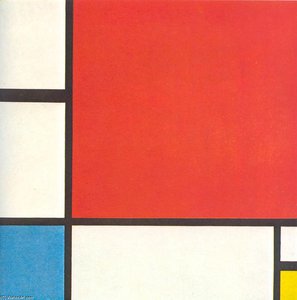
The artwork's visual impact stems from Mondrian’s masterful simplification of form—a cornerstone of his Neo-Plasticist philosophy. Dune IV abandons traditional perspective and illusionistic techniques, opting instead for a grid structure composed of horizontal and vertical lines intersecting at right angles. This geometric abstraction isn’t merely aesthetically pleasing; it represents Mondrian's belief in universal harmony achieved through the reduction of visual elements to their fundamental components—a concept deeply influenced by Zen Buddhism and Russian Constructivism. The careful placement of these lines creates a dynamic equilibrium, guiding the viewer’s eye across the canvas and emphasizing the interplay between opposing forces.
Color Palette & Emotional Resonance
Mondrian's audacious use of color—primarily shades of orange-red for the dunes and blue for the sky—is central to Dune IV’s expressive power. These hues aren’t chosen according to naturalistic conventions but rather serve as conduits for conveying emotion and spiritual contemplation. The vibrant reds evoke passion and energy, while the blues instill calmness and serenity. Mondrian deliberately avoids blending colors, maintaining distinct planes of pigment that heighten visual impact and reinforce the painting's geometric structure. This technique underscores his conviction that color itself possesses inherent symbolic significance—a belief rooted in Jungian psychology and reflecting a desire to tap into universal archetypes.
Historical Context & Legacy
Created in 1909-1910, Dune IV emerged during a period of significant artistic upheaval—the Fauvist movement challenged the prevailing academic traditions of Impressionism and Post-Impressionism. Mondrian’s work signaled a decisive break from representational art, paving the way for the development of Abstract Expressionism and Minimalism decades later. Dune IV stands as an enduring testament to Mondrian's unwavering commitment to geometric abstraction and his profound exploration of spiritual principles—a legacy that continues to inspire artists and designers worldwide. Its influence can be seen in countless architectural designs and interior spaces where simplicity, clarity, and harmonious color palettes are prioritized.