x































作品のオリジナル比率に合わせた、当店の規定サイズからお選びください。

特定のフレームやスペースに合わせて、ご自身でサイズを指定することも可能です。選択されたサイズが元の画像の比率と一致しない場合、作品をトリミングするか、鏡面反射または単色での塗りつぶしによって画像を拡張いたします。制作を開始する前に、ご確認用のデジタルモックアップをお送りいたします。
画面上のプレビューには、実際のトリミングや拡張は反映されませんのでご注意ください。最終的な構図を正確に確認できるのは、モックアップのみとなります。
カスタムサイズも承っておりますが、元の比率を維持するためには、あらかじめ用意されたリストからサイズを選択することをお勧めいたします。

Judith's Return to Bethulia
複製画のサイズ
Sandro Botticelli's Judith’s Return to Bethulia , painted around 1472 and currently residing within the hallowed halls of the Uffizi Gallery in Florence, is more than just a depiction of a biblical narrative; it’s a potent distillation of Renaissance ideals – courage, faith, and the enduring strength of women. This small-format tempera on panel offers an intimate glimpse into a pivotal moment: Judith's triumphant return to Bethulia bearing the severed head of Holofernes, the Assyrian general she had so cleverly deceived. Botticelli’s masterful handling of light and shadow, coupled with his signature graceful lines, elevates this scene beyond mere illustration, transforming it into a compelling meditation on victory and resilience.
The painting immediately draws the eye to Judith herself, rendered as a figure of remarkable composure amidst apparent chaos. Her face, subtly reminiscent of the central figure in Botticelli’s earlier *Fortitude* (1470), hints at a shared psychological depth – a quiet determination beneath an outward serenity. She carries the head of Holofernes within a simple sack, a stark symbol of her power and the subjugation of tyranny. Beside her stands Susanna, equally dignified, offering support and perhaps a reflection on their shared victory against adversity. The forest setting, rendered with atmospheric perspective, adds to the sense of drama and isolation, emphasizing Judith’s journey from danger to triumph.
Botticelli’s early style is evident in his use of tempera on panel – a technique favored for its luminous colors and ability to retain detail. The palette is rich yet restrained, dominated by earthy tones—ochres, browns, and deep reds—contrasting sharply with the pale flesh of the women. Notice how Botticelli employs *sfumato*, a subtle blurring of lines and edges, particularly around Judith’s face, creating an ethereal quality that softens her features while simultaneously emphasizing her strength. The meticulous rendering of fabric – the sack, Susanna's cloak – demonstrates Botticelli’s dedication to anatomical accuracy and his keen observation of the natural world.
Interestingly, the painting reveals influences from artists like Antonio del Pollaiolo and Mantegna, both known for their dramatic compositions and expressive figures. Botticelli seems to have absorbed elements of their style while maintaining a distinctly personal vision. The dynamic pose of Judith, holding aloft the head of Holofernes, echoes the heroic gestures found in earlier Renaissance art, but Botticelli imbues it with a uniquely human vulnerability.
The story of Judith is steeped in symbolism. Judith herself represents Jewish courage and faith in the face of overwhelming odds. Her deception of Holofernes highlights the power of intelligence and strategic thinking as weapons against brute force. The sack containing the head symbolizes not just victory, but also a warning to all who would threaten the Israelites. It’s a potent reminder that even the most formidable enemies can be overcome through cunning and divine assistance.
Beyond the immediate narrative, *Judith’s Return to Bethulia* speaks to broader Renaissance themes of virtue, honor, and the role of women in society. In an era where female figures were often relegated to passive roles, Botticelli presents Judith as a proactive agent of change – a warrior queen who secures her people's freedom through her own actions. The painting’s enduring appeal lies in its ability to resonate with viewers across centuries, offering a timeless celebration of female strength and resilience.
Botticelli’s *Judith’s Return to Bethulia* is a cornerstone of the Italian Renaissance. At Most-Famous-Paintings.com , we are proud to offer meticulously crafted, hand-painted oil painting reproductions that capture the essence and beauty of this iconic masterpiece. Our skilled artisans utilize traditional techniques and archival-quality materials to create faithful representations that will grace your home or office with Botticelli’s genius. Whether you're an art enthusiast, a collector, or simply seeking to add a touch of Renaissance elegance to your space, our reproductions provide an accessible and authentic way to experience the power and artistry of this remarkable painting.

1445年頃、フィレンツェで生まれたアレッサンドロ・ディ・マリアーノ・ディ・ヴァンニ・フィリペピ。後にサンドロ・ボッティチェリとして知られる彼は、初期ルネサンス期の最も重要な芸術家の一人であり、その作品は美と調和の象徴として、時代を超えて人々を魅了し続けています。彼の人生は、メディチ家の庇護のもと、フィレンツェという文化の中心地で展開され、芸術、哲学、文学が花開く時代を背景に、独自の芸術世界を築き上げました。
ボッティチェリの初期の教育については詳細は不明ですが、金細工師としての修行を経て、画家フィリッポ・リッピのもとで絵画技術を習得したことが知られています。リッピの影響を受けながらも、彼は独自のスタイルを確立し、アンтонио・デル・ポーライオーロやアンドレア・デル・ヴェロッキオといった同時代の巨匠からも影響を受けました。特に、彫刻的な人物描写と、繊細な線描が特徴的であり、彼の作品に独特の魅力を生み出しました。
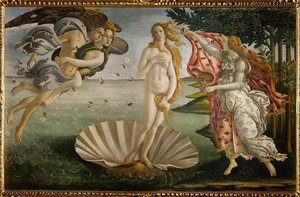
ボッティチェリの芸術の特徴は、その優雅で詩情豊かな表現にあります。「ヴィーナスの誕生」や「春(プリマヴェーラ)」に見られるように、古典古代の神話や寓意を題材に取り入れながら、独自の解釈と美意識に基づいた作品を生み出しました。これらの作品は、単なる物語の描写ではなく、愛、美、そして精神的な高揚といった普遍的なテーマを探求するものであり、ルネサンス期の人文主義思想を体現するものとして高く評価されています。彼の描く人物たちは、洗練された衣装を身につけ、優雅なポーズをとっており、まるで生きているかのような生命力に満ち溢れています。
ボッティチェリの作品は、その繊細な色彩と線描によって特徴づけられます。彼は、テンペラ画という技法を多用し、鮮やかな色彩と緻密な描写を実現しました。また、彼の作品には、銀筆(シルバーポイント)による下絵が施されていることが多く、その繊細なタッチは、最終的な作品の完成度を高めています。特に「ヴィーナスの誕生」におけるヴェーヌス像の肌の表現や、「春」における人物たちの衣装の描写は、彼の卓越した技術力の証と言えるでしょう。
15世紀末には、ドミニコ会の修道士ジロラモ・サヴォナローラの布教活動の影響を受け、ボッティチェリの芸術にも変化が見られます。サヴォナローラは、当時のフィレンツェにおける奢侈や退廃を厳しく非難し、宗教的な清貧と禁欲を説きました。その結果、ボッティチェリもまた、自身の作品に宗教的なテーマを取り入れ、より内省的で精神的な表現へと傾倒していったのです。
しかし、彼の晩年の作品は、当時の世情に受け入れられず、忘れ去られてしまうという憂き目に遭いました。19世紀に入り、前ラファエロ派の画家たちがボッティチェリの作品を再評価し、その芸術的な価値を広く知らしめました。彼らの熱心な支持によって、ボッティチェリはルネサンス期の最も重要な芸術家の一人として、再び脚光を浴びることになったのです。
今日、ボッティチェリの作品は、世界中の美術館に所蔵されており、多くの人々を魅了し続けています。彼の作品は、ルネサンス期における美意識と精神性を象徴するものであり、芸術史において不朽の名声を確立しています。特に「ヴィーナスの誕生」や「春」は、西洋美術の金字塔として、その地位を不動のものとしているのです。
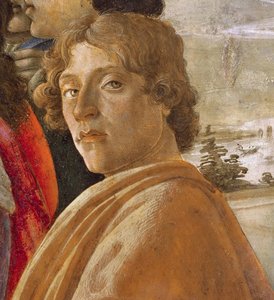
1445 - 1510 , イタリア
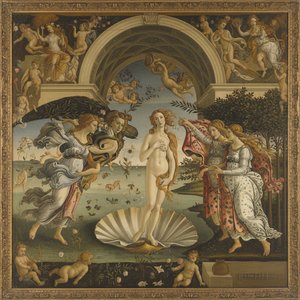
ボッティチェリの至宝25選。ルネサンス美術を代表する「春」「ヴィーナスの誕生」など、名画の物語と芸術史を紐解きます。Most-Famous-Paintingsで高品質な複製画やインテリアアートを見つけ、お部屋に永遠の美を。今すぐコレクションをご覧ください。
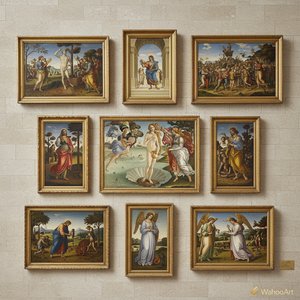
初期ルネサンス美術の革新を彩る10選。ボッティチェリ、ダ・ヴィンチの名作から、時代を超越する美と技術を紐解きます。壁掛けアートやインテリアにインスピレーションを。Most-Famous-Paintings.comで至宝のコレクションをオンラインで発見しましょう!
ミュンヘン・アルテ・ピナコテークの至宝25選。ドゥーラー、ラファエロ、レンブラントの名画を紐解き、ルネサンス美術とバロック美術の輝きをご堪能ください。Most-Famous-Paintingsで高品質なアートプリントや複製画を見つけ、お部屋に芸術の彩りを。今すぐコレクションをご覧ください。

メトロポリタン美術館の至宝25選。モネ、ゴッホ、レンブラント…名画に秘められた物語と技法を紐解きます。印象派からルネサンスまで、時代を超えて輝く芸術作品をウォールアートで暮らしに取り入れませんか?Most-Famous-Paintings.comで全コレクションをご覧ください。
ワシントン美術館の至宝25選。セザンヌ、マティス、ピカソ…名画に秘められた物語と色彩を紐解きます。Most-Famous-Paintingsで高品質な絵画複製やインテリアアートを見つけ、お部屋に芸術の輝きを。今すぐコレクションをご覧ください!


最新の美術ニュース、限定オファー、そしてインテリアのアイデアをいち早くお届けします。
お客様のプロジェクトについてお聞かせください。当社の美術専門家が、お客様に合わせた3つのパーソナライズされた芸術提案をご提供いたします。
あなたにぴったりの3作品を無料で厳選いたします


 手描き複製画を注文する
 シェアする
シェアする シェアする
シェアする
 詳細を見る
詳細を見る

 ダウンロード
 似ている作品
 X線調査
X線調査 スライドショー

 詳細を見る
詳細を見る









 ガラスオプションは、110cm未満のサイズでのみご利用いただけます。