作家の略歴
A Life Imbued with Light: The Journey of Stephen Morgan Etnier
Stephen Morgan Etnier, born in York, Pennsylvania, on September 11, 1903, was an artist whose life and work were inextricably linked to a restless spirit and a profound sensitivity to the natural world. He wasn’t destined for the canvas; his upbringing within the privileged confines of the Wyndham Estate, home to the successful Smith family (his grandfather founded Vioth Hydro), initially pointed towards a career in business. However, Etnier harbored a deep-seated aversion to the perceived constraints of office life, an early rebellion fueled by a nascent artistic impulse. This urge manifested first in youthful attempts at verse and then, crucially, through copying Western paintings discovered within the Hill School library around 1919. These weren’t merely exercises in technique; they were explorations of a landscape that resonated with his own experiences and a growing desire to capture fleeting moments of beauty. His early artistic endeavors served as an escape, a means of self-expression for a young man who felt somewhat adrift academically and socially.
From Academic Pursuits to the Allure of Luminism
Etnier’s formal education was characterized by a degree of peripatetic exploration—Yale University, Yale Art School, Haverford College, Boothbay Art School, apprenticeships with Rockwell Kent and John Carroll – a testament to his search for the right environment. While he didn't always thrive within traditional academic structures, these experiences were formative. He was elected into the National Academy of Design as an Associate in 1950, later achieving full Academician status in 1953, alongside honorary doctorates from Bates and Bowdoin Colleges. But it wasn’t institutional recognition that truly defined his artistic path; rather, it was a gradual evolution towards a distinctive style blending realism with the atmospheric qualities of Luminism. Inspired by the romantic vision presented in Somerset Maugham's *The Moon and Sixpence*, Etnier launched his career with a solo exhibition at Dudensing Galleries in New York City in 1931, followed by a long association with the Milch Gallery. His early work documented scenes from Pennsylvania streets to the vibrant waterfronts of Haiti and the Bahamas, often created while sailing aboard his 70-foot yacht, *Morgana*. These paintings weren’t simply depictions of place; they were imbued with a sense of personal experience, a traveler's eye seeking out moments of quiet beauty.
A Palette Shaped by Experience: War, Travel and Isolation
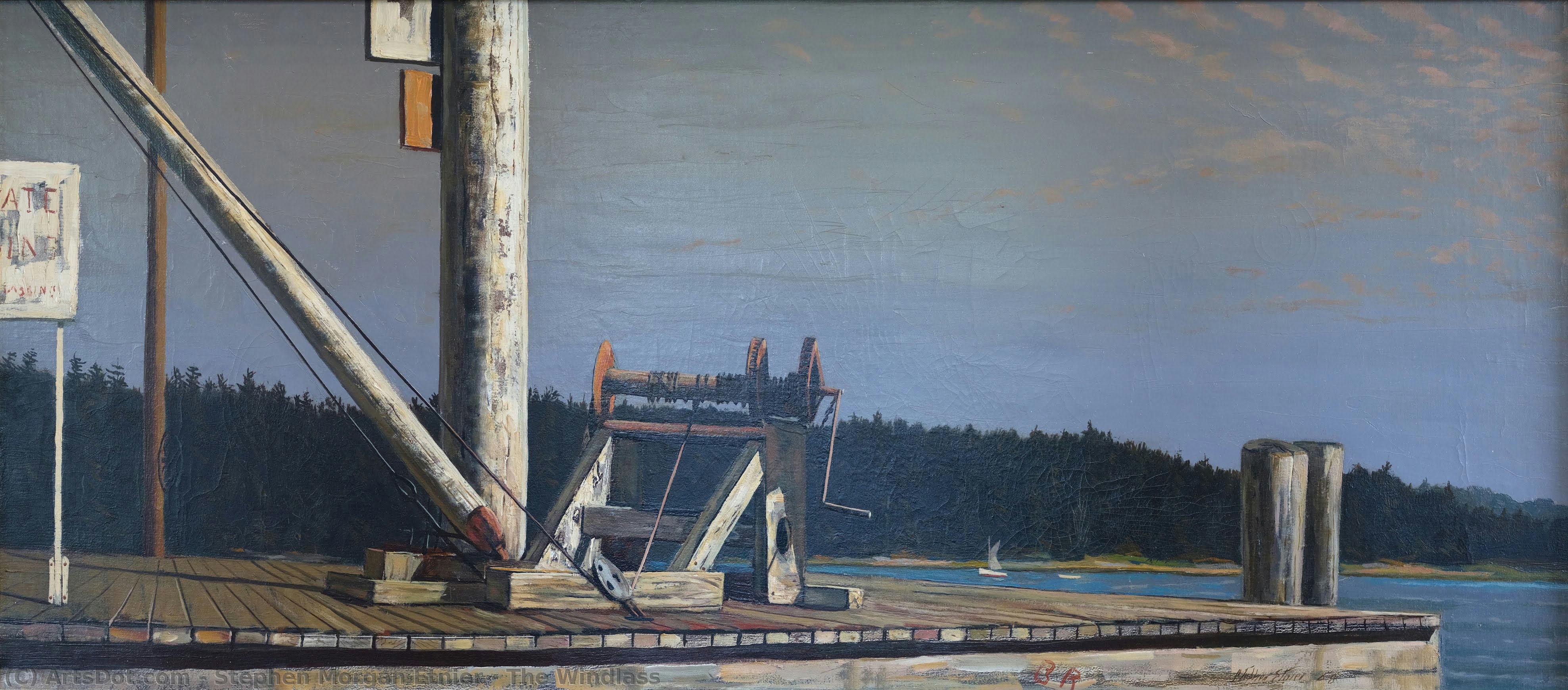
The outbreak of World War II marked a significant turning point in Etnier’s life and art. At the age of thirty-eight, he voluntarily entered the U.S. Navy, serving as a commissioned officer and commanding officer of convoy escort ships in the North Atlantic. This experience profoundly impacted his artistic vision. The lightheartedness of his pre-war paintings gave way to a more somber mood, reflected in quiet marine settings, sparsely lit landscapes, and harsh winter scenes. His post-war work is characterized by an increasing focus on atmosphere and isolation, often devoid of human figures—a visual representation of the psychological weight of wartime experiences. This period also saw Etnier embrace extensive travel, exploring both the Atlantic and Pacific coasts, as well as numerous Caribbean islands and Bermuda. The scale of his paintings sometimes diminished during this time, though he remained adept at working in various formats. He was a self-critical artist, known to destroy works that didn’t meet his exacting standards, driven by an ambition for excellence.
Maine as Muse: Gilbert Head and the Pursuit of Romantic Realism
The final chapter of Etnier's life unfolded in Maine, where he found a lasting home and source of inspiration. He first arrived as a devoted sailor, eventually becoming a summer resident on Gilbert Head, Long Island, Maine, which he and his second wife, Elizabeth Morgan Jay Etnier, purchased and meticulously restored in 1934. This location, at the mouth of the Kennebec River, became central to his artistic practice. He renovated an 1862 stately home, transforming it into a haven for creativity. His marriage to Elizabeth lasted until 1948, chronicled in her book *On Gilbert Head*. Later, he settled in South Harpswell, Maine, where he continued to paint until his death in 1984. Etnier identified as a “romantic realist,” seeking to capture the essence of nature with both precision and emotional depth. He executed murals for post offices in Spring Valley and Boston, New York, further establishing his reputation. His work, spanning six decades and encompassing over five hundred paintings, stands as a testament to a life dedicated to observing, interpreting, and sharing the beauty he found in the world around him—a legacy of light, atmosphere, and enduring artistic vision.
Historical Significance and Enduring Appeal
Stephen Morgan Etnier’s place within American art history is that of a skilled realist who successfully integrated Luminist principles into his work. He wasn't part of any specific “school” or movement; rather, he forged his own path, blending meticulous observation with a romantic sensibility. His paintings offer a valuable record of industrial scenes and working life during the mid-20th century, alongside evocative landscapes that capture the beauty of coastal regions. His ability to convey atmosphere—the quality of light, the feeling of isolation, the vastness of nature—continues to resonate with viewers today. Etnier’s work is a reminder of the power of art to transform personal experience into universal emotion, and his dedication to capturing the fleeting moments of beauty in the world around him ensures his enduring appeal as an American master.







 プレビュー
プレビュー
 プリントを購入
 シェアする
シェアする シェアする
シェアする
 詳細を見る
詳細を見る

 ダウンロード
 似ている作品
 X線調査
X線調査 スライドショー

 詳細を見る
詳細を見る


