x
 Acrylic On CanvasWallArtContemporary Realism
 1963
1963 135.0 x 180.0 cm




























작품의 원본 비율을 유지하는 미리 설정된 크기 중에서 선택하세요.

특정 프레임이나 공간에 맞도록 직접 크기를 입력할 수 있습니다. 선택하신 크기가 원본 이미지의 비율과 일치하지 않는 경우, 작품을 자르거나 추가적인 손으로 그린 요소를 사용하여 그림을 확장합니다. 제작 시작 전 승인을 위해 디지털 목업을 보내드립니다.
화면 미리 보기는 실제 자르기 또는 확장을 반영하지 않습니다. 최종 구성은 목업을 통해서만 정확하게 확인하실 수 있습니다.
맞춤 크기 제작도 가능하지만, 원본 비율을 유지하기 위해 사전 정의된 목록에서 크기를 선택하시는 것을 권장합니다.

Coffin Bearers
복제본 크기
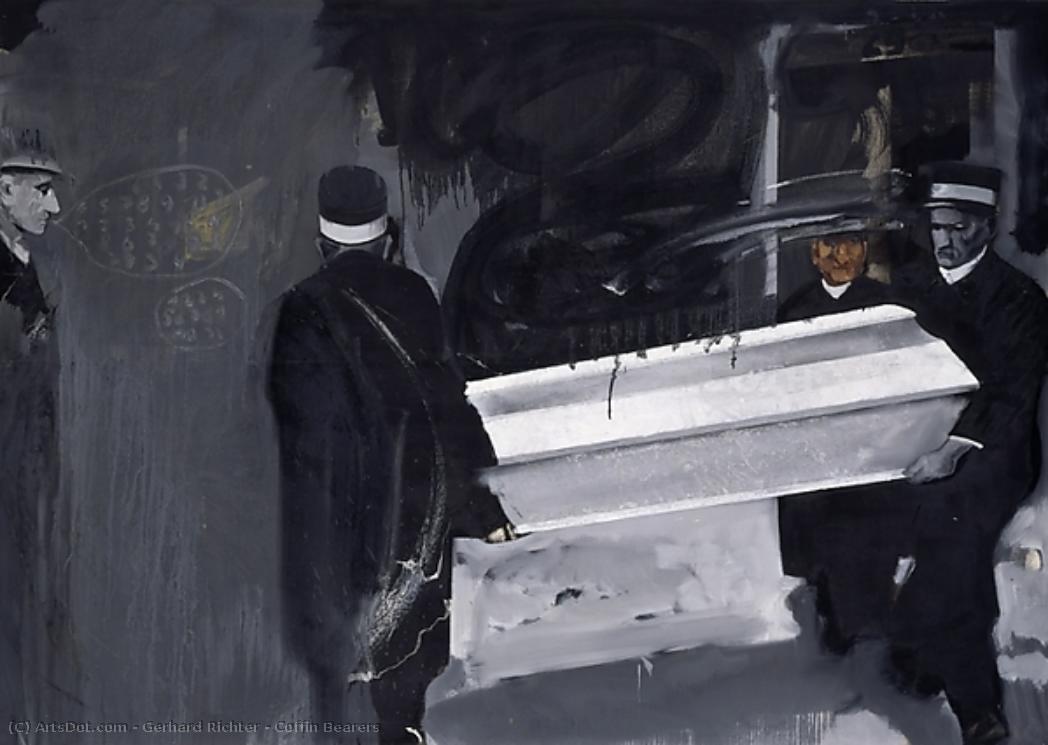
Gerhard Richter's "Coffin Bearers," painted in 1963, is not merely a depiction of a somber scene; it’s a profoundly unsettling meditation on loss, uncertainty, and the fractured realities of post-war Germany. The black and white photograph captures three men, their faces obscured by shadow and the formality of their ties, laboriously carrying a shrouded casket through a dimly lit hallway or alleyway. This seemingly straightforward image is imbued with layers of meaning, reflecting Richter’s own experiences growing up in a nation grappling with profound division and trauma. The stark contrast between the figures' rigid posture and the implied weight they bear speaks volumes about the emotional burden carried by an entire generation.
Richter’s artistic formation was deeply shaped by the tumultuous events of his childhood. Born in Dresden in 1932, he witnessed firsthand the displacement and anxieties brought on by World War II and the subsequent rise of Nazism. His family's repeated moves during the war instilled a sense of instability and questioning – qualities that would become central to his artistic practice. The photograph’s muted palette and deliberate lack of detail contribute to this atmosphere of unease, mirroring the emotional landscape of a nation struggling to rebuild itself after decades of conflict. The hallway itself feels claustrophobic, suggesting a journey through a difficult and uncertain future.
“Coffin Bearers” exemplifies Richter’s signature style – a masterful blend of photorealism and abstraction. While the image possesses a photographic quality, it's not a straightforward reproduction. Richter employs subtle distortions and variations in tone, creating an effect that is both familiar and subtly unsettling. The figures are rendered with meticulous detail, yet their faces remain hidden, adding to the sense of anonymity and universality. This deliberate ambiguity invites viewers to project their own emotions and interpretations onto the scene.
Richter’s technique involved layering thin washes of oil paint over a photograph, creating a textured surface that resists easy categorization. He often worked with multiple negatives, manipulating the image through a process of repetition and variation. This method allowed him to explore the inherent limitations of representation, questioning the very nature of seeing and knowing. The resulting paintings are not simply copies of photographs; they are original works of art that possess their own unique character and emotional resonance.
The act of carrying a coffin is inherently symbolic, representing grief, mourning, and the passage into the unknown. In the context of 1963 Germany, however, it carries an additional layer of significance. The country was still reeling from the devastation of World War II and the division caused by the Cold War. The men bearing the casket can be interpreted as representatives of a nation burdened by loss – not just personal grief, but also the collective trauma of war and displacement.
Furthermore, the formal attire worn by the bearers suggests a sense of duty and obligation, highlighting the societal expectations placed upon individuals during times of mourning. The hallway itself, with its limited space and lack of discernible destination, symbolizes the uncertain path forward for Germany as it navigated the complexities of the post-war era. Richter’s work subtly reflects the anxieties and contradictions of this period – a nation striving to rebuild while grappling with the ghosts of its past.
"Coffin Bearers" transcends its specific historical context, offering a timeless reflection on the universal themes of loss, mortality, and the human condition. Richter’s masterful use of light, shadow, and ambiguity creates an image that is both hauntingly beautiful and profoundly moving. It's a work that invites contemplation and encourages viewers to confront their own emotions in response to the shared experience of grief and uncertainty. Most-Famous-Paintings’s hand-painted reproductions capture the nuances and subtleties of Richter’s original painting, allowing you to bring this powerful artwork into your home or office as a poignant reminder of life's fragility and enduring beauty.

1932 - , 독일

Explore the profound artistry of black and white photography. From the chemistry of gelatin silver to the chiaroscuro of the Old Masters, discover how monochrome captures the eternal essence of light, form, and emotion for the discerning art collector.


최신 미술 뉴스, 특별 혜택 및 인테리어 아이디어를 가장 먼저 만나보세요.
프로젝트에 대해 알려주시면 저희 미술 전문가들이 맞춤형 아트 제안 3가지를 전달해 드립니다.
당신만을 위한 맞춤형 옵션 3가지를 무료로 추천해 드립니다!


 미리보기
미리보기
 프린트 구매
 공유하기
공유하기 공유하기
공유하기
 상세 정보
상세 정보

 다운로드
다운로드
 유사 작품
유사 작품 X-레이
X-레이 슬라이드 쇼
 더 보기
더 보기









 유리 옵션은 110cm 미만 크기에서만 선택 가능합니다.