x





























작품의 원본 비율을 유지하는 미리 설정된 크기 중에서 선택하세요.

특정 프레임이나 공간에 맞도록 직접 크기를 입력할 수 있습니다. 선택하신 크기가 원본 이미지의 비율과 일치하지 않는 경우, 작품을 자르거나 추가적인 손으로 그린 요소를 사용하여 그림을 확장합니다. 제작 시작 전 승인을 위해 디지털 목업을 보내드립니다.
화면 미리 보기는 실제 자르기 또는 확장을 반영하지 않습니다. 최종 구성은 목업을 통해서만 정확하게 확인하실 수 있습니다.
맞춤 크기 제작도 가능하지만, 원본 비율을 유지하기 위해 사전 정의된 목록에서 크기를 선택하시는 것을 권장합니다.

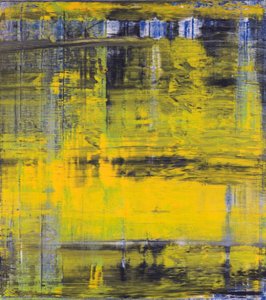
Untitled (167)
복제본 크기
Gerhard Richter's "Untitled (167)," a seemingly simple black and white photograph of a woman nursing her child, is far more than a portrait; it’s a profound exploration of memory, time, and the inherent ambiguity of representation. Created in an era deeply marked by division – Richter’s childhood unfolded under the shadow of post-war Germany and the subsequent rise of authoritarianism – the work speaks to a persistent sense of uncertainty and a questioning spirit that would become hallmarks of his artistic practice. This photograph, created around 1989, captures a tender yet subtly unsettling moment, inviting viewers to contemplate the fragility of human connection and the elusive nature of recollection.
Richter’s approach is characteristic of his broader oeuvre: he masterfully employs techniques borrowed from both photography and painting. The image itself isn't a direct reproduction but rather an interpretation, a distillation of memory through the lens of the camera. Richter frequently worked with photographs, often creating multiple versions of the same subject – a technique that highlights the subjective nature of visual perception. Here, he’s not simply documenting reality; he’s constructing a narrative, layering meaning onto a seemingly straightforward scene. The stark black and white palette further emphasizes this process, stripping away extraneous detail and focusing attention on form, texture, and the emotional weight of the figures.
A key element of Richter’s work – and particularly evident in “Untitled (167)” – is his use of absence. The background figures are deliberately vague, their identities obscured by distance and shadow. This deliberate lack of specificity forces the viewer to actively participate in constructing the scene, filling in the gaps with their own memories and associations. The woman’s gaze, fixed intently on her child, is both loving and distant, suggesting a complex mix of emotions – perhaps nostalgia, worry, or simply the quiet contemplation that accompanies motherhood. The baby's proximity to her chest isn’t merely a depiction of physical closeness; it symbolizes nourishment, protection, and the continuity of life.
Richter’s technique is deceptively simple. He utilizes a soft focus, characteristic of his ‘photorealistic’ period, lending the image an almost dreamlike quality. The subtle gradations of tone create a sense of depth and atmosphere, while the slightly blurred edges contribute to the feeling that we are glimpsing a memory rather than witnessing a concrete event. This blurring is not a flaw but a deliberate artistic choice, mirroring the imperfect nature of recollection itself – how memories fade, shift, and ultimately become reconstructions.
“Untitled (167)” was created during a period when Gerhard Richter's work began to be recognized for its exploration of the complexities of post-war Germany. His style, often described as “Capitalist Realism,” reflected the societal shifts and anxieties of the time. This approach involved creating paintings that mimicked the appearance of photographs but lacked their inherent truthfulness – a deliberate commentary on the increasing reliance on media and the manipulation of reality. The photograph’s quiet intimacy contrasts sharply with the grand narratives often associated with historical art, suggesting a focus on the individual experience within a broader context of societal change.
Richter's work during this period was deeply influenced by his personal history – his childhood experiences under Nazi rule and the subsequent division of Germany. The photograph’s sense of vulnerability and uncertainty can be interpreted as a reflection of this historical trauma, a quiet acknowledgment of the enduring impact of past events on the present.
Despite its subtle complexities, “Untitled (167)” ultimately offers a profoundly moving portrayal of human connection. The image transcends specific details and speaks to universal themes of love, care, and the passage of time. It’s a reminder that even in moments of quiet intimacy, there is always an element of mystery and ambiguity. Richter's masterful use of light, shadow, and composition creates a work that is both visually arresting and emotionally resonant – a testament to his enduring legacy as one of the most important artists of our time.

1932 - , 독일

Explore the profound artistry of black and white photography. From the chemistry of gelatin silver to the chiaroscuro of the Old Masters, discover how monochrome captures the eternal essence of light, form, and emotion for the discerning art collector.

Explore the profound history of documentary photography. From early daguerreotypes to social reform movements, discover how the lens captures truth, preserves vanishing cultures, and shapes our global visual narrative through an expert art-historical lens.


최신 미술 뉴스, 특별 혜택 및 인테리어 아이디어를 가장 먼저 만나보세요.
프로젝트에 대해 알려주시면 저희 미술 전문가들이 맞춤형 아트 제안 3가지를 전달해 드립니다.
당신만을 위한 맞춤형 옵션 3가지를 무료로 추천해 드립니다!


 미리보기
미리보기
 프린트 구매
 공유하기
공유하기 공유하기
공유하기
 상세 정보
상세 정보

 다운로드
다운로드
 유사 작품
유사 작품 X-레이
X-레이 슬라이드 쇼
 더 보기
더 보기









 유리 옵션은 110cm 미만 크기에서만 선택 가능합니다.