


x
빠른 제작과 다양한 마감 옵션을 제공하는 박물관 품질의 지클레이 또는 캔버스 프린트. ( 손으로 그린 그림 구매 이미지 구매)





























작품의 원본 비율을 유지하는 미리 설정된 크기 중에서 선택하세요.

특정 프레임이나 공간에 맞춰 직접 치수를 입력하실 수 있습니다. 선택하신 사이즈가 원본 이미지의 비율과 일치하지 않을 경우, 작품을 크롭(자르기)하거나 이미지를 대칭 또는 단색 채우기로 확장하여 제작합니다. 제작 시작 전, 최종 확인을 위해 디지털 목업이 전송됩니다.
화면상의 미리보기는 실제 크롭이나 확장 상태를 반영하지 않으므로, 최종 구도는 오직 목업을 통해서만 정확하게 확인하실 수 있습니다.
맞춤 사이즈 제작도 가능하지만, 원본 비율을 유지하기 위해서는 사전 정의된 목록에서 치수를 선택하시는 것을 권장합니다.

Untitled (828)
복제본 크기
In the vast landscape of contemporary art, few works possess the ability to simultaneously anchor the viewer in reality and dissolve it into pure abstraction as effectively as Gerhard Richter’s Untitled (828). This evocative piece serves as a profound meditation on the nature of sight, presenting an image that feels like a half-remembered dream or a fading photograph from a lost era. At first glance, the eye seeks a recognizable subject—a human presence emerges from the depths of the canvas, a face partially veiled by layers of pigment. Yet, Richter deliberately resists this easy identification. Through a masterful manipulation of blue and black tones, he creates a composition that is both intimate and profoundly distant, making it an irresistible centerpiece for those who appreciate art that invites deep, contemplative inquiry.
The power of the work lies in its technical duality, a hallmark of Richter’s legendary career. Utilizing a process reminiscent of the photogram technique, the artist applies pigment to surfaces that bridge the gap between photographic precision and painterly spontaneity. In Untitled (828), this results in a textured surface where broad, sweeping brushstrokes seem to sweep across the figure like mist over water. This deliberate blurring does not merely obscure the subject; it transforms the human form into an emotional landscape. For the collector or interior designer, this technique offers a unique aesthetic advantage: the painting possesses a dynamic energy that changes depending on the light and the viewer's perspective, providing a sophisticated layer of movement to any curated space.
To truly appreciate the emotional weight of this work, one must look toward the turbulent history that shaped Richter’s gaze. Born in Dresden in 1932, Richter’s formative years were defined by the fractures of German history—the rise of National Socialism, the devastation of World War II, and the subsequent division of his homeland. These experiences of displacement and uncertainty are woven into the very fabric of Untitled (828). The way the figure is partially erased by amorphous strokes can be seen as a metaphor for the fragility of memory and the way trauma can obscure the clarity of our personal and collective pasts. There is a profound sense of absence within the painting; what is not shown is just as vital as what is visible.
This interplay between presence and disappearance creates an atmosphere of haunting ambiguity. The monochromatic palette, dominated by deep blacks and ethereal blues, evokes a nocturnal or underwater sensation, pulling the viewer into a quiet, introspective state. It is this very quality—the ability to evoke intense feeling without relying on explicit narrative—that makes Richter’s work so enduringly relevant. For those seeking to bring a sense of intellectual depth and emotional resonance to a room, Untitled (828) offers more than just visual beauty; it offers a window into the complexities of the human condition, making it a timeless acquisition for any serious collection.


1932 - , 독일
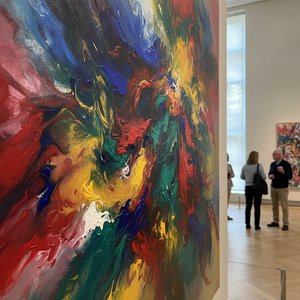
Explore the profound emotional depth of Lyrical Abstraction. Discover how masters like Raymond Parker used color and form to bridge Impressionism and Abstract Expressionism. Learn about this pivotal movement through our expert-led art history guide.

Explore the profound emotional depth of Color Field painting. Discover the history of mid-century abstraction, from Rothko to Newman, and learn how pure color transforms the viewer's experience through our expert art history guide.


최신 미술 뉴스, 특별 혜택 및 인테리어 아이디어를 가장 먼저 만나보세요.
프로젝트에 대해 알려주시면 저희 미술 전문가들이 맞춤형 아트 제안 3가지를 전달해 드립니다.
당신만을 위한 맞춤형 옵션 3가지를 무료로 추천해 드립니다!


 미리보기
미리보기
 공유하기
공유하기 공유하기
공유하기
 상세 정보
상세 정보

 다운로드
다운로드
 유사 작품
유사 작품 X-레이
X-레이 슬라이드 쇼

 더 보기
더 보기









 유리 옵션은 110cm 미만 크기에서만 선택 가능합니다.


