


x
 Acrylic On CanvasWallArtMinimalism
 1998Contemporary
 420.0 x 250.0 cm
 Albertina Klosterneuburg
빠른 제작과 다양한 마감 옵션을 제공하는 박물관 품질의 지클레이 또는 캔버스 프린트. ( 손으로 그린 그림 구매 이미지 구매)
작품의 원본 비율을 유지하는 미리 설정된 크기 중에서 선택하세요.

특정 프레임이나 공간에 맞춰 직접 치수를 입력하실 수 있습니다. 선택하신 사이즈가 원본 이미지의 비율과 일치하지 않을 경우, 작품을 크롭(자르기)하거나 이미지를 대칭 또는 단색 채우기로 확장하여 제작합니다. 제작 시작 전, 최종 확인을 위해 디지털 목업이 전송됩니다.
화면상의 미리보기는 실제 크롭이나 확장 상태를 반영하지 않으므로, 최종 구도는 오직 목업을 통해서만 정확하게 확인하실 수 있습니다.
맞춤 사이즈 제작도 가능하지만, 원본 비율을 유지하기 위해서는 사전 정의된 목록에서 치수를 선택하시는 것을 권장합니다.

Untitled
복제본 크기
In the vast, immersive expanse of "Untitled" (1998), the viewer is immediately enveloped by a luminous atmosphere that defies the boundaries of the canvas. This monumental work, measuring an awe-inspiring 420 x 250 cm, serves as a profound testament to the late German master Günther Förg's ability to manipulate space and light through a minimalist lens. At first glance, the eye is drawn to the vibrant yellow background, a field of warmth that radiates with an almost solar intensity. Yet, this brightness is rhythmically interrupted by delicate blue lines that traverse the surface, creating a structural tension that pulls the gaze across the massive scale of the work. The interplay of these primary hues, accented by subtle traces of brown and orange, creates a chromatic dialogue that feels both spontaneous and meticulously calculated.
The technique employed in this piece reflects Förg’s mastery of acrylic on canvas, where the medium is used not merely to coat a surface, but to build a layered, atmospheric depth. The brushwork, while appearing fluid, possesses a controlled precision characteristic of his fascination with architectural geometry. There is a palpable sense of weightlessness in the way the blue lines float atop the yellow expanse, yet the inclusion of earthier tones provides an essential grounding. This duality—the ethereal and the structural—is a hallmark of Förg’s oeuvre, inviting the observer to contemplate the thin veil between abstraction and the physical reality of the space they inhabit.
To understand "Untitled," one must look toward the historical currents that shaped Förg’s artistic consciousness. Deeply influenced by the Bauhaus movement and the stark, imposing aesthetics of 20th-century architecture, Förg utilized abstraction to explore themes of structure, void, and memory. His work often acts as a geometric echo, where lines function as architectural blueprints for an imagined space. In this particular painting, the blue striations act as skeletal frameworks, suggesting windows, corridors, or horizons that exist only in the mind's eye. This connection to architectural form allows the painting to transcend mere decoration, becoming a window into a structured, yet dreamlike, reality.
Beyond the purely formal, there is an underlying emotional resonance that speaks to the collector and the designer alike. The piece possesses a transformative power; in a contemporary interior, its massive scale and vibrant palette can serve as a focal point of profound energy, while its minimalist discipline ensures it complements sophisticated, modern environments. For those seeking to bring a sense of historical depth and intellectual rigor into a space, this reproduction offers more than just color—it offers an encounter with the sublime. It is a work that demands presence, inviting a meditative stillness as one loses themselves in its rhythmic, colorful depths.

Born amidst the serene, sweeping landscapes of Füssen, Bavaria, in 1952, Günther Förg developed an artistic vision that would eventually bridge the gap between the tranquil Alpine periphery and the intense, intellectual heart of international contemporary art. His early life, shaped by the meticulous precision of a father who served as a customs officer, instilled in him a profound sensitivity to detail and structure—qualents that would later become the bedrock of his visual language. As he moved toward formal training at the Akademie der Bildenden Künste München under Karl Fred Dahmen, Förg began to navigate the complex intersections of color, form, and history, setting the stage for a career defined by a restless, searching intellect.
Förg’s artistic evolution was not a linear progression but rather a sophisticated dialogue between disparate worlds. In the mid-1970s, his work emerged with a stark, monochromatic intensity, characterized by black acrylic canvases layered with translucent grey to create a milky, veiled surface that seemed to breathe with a quiet, ghostly light. As he matured, his practice expanded into a multidisciplinary exploration that seamlessly blended painting, sculpture, photography, and graphic design. He became a master of the minimalist ethos, yet he refused to let his work remain purely formalist. Instead, he infused the geometric rigor of American Minimalism—reminiscent of Donald Judd and Sol LeWitt—with a uniquely European consciousness, one that grappled with the heavy shadows of architectural history.
The true power of Förg’s oeuvre lies in its ability to evoke the weight of the past through the simplicity of the present. His work often functions as an architectural echo, where the lines on a canvas or the composition of a photograph serve as meditations on space and power. He was deeply moved by the tension between the utopian, clean lines of Bauhaus aesthetics and the imposing, unsettling grandeur of fascist iconography. Through his large-scale architectural photographs, he captured the rhythmic patterns and monumental scales of structures that carried the psychological weight of 20th-century history, turning stone and concrete into poetic symbols of order and anxiety.
This preoccupation with materiality and space led him to experiment with unconventional mediums, most notably his celebrated lead paintings. In these works, the physical heaviness of the metal meets the ethereal quality of abstract form, creating a sensory experience that is both grounded and transcendent. His use of color was equally strategic; while he often retreated into a disciplined palette of greys and blacks, he could just as easily command the viewer with vibrant, luminous fields of yellow or blue that manipulated light and atmosphere to redefine the boundaries of the canvas.
Beyond the studio, Förg was a vital presence in the academic community, shaping the trajectory of contemporary art through his roles as a lecturer at the Staatliche Hochschule für Gestaltung Karlsruhe and later as a professor in Munich. His influence extended far beyond his own canvases, as he maintained a profound connection to the European legacy of American Minimal Art, a lineage shared with contemporaries like Blinky Palermo. His ability to strip away the superfluous to reveal fundamental truths about perception allowed him to remain relevant across decades of shifting artistic movements.
The historical significance of Günther Förg rests in his refusal to settle into a single identity. He was simultaneously a painter of profound stillness and a photographer of architectural tension; a minimalist who embraced the complexity of historical memory. His legacy is found in the way his works continue to haunt and inspire, standing as enduring monuments to the idea that abstraction is never merely about shape, but about the deep, resonant echoes of the human experience within the spaces we inhabit.

1952 - 2013
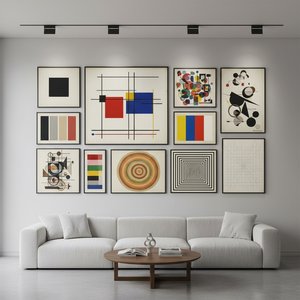
몬드리안, 말레비치 등 거장들의 기하학적 추상 미술 명작 10선을 만나보세요. 각 작품의 예술사적 의미와 색채, 구성을 탐구하고 Most-Famous-Paintings.com에서 고품질 아트 프린트를 소장하세요. 지금 바로 온라인 컬렉션을 확인하세요!
Journey through Wassily Kandinsky's 25 most iconic abstract paintings. Explore his revolutionary use of color, form & spiritual expressionism. Find museum-quality Kandinsky reproductions and elevate your home decor with Most-Famous-Paintings.com. Discover all masterpieces on Most-Famous-Paintings.com!

Immerse yourself in the captivating world of slate blue! Explore 10 iconic paintings by Monet, Van Gogh & Renoir. Discover their stories, techniques & find museum-quality art reproductions for your home at .
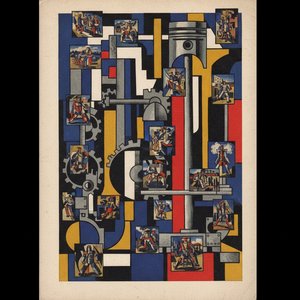
페르낭 레제의 최고 걸작 25선을 만나보세요. 큐비즘, 추상 미술의 거장이 그린 명작들의 탄생 비화와 예술적 의미를 탐구합니다. Most-Famous-Paintings에서 고품질 아트 프린트와 인테리어 액자로 공간에 예술을 더하세요. 지금 바로 컬렉션을 확인하세요!

추상표현주의의 심장을 뛰게 한 10대 걸작을 만나보세요. 폴록, 로스코 등 거장의 작품 비하인드 스토리와 예술적 영감을 Most-Famous-Paintings에서! 지금 바로 미술품 컬렉션을 탐험하고, 당신의 공간에 특별한 예술적 감성을 더하세요. Most-Famous-Paintings.com


최신 미술 뉴스, 특별 혜택 및 인테리어 아이디어를 가장 먼저 만나보세요.
프로젝트에 대해 알려주시면 저희 미술 전문가들이 맞춤형 아트 제안 3가지를 전달해 드립니다.
당신만을 위한 맞춤형 옵션 3가지를 무료로 추천해 드립니다!


 미리보기
미리보기
 공유하기
공유하기 공유하기
공유하기
 상세 정보
상세 정보

 다운로드
다운로드
 유사 작품
유사 작품 X-레이
X-레이 슬라이드 쇼
 더 보기
더 보기






































 유리 옵션은 110cm 미만 크기에서만 선택 가능합니다.


