


x
온라인 미리보기보다 훨씬 뛰어난 품질의 고해상도 디지털 이미지를 구매해 보세요.
각 파일은 사내 전문가가 고급 도구와 숙련된 수동 리터칭 기술을 사용하여 세심하게 준비합니다. 우리는 모든 이미지가 탁월한 선명도, 정확한 색상 재현력, 그리고 미세한 디테일까지 완벽하게 갖추도록 보장합니다.
최종 파일은 전문적인 편집 및 인쇄 환경에서 즉시 사용할 수 있도록 최적화되어 72시간 이내에 이메일로 발송됩니다. 이는 세계적인 디자인 스튜디오, 출판사 및 갤러리가 신뢰하는 것과 동일한 품질입니다.
개인 소장 및 전시, 인쇄, 창작 프로젝트를 위한 고해상도 파일을 다운로드하세요. ( 프린트 구매 손으로 그린 그림 구매)
Most-Famous-Paintings.com를 선택하시면 단순히 이미지를 받는 것을 넘어, 정밀한 보정 과정을 거친 전문적인 디지털 예술 작품을 만나보실 수 있습니다. 모든 작품에는 만족 보장 서비스가 함께 제공되며, 주문 시 다음과 같은 사항들이 자동으로 포함됩니다:

주문 후 72시간 이내에 고해상도 디지털 이미지 파일이 이메일로 발송되며, 즉시 사용하실 수 있습니다.

귀하의 작품은 고급 AI 도구와 수동 편집 과정을 거쳐 전문적으로 최적화되며, 이를 통해 디테일과 선명도, 색상의 정확도를 극대화합니다.

파일을 실수로 삭제하거나 분실하셨나요? 걱정 마세요. 언제든 무료로 다시 보내드립니다.

관세나 부가세, 배송비 부담 없이 작품을 즉시 감상하세요 - 디지털 다운로드는 언제나 면세 혜택이 적용됩니다.

전문적인 도구와 색상 관리 시스템을 통해 디지털 이미지가 원본의 색상을 최대한 정확하게 구현하도록 보장합니다.

구매하신 디지털 이미지에 만족하지 못하실 경우, 60일 이내에 수정 또는 100% 환불을 진행해 드립니다 - 어떠한 문의도 필요 없습니다.

만족하지 못하셨나요? 디지털 파일을 수령하신 후 60일 이내라면 별도의 이유를 밝힐 필요 없이 전액 환불해 드립니다.

이미지 3매 구매 시 10% 할인 - 5매 구매 시 15% 할인 - 10매 이상 구매 시 20% 할인. 크리에이티브 프로젝트, 갤러리, 에이전시에 매우 유용합니다.
René Magritte's "Composition with Locomotive," painted in 1923, isn’t merely a depiction of a train; it’s an invitation to question the very nature of perception and representation. This iconic work, housed within the Winterbotham Collection at the Art Institute of Chicago, exemplifies Magritte’s unique brand of surrealism – a deliberate disruption of familiar realities that compels viewers to actively engage with the artwork and their own assumptions about what they see.
The painting immediately draws the eye with its stark geometric composition. Bold, angular lines delineate planes of color—primarily shades of brown, grey, blue, white, and black—creating a fragmented cityscape or interior space. The locomotive itself is rendered in simplified forms, almost as if constructed from basic shapes rather than faithfully representing a specific machine. This abstraction isn’t arbitrary; it reflects Magritte's fascination with deconstructing objects to reveal their underlying structure and challenging the viewer’s ability to easily recognize familiar subjects. The influence of Cubism, particularly its emphasis on flattened perspective and multiple viewpoints, is undeniable, yet Magritte transcends mere imitation, imbuing these techniques with a distinctly personal and unsettling quality.
What makes “Composition with Locomotive” so compelling isn’t just the formal arrangement but also the subtle interplay of contrasting elements. The industrial power of the train—symbolic of modernity, progress, and perhaps even alienation—is juxtaposed against the domesticity of a fireplace. The billowing smoke from the locomotive is cleverly integrated with the plumes rising from the chimney, creating a visual metaphor for connection and shared experience. This pairing suggests that even seemingly disparate elements can be linked through abstract associations, prompting viewers to consider how our minds construct meaning from seemingly unrelated sensory information.
Magritte’s choice of color palette further enhances this duality. The cool blues and greys of the locomotive contrast sharply with the warmer browns and blacks of the fireplace, creating a visual tension that mirrors the conceptual one. The limited range of colors contributes to the painting's overall sense of stillness and contemplation, inviting viewers to linger and decipher the hidden connections within the composition.
To fully appreciate “Composition with Locomotive,” it’s crucial to understand Magritte’s artistic journey. Early influences included Impressionism and Cubism, but a pivotal moment arrived in 1916 when he encountered the work of Italian futurists like Gino Severini. The dynamism and rhythmic energy of Futurist painting—particularly their use of lines and color to convey movement—resonated deeply with Magritte’s own desire to break free from traditional representational conventions. He described this encounter as a revelation, stating that it opened his eyes to “thought for the first time.”
Magritte's engagement with Surrealism, spearheaded by André Breton, provided him with a framework for exploring the subconscious and challenging rational thought. However, Magritte’s surrealism wasn’t driven by dreamlike imagery or irrationality in the traditional sense. Instead, he sought to expose the inherent strangeness of everyday reality—to reveal the “hidden” aspects of our perception that we often overlook. “La duree poignadee,” as it was known at the time, exemplifies this approach, presenting a familiar scene (a train and a fireplace) in an arrangement that defies immediate comprehension.
“Composition with Locomotive” remains one of Magritte’s most enduringly enigmatic works. It's not a painting that offers easy answers or straightforward narratives; rather, it invites viewers to engage in a process of active interpretation. The ambiguity inherent in the composition—the blurred boundaries between industrial and domestic, reality and representation—is precisely what makes the painting so captivating. It’s a testament to Magritte’s genius that he could create an artwork that simultaneously challenges our assumptions about the world and invites us to contemplate the mysteries of perception itself.
Reproductions of this piece offer a remarkable opportunity to bring this surreal vision into your own space, allowing you to experience the same sense of wonder and contemplation that Magritte intended. Its geometric precision and evocative color palette make it a striking addition to any collection, sparking conversation and inviting viewers to question the familiar.
René Magritte는 벨기에 레센네스에서 1898년 11월 21일에 태어났습니다. 그의 어린 시절은 충격적인 사건으로 시작되었습니다. 바로 어머니의 자살이었는데, 그는 열세 살 때였습니다. 그녀의 시체가 세브레 강에 발견되었고 그녀의 드레스가 얼굴을 가리는 모습이 눈앞에 펼쳐졌습니다. 이 초기의 트라우마는 그에게 미스터리함과 상실감 그리고 우리가 보지 못하는 힘에 대한 매혹감을 심어주었습니다. 그의 어린 시절에 대한 자세한 정보는 아직 명확하게 밝혀지지 않았지만 그는 삶 전체를 질문하는 방식으로 끊임없이 탐구하며 예술적 비전을 형성했습니다. 그는 열 살 때 그림 레슨을 시작했는데 이는 그에게 시각적 표현에 대한 타고난 기질을 드러냈습니다. 하지만 처음에는 인상주의로 탐구했지만 이후 그의 예술 경로는 서양 미술의 주요 인물 중 한 명으로 나아가기 위해 독특한 길을 택했습니다.
마그리트는 예술적 여정이 즉각적이고 간단하지 않았습니다. 그는 브뤼셀 왕립 미술 아카데미에서 공부했지만 전통적인 방법은 그에게 답답함을 안겨주었습니다. 그의 초기 작품은 미래주의와 입체주의를 실험했는데 이 두 현대 미술 운동의 형식을 흡수했지만 형식적인 우려에 대한 관심이 부족했습니다. 그는 1922년 지오르지오 드 치리코의 그림 *사랑의 노래*를 만나면서 새로운 시각을 발견했습니다. 드 치리코의 꿈 같은 풍경과 혼란스러운 대립은 마그리트에게 익숙한 것이 이상하게 변하고 평범함이 깊은 미스터리로 가득 차는 세계로 이끌었습니다. 이 만남은 그가 초현실주의에 대한 약속을 깨고 그의 동료 예술가들보다 더 자유로운 방식으로 탐구하는 것을 촉발했습니다. 그는 초현실주의의 심리적 또는 자동적인 접근 방식과 같은 방법으로 무의식 탐구를 추구하지 않았습니다.
1926년 마그리트는 초현실주의 원칙을 완전히 받아들였고 *로스트 조커*를 제작했는데 이 작품은 광범위하게 그의 첫 번째 진정한 초현실주의 작품으로 여겨집니다. 그러나 그의 초현실주의는 독특했습니다. 그는 미래주의와 같은 다른 예술가들의 방식과 달리 무의식 탐구에 대한 자유 연관이나 꿈 이미지 사용에 관심이 없었습니다. 대신 마그리트는 일반적인 물건을 예상치 못한 맥락에서 제시하여 관객에게 세계에 대한 가정에 대해 질문하도록 강요하는 방식으로 현실에 도전했습니다. 그는 초현실주의의 핵심은 이처럼 관객에게 새로운 시각을 제공하고 예술이 생각과 경외심을 불러일으키는 능력을 인정하는 것입니다.
마그리트는 초현실주의 원칙에 대한 약속을 깨고 *사랑의 노래*를 제작했는데 이 작품은 광범위하게 그의 첫 번째 진정한 초현실주의 작품으로 여겨집니다. 그는 미래주의와 같은 다른 예술가들의 방식과 달리 무의식 탐구에 대한 자유 연관이나 꿈 이미지 사용에 관심이 없었습니다. 대신 마그리트는 일반적인 물건을 예상치 못한 맥락에서 제시하여 관객에게 세계에 대한 가정에 대해 질문하도록 강요하는 방식으로 현실에 도전했습니다. 그는 초현실주의의 핵심은 이처럼 관객에게 새로운 시각을 제공하고 예술이 생각과 경외심을 불러일으키는 능력을 인정하는 것입니다.
마그리트는 초기 작품에서 미래주의와 입체주의를 실험했는데 이 두 현대 미술 운동의 형식을 흡수했지만 형식적인 우려에 대한 관심이 부족했습니다. 그는 초현실주의의 심리적 또는 자동적인 접근 방식과 같은 방법으로 무의식 탐구에 대한 자유 연관이나 꿈 이미지 사용에 관심이 없었습니다. 대신 마그리트는 일반적인 물건을 예상치 못한 맥락에서 제시하여 관객에게 세계에 대한 가정에 대해 질문하도록 강요하는 방식으로 현실에 도전했습니다. 그는 초현실주의의 핵심은 이처럼 관객에게 새로운 시각을 제공하고 예술이 생각과 경외심을 불러일으키는 능력을 인정하는 것입니다.
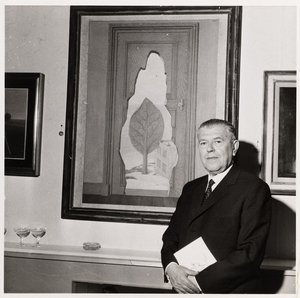
1898 - 1967 , 벨기에


최신 미술 뉴스, 특별 혜택 및 인테리어 아이디어를 가장 먼저 만나보세요.
프로젝트에 대해 알려주시면 저희 미술 전문가들이 맞춤형 아트 제안 3가지를 전달해 드립니다.
당신만을 위한 맞춤형 옵션 3가지를 무료로 추천해 드립니다!


 미리보기
미리보기
 공유하기
공유하기 공유하기
공유하기
 상세 정보
상세 정보

 다운로드
다운로드
 유사 작품
유사 작품 X-레이
X-레이 슬라이드 쇼

 더 보기
더 보기


