x

Muziejų lygio „giclée“ arba drobos spausdinimas: greita gamyba ir lankstios apdailos parinktys. ( Perejti prie rankinio darbo paveikslėlio Perjungti į vaizdą)
Pasirinkite iš mūsų nustatytų dydžių, atitinkančių originalaus meno kūrinio proporcijas.

Galite nurodyti savo matmenis, kad vaizdas atitiktų konkretų rėmą ar erdvę. Jei pasirinktas dydis nesutaps su originalaus paveikslėlio proporcijomis, mes arba apkirpsime kūrinį, arba išplėsime vaizdą naudojant veideliu atspindėtą arba vientisą šoną. Skaitmeninis maketas bus išsiųstas jums patvirtinti prieš pradedant gamybą.
Atkreipkite dėmesį, kad ekrane matomas vaizdinys neatspindi tikrojo apkirpimo ar išplėtimo. Tik maketas tiksliai parodytų galutinę kompoziciją.
Nors galima rinktis ir individualius dydžius, rekomenduojame pasirinkti vieną iš išanksti nustatytų matmenų, kad būtų išlaikytos originalios proporcijos.
Pristatymas visame pasaulyje () per 2 weeks, o ne įprastas 4/5 savaičių laikotarpis. (11 rugpjūtis)


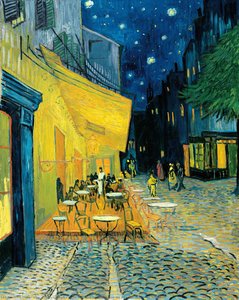
A Night At The Opera
Reprodukcijos matmenys

In the twilight of the nineteenth century, as the gears of the Industrial Revolution began to turn with an almost feverish intensity, one artist looked beyond the soot and steam to glimpse a future charged with electricity and wonder. Albert Robida was not merely an illustrator or a novelist; he was a temporal voyager, a man whose pen traced the outlines of a century yet to be born. Born in the historic town of Compiègne in 1848, Robida possessed a rare intellectual duality, blending the meticulous precision of a trained notary with the boundless, satirical imagination of a true storyteller. His early years, steeped in classical literature and fine arts, provided the foundation for a career that would eventually bridge the gap between the gritty realism of his era and the fantastical possibilities of science fiction.
Robida’s ascent within the vibrant Parisian art scene was fueled by his remarkable ability to capture the pulse of social change. Beginning his professional journey in 1866 with the Journal Amusant, he quickly distinguished himself through a sharp, observant eye for caricature. He did not merely draw people; he drew the very spirit of an age caught between tradition and progress. As the co-founder and editor of the satirical magazine La Caricature, he wielded his illustrations as both a mirror and a weapon, offering biting commentary on political shifts and the burgeoning anxieties of a society facing rapid technological advancement. His work during this period was characterized by an extraordinary level of detail, utilizing intricate hatching techniques that gave his compositions a tactile, breathing quality.
While his satirical sketches earned him contemporary fame, it was Robida’s profound literary and visual trilogy—comprising works such as Le Vingtième Siècle—that secured his place in the pantheon of visionary creators. In these works, Robida moved far beyond the models of his predecessors like Gustave Doré or Honoré Daumier. He constructed a "pantomimed exposition" of the future, where the air itself seemed vibrant with the hum of new inventions. His illustrations for these narratives were not merely accompaniments to text but were essential components of a larger, cohesive mythology. He envisioned a world of aerostats, telephonic communication, and mechanized wonders, often imbuing these technological marvels with a sense of everyday normalcy that made his predictions feel hauntingly plausible.
The technical mastery Robida brought to his speculative landscapes was nothing short of extraordinary. His process involved:
As the twentieth century dawned, Robida’s influence began to ripple through the burgeoning genre of science fiction. His ability to blend dystopia with satire allowed him to explore the darker side of progress—the potential for mechanized warfare and social fragmentation—while never losing the sense of whimsical wonder that defined his aesthetic. Even as his mainstream fame waned following the devastation of World War I, his impact remained etched in the DNA of visual storytelling. He paved the way for future illustrators who would seek to visualize the impossible, serving as a vital link between the romanticized past and the technological future.
Today, we look back at Robida not just as a chronicler of his time, but as an architect of our collective imagination. His work remains a testament to the power of art to transcend its era, reminding us that the most profound way to understand our present is to dare to dream of what lies beyond the horizon. Through his etchings and novels, Albert Robida continues to invite us into a world where the boundaries between reality and fantasy are perpetually blurred by the light of human ingenuity.

1848 - 1926 , France


Sekite naujausias meno naujienas, išskirtinius pasiūlymus ir dekoravimo idėjas.
Pasakokite mums apie savo projektą, o mūsų meno ekspertai parengs jums 3 asmeniškus meno pasiūlymus.
Leiskite mums parinkti 3 variantus būtent jums – nemokamai!


 Peržiūrėti realybėje
 Pasidalinti
 Dalintis
 Išsamiau

 Atsisiųsti
 Panašūs eksponatai
 Rentgeno nuotrauka
 Automatinė diorama
 Skaityti daugiau




































 Stiklo variantas prieinamas tik pasirinkus dydį iki 110 cm